




How to Get Rid of Black Widow Spiders
If you have an active black widow infestation, follow these guidelines to learn how to get rid of black widow spiders, and the best products for black widow pest control here.
December 16th, 2023
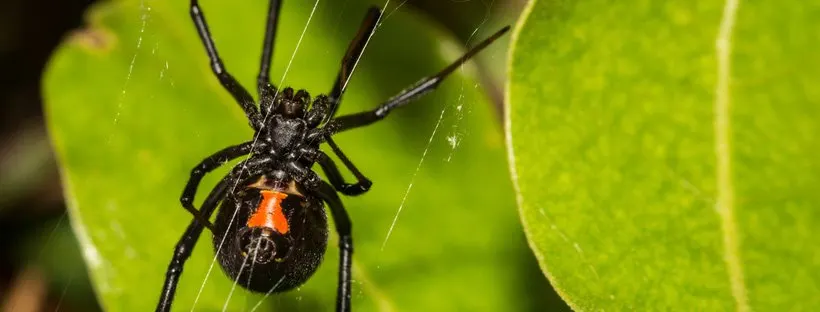
The Black Widow Spider
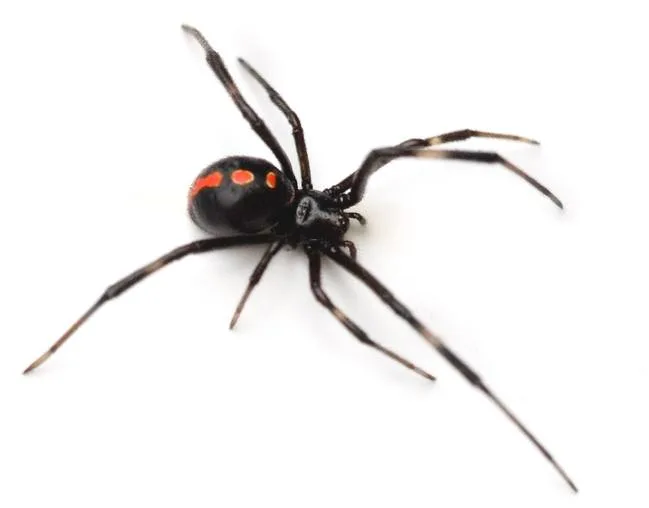
Black Widow Spiders are considered venomous spiders in North America. When a Black Widow spider bites a human, it is not usually deadly, because they inject only a small amount of venom.
Black Widows will attempt to escape rather than bite. It may bite in defense as it guards eggs or is cornered and pressed. This species of spider was given the name "widow,” due to the female eating the male black widows after mating.
How to Get Rid of Black Widows
Black Widow Control Tips
To inspect your home and yard for black widow spiders, carefully remove all materials where they might hide.
-
Always wear gloves when handling debris or material like firewood, as you are at risk of a black widow spider bite.
-
Don't garden, handle firewood, pine straw, etc., without gloves.
-
Don't go barefoot.
-
Eliminate as much clutter as possible in storage areas and frequently dust and vacuum around windows, corners of rooms, and under furniture.
-
Trim weeds around the building foundation and remove debris to discourage insects and spiders from living next to a structure.
-
Seal openings and install screens and door sweep to prevent spiders (and other unwanted pests) from moving indoors.
-
Use a vacuum cleaner to remove webs, spiders, and their egg sacs.
Key Takeaway
While Black Widow Spiders are venomous spiders, they are no more difficult to treat than other spiders.
You can protect your family and pets with regular inspections and treatments to kill black widows.
Recommended Products for Black Widow Spider Control
1. Liquid Residual Concentrates to Get Rid of Black Widows
An effective method for how to get rid of black widows is to use a liquid insecticide. Onslaught FastCap, Avesta CS, Demand CS, Residential Spider Kit, Cyper WSP, or Onslaught are some of the best black widow control products on the market.
These are liquid residual concentrates that you mix with water and spray. Spray around the foundation perimeter to control black widow spiders. Spray about 1-2 feet up the exterior wall and 3-10 feet out from the exterior wall as a liquid barrier.
Also, spray around window frames, door frames, soffit areas, vent openings, exhaust areas, garages, basements, mounted lights, air conditioning areas, cable entry points, deck areas, stoops, and patio areas.
2. Use Dust to Kill Black Widows
Dusting is useful for getting rid of black widows if there are voids such as electric outlets, switch plate covers, or vent areas where black widow spiders are emerging.
Using a hand duster like Bellows duster would allow for easier dusting. Cimexa Dust and D-Fense Dust would are our top recommended insecticide dusts for black widow and spider infestation control.
Using D-Fense Dust dusted in the attic area would be a good measure if there is an infestation in the attic area. Delta Dust may be used in your crawl space; it is moisture-proof. Dustin Mizer makes dusting an attic easier, giving an even dust dispersion.
3. Aerosols Sprays for Black Widow Spiders
-
PT 221L Residual Insecticide Aerosol is used for getting rid of black widows around the home and garden.
-
Zenprox Aerosol - Botanical/Pyrethroid, quick kill and residual with 360-degree valve(for upside-down spraying), dries dry instead of oily.
-
Stryker 54 Contact Spray - This pyrethrin aerosol spray is used for killing black widow spiders on contact and flushing them out of hiding places.
-
Residential Spider Control Kit: We have a kit with Demand CS and PT 221L in one kit called the Residential Spider Kit. Use the Demand CS outside (it may be sprayed inside as well) and the PT221L Aerosol with its crack and crevice tip is used to spray into hiding places where the liquid can not reach the black widow spiders.
4. Monitoring with Spider Traps
Trapper LTD Insect Glue Boards will help get rid of black widow spiders and monitor the population. The Monterey Spider Trap will catch and kill black widow spiders, and serve as a monitoring tool.
How to Identify Black Widow Spiders
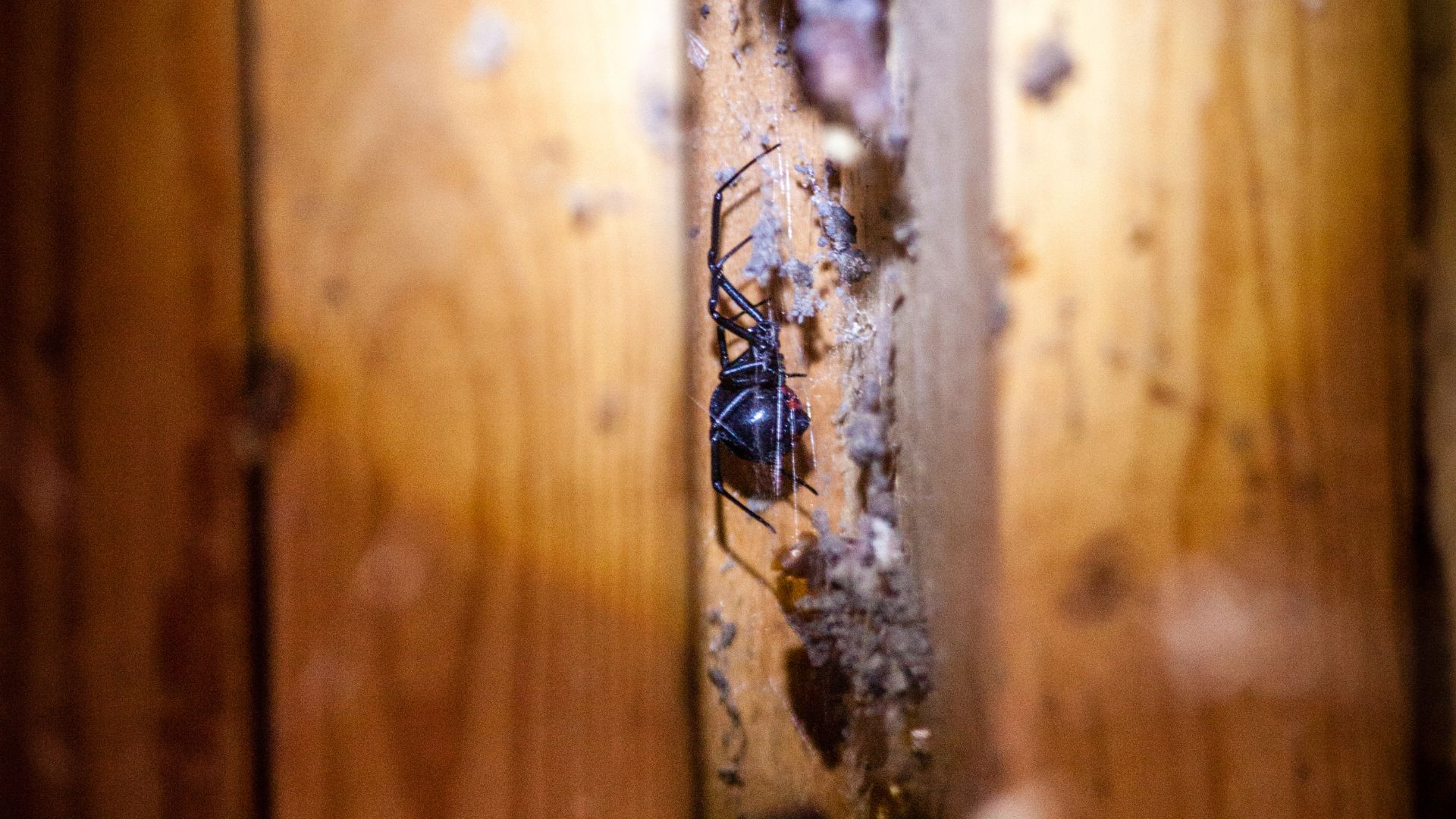
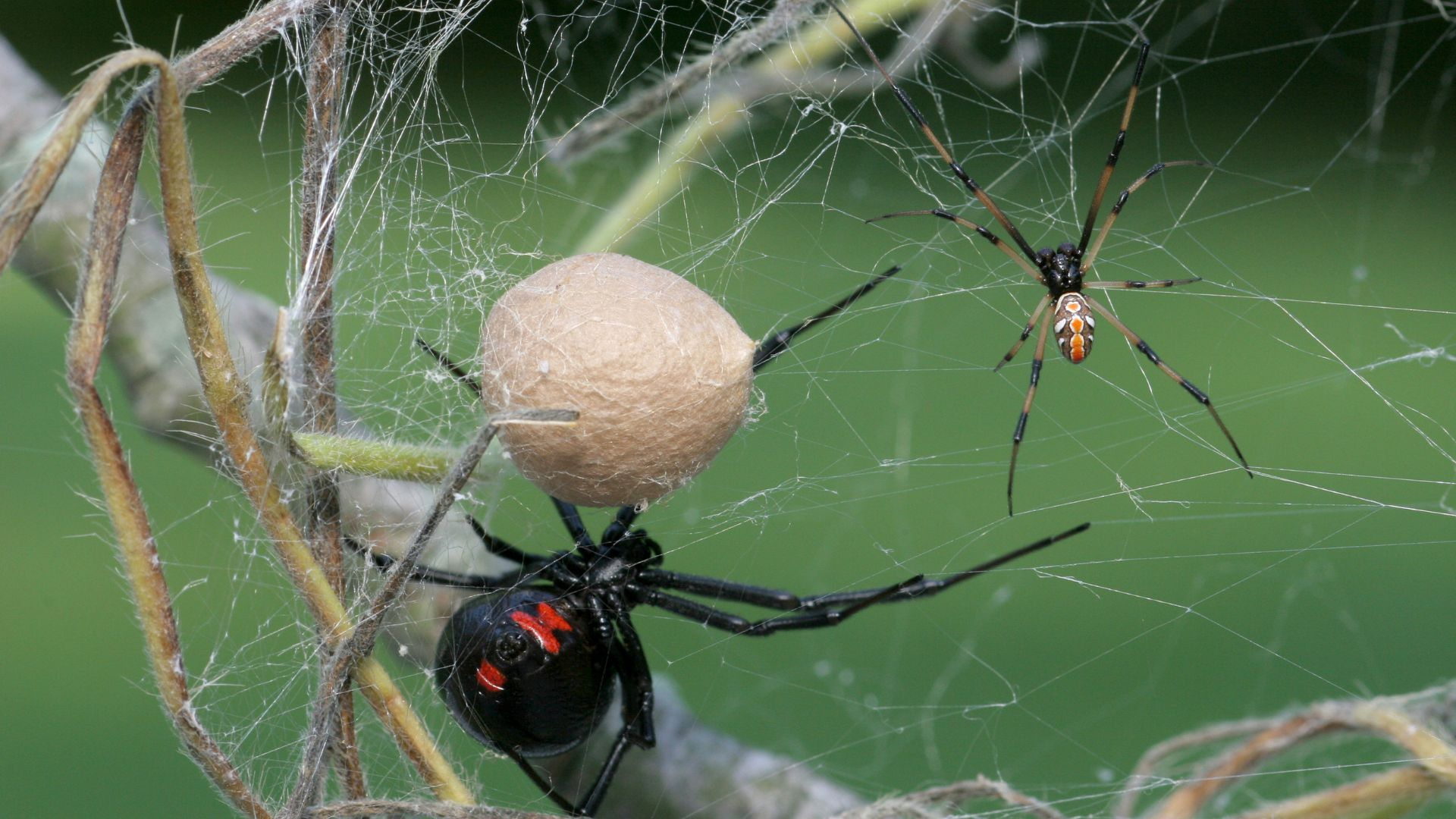
The first step in getting rid of black widows and preventing them from returning is to correctly identify them. Female black widow spiders are the most easily recognized, their shiny black body giving great contrast to their round abdomen's red hourglass marking.
Male Black Widow Spiders
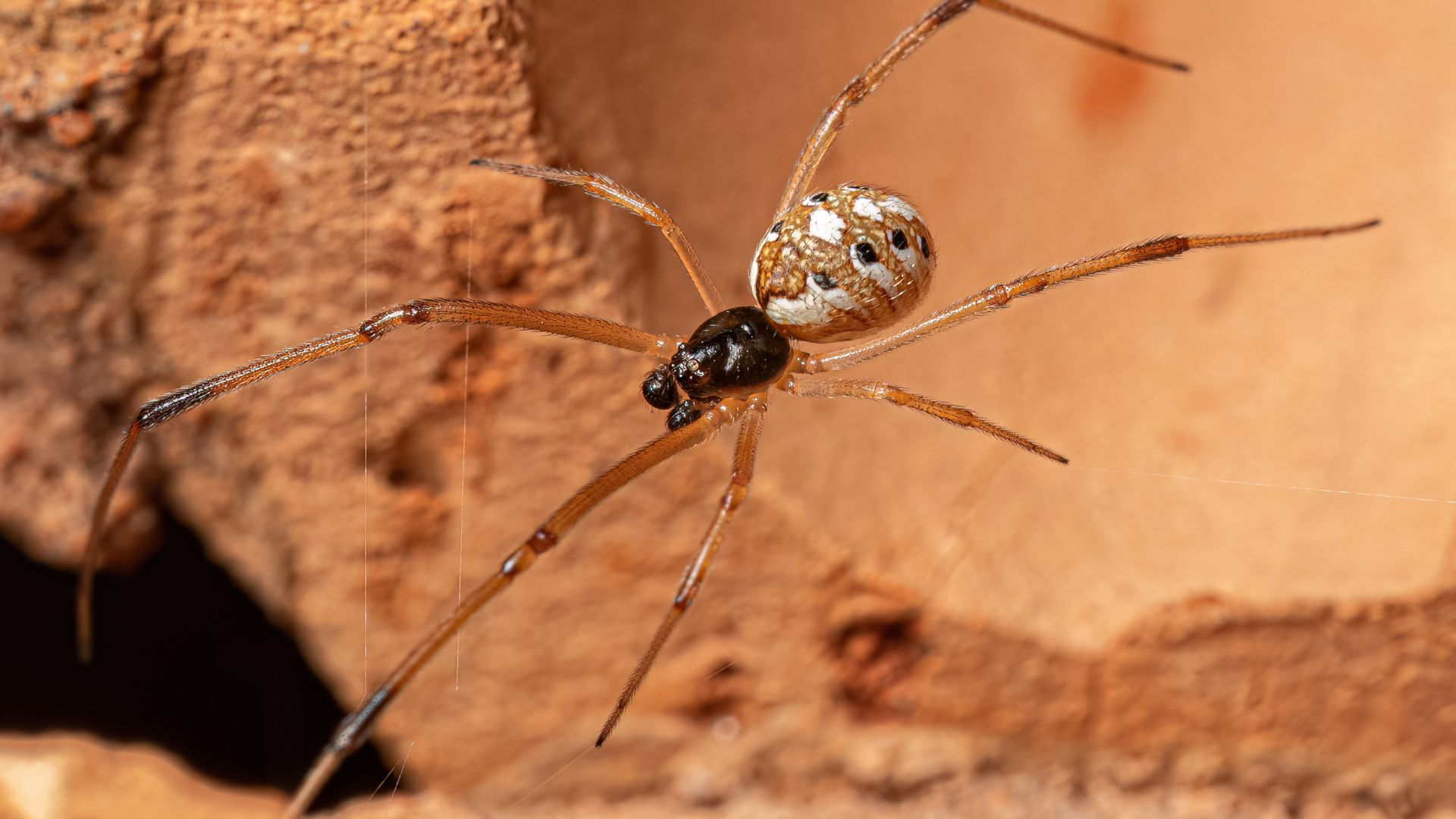
Adult male black widow spiders are harmless, about half the of female black widows's size, and usually have yellow and red bands with spots on their backs.
The male's legs are much longer in proportion to his body than that of the female, with its body being about half the size.
Black Widow Distribution
The black widow spider's range is from Massachusetts to Florida and west to California, Texas, Oklahoma, and Kansas.
Although they can be found in almost every state (and some portions of Canada), this spider is most common in the Southern areas of the United States.
Inspect
Black Widow Spider Habits
Black widow spiders can be found on the underside of window ledges, rocks, plants, and debris, wherever a web can be strung. Cold weather and drought may drive these spiders into crawl spaces, dark corners, and other floor-level areas in buildings.
Black widows can be found under stones, outside boards, along with foundational slabs, behind shrubs, and along siding that touches the ground.
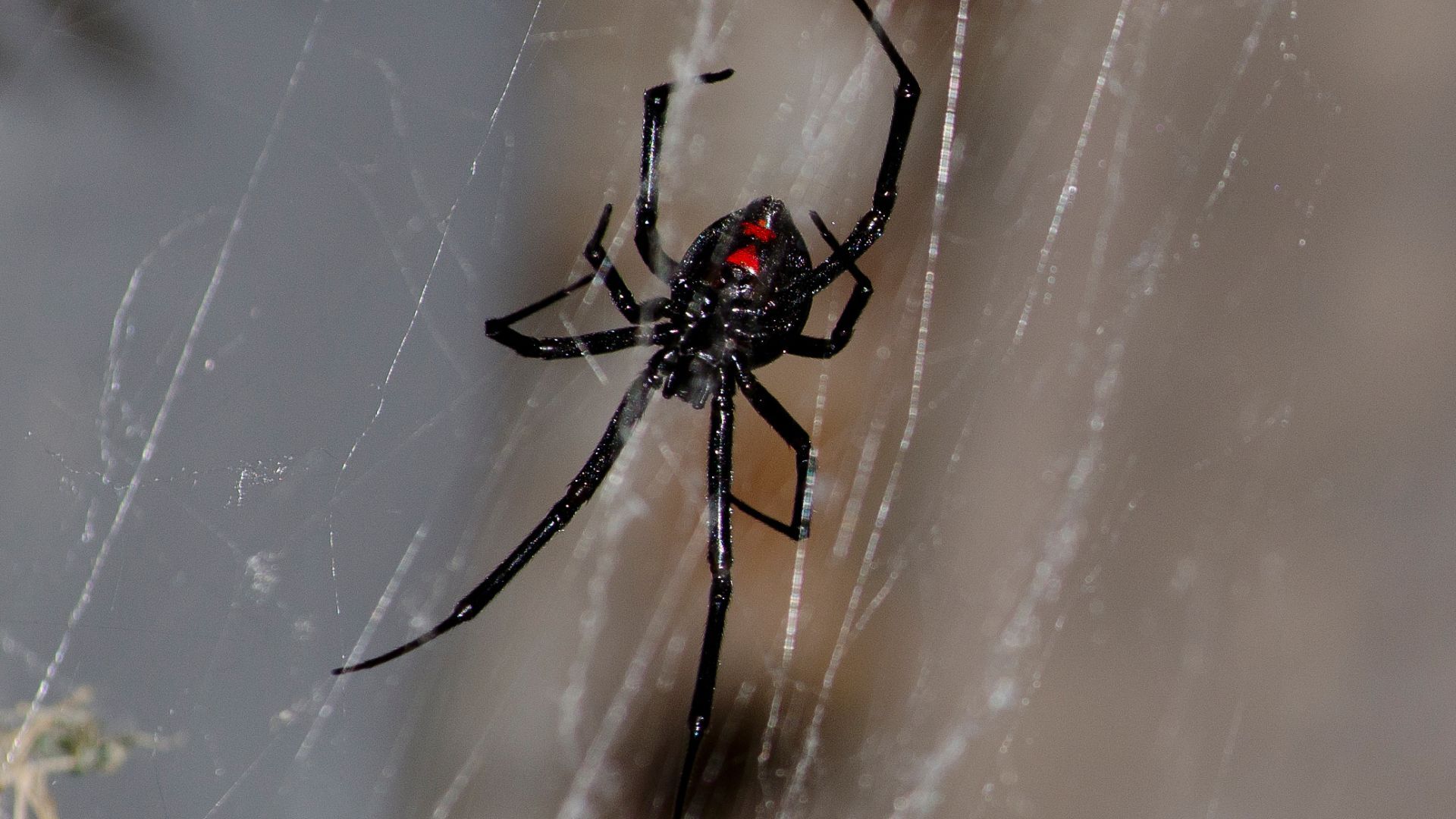
The female black widow spider rarely leaves her web and retreats, waiting for her prey. The web she constructs is an irregular, tangled, criss-cross web of relatively coarse silk.
This same web may be rebuilt or changed on an ongoing basis depending upon her needs, so it pays to get rid of black widow webs when you see them.
The female black widow spider spends most of her daylight hours on the web. She is often found hanging upside down. Female black widows capture their victims with their silk, wrapping it around the prey.
After the covering of the silk, the prey is killed by an injection of venom. The prey might be eaten immediately or reserved for later feeding.
She stays close to her egg mass, defensively biting anything that disturbs her or her egg sac. Egg sacs are oval, brown, papery, and about ½ inch long.
They hold from 25 to 750 or more eggs, which have an incubation period of 20 days. The female black widow stores sperm, producing more egg sacs without mating.
Newly hatched spiders are predominately white or yellowish-white, gradually acquiring more black and varying red and white amounts with each molt.
Growth requires two to three months, with older black widow spider females dying in autumn after egg laying. Some black widow spider females live more than three years so it is crucial to implement a black widow control program.
How to Prevent Black Widow Spiders
Clean Up
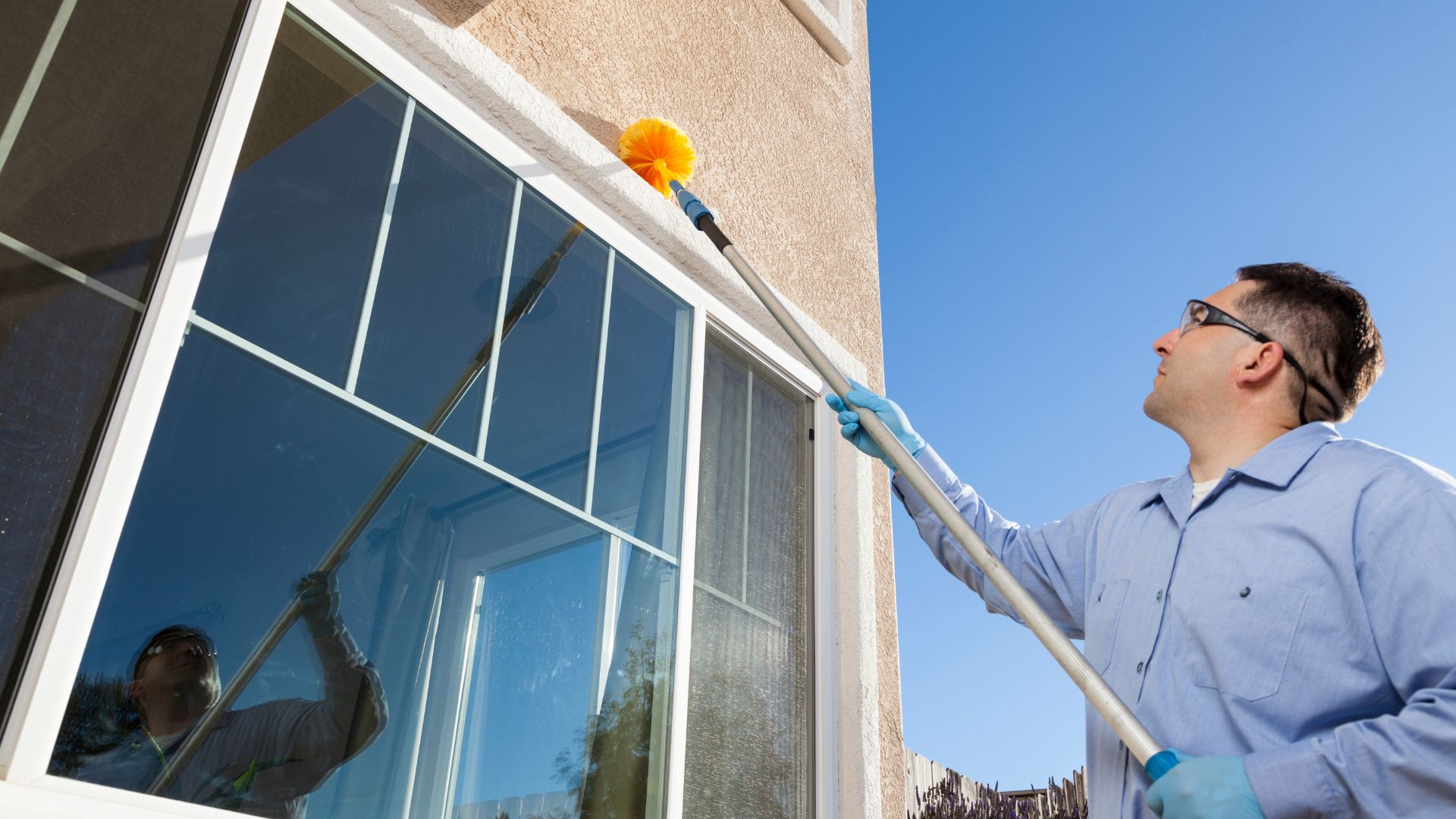
To deter black widows, remove sources of spider webs and infestations, like firewood piles and clutter in the yard. Get rid of spider cobwebs during cleaning. Cobweb duster and Web Out can be used to help eliminate cobwebs.
Getting rid of spider webs will eliminate their ability to gather their food, and prevent them from making your home, theirs.Additionally, preventing insects from congregating around your home may remove the black widow's food supply, leading to them leaving the area.
Residual Insecticides
Spray along entry points with a residual insecticide. You are spraying areas where black widow spiders come inside looking for other insects for food.
These locations include cracks and crevices, doors, windows, washer and dryer connections, crawl spaces, etc. Also, spray in corners and anywhere the black widow spiders may be making webs.
Insecticide Dusts
Typical areas of dusting would be in attics, wall voids, and under your baseboards. D-Fense Dust lasts 6 months or more. You will need a duster for the application.
Black Widow Spider Bites
One of the key reasons to get rid of black widows is to prevent them from biting you or your loved ones. The venom in the black widow bite is toxic to the human nervous system. There are many variables to a person's reaction to a bite from black widows.
The severity of black widow bites may depend on the body weight, the person's general sensitivity, where the venomous bite occurred, the amount of venom that was injected, the bite's depth, etc.
After A Black Widow Bite
-
You may not always feel the black widow spider bite at first. The first sign of a bite is a small local swelling.
-
There may be two small red spots in the center of the swelling. After three hours or so, the site of the bite becomes more painful.
-
Common reactions include an overall ache of the body, in particular the legs. Other symptoms include alternating salivation and dry mouth, paralysis of the diaphragm, profuse sweating, and swollen eyelids.
-
In severe cases, a headache, elevated blood pressure, nausea, and perspiration could occur.
-
The poison injected by the Black Widow Spider bite can cause abdominal pain similar to appendicitis and pain to muscles or the soles of the feet.
-
In most cases, symptoms disappear in two or three days.
-
Calcium gluconate is used intravenously to relieve and relax muscle spasms produced by black widow venom.
-
The victim of a black widow bite should go to the doctor immediately for treatment.
-
Clean the site of the bite well with soap and water.
-
Apply a cool compress over the bite location and keep the affected limb elevated to about heart level.
-
Aspirin or Tylenol may be used to relieve minor symptoms.
-
Treatment in a medical facility may be necessary for children less than five years old or adults with severe symptoms.
-
Take proper precautions, wear gloves, and pay attention to where you are working.
Black Widow Spiders
Top ways to kill Black Spiders & Black Widow Spiders

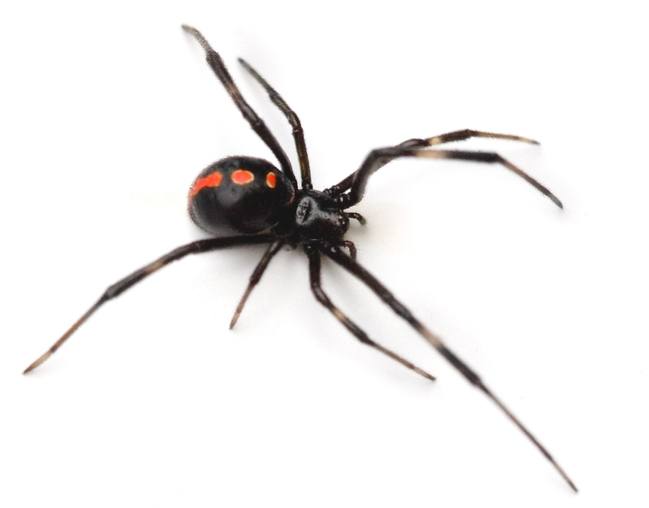
Black Widow Spiders are considered venomous spiders in North America. Black Widow spiders are not usually deadly, especially to adults, because they inject only a small amount of venom. This spider attempts to escape rather than bite. It may bite in defense as it guards eggs or is cornered and pressed. At times, the female eats the male after mating, earning the name "widow."
Black Widow Control Tips
- To control black widow spiders, carefully remove all materials where they might hide.
- Always wear gloves when handling debris or material like firewood.
- Don't garden, handle firewood, pine straw, etc., without gloves.
- Don't go barefoot.
- Eliminate as much clutter as possible in storage areas and frequently dust and vacuum around windows, corners of rooms, and under furniture.
- Trim weeds around the building foundation remove debris to discourage insects and spiders from living next to a structure.
- Seal openings and install screens and door sweep to prevent spiders (and other unwanted pests) from moving indoors.
- Use a vacuum cleaner to remove webs, spiders, and their egg sacs.
Key Takeaway
While Black Widow Spiders are venomous, they are no more difficult to treat than other spiders.
You can protect your family and pets with regular inspections and treatments.
Monitoring with Spider Traps
Trapper LTD Insect Glue Boards will catch spiders and monitor the population. The Monterey Spider Trap will catch spiders and serve as a monitoring tool.
Recommended Products for Black Widow Spider Control
-
Liquid Residual Concentrates: Use Onslaught FastCap, Avesta CS, Demand CS Demand CS, Residential Spider Kit, Cyper WSP, or Onslaught. These are liquid residual concentrates that you mix with water and spray. Spray around the foundation perimeter. Spray about 1-2 feet up the exterior wall and 3-10 feet out from the exterior wall as a liquid barrier. Also, spray around window frames, door frames, soffit areas, vent openings, exhaust areas, garages, basements, mounted lights, air conditioning areas, cable entry points, deck areas, stoop, and patio areas.
-
Dust: Dusting is useful if there are voids such as electric outlets, switch plate covers, or vent areas where spiders are emerging. Using a hand duster like Bellows duster would allow for easier dusting. Cimexa Dust and D-Fense Dust would be the recommended insecticide dust. Using D-Fense Dust dusted in the attic area would be a good measure if there is an infestation in the attic area. Delta Dust may be used in your crawl space; it is moisture-proof. Dustin Mizer makes dusting an attic easier, giving an even dust dispersion.
Aerosols:
-
Zenprox Aerosol - Botanical/Pyrethroid, quick kill and residual with 360-degree valve(for upside-down spraying), dries dry instead of oily.
-
Stryker 54 Contact Spray - This pyrethrin aerosol spray is used for killing black widow spiders on contact and flushing them out of hiding places.
-
Residential Spider Control Kit: We have a kit with Demand CS and PT 221L in one kit called the Residential Spider Kit. Use the Demand CS outside (it may be sprayed inside as well) and the PT221L Aerosol with its crack and crevice tip is used to spray into hiding places where the liquid can not reach.
How to Identify Black Widow Spiders
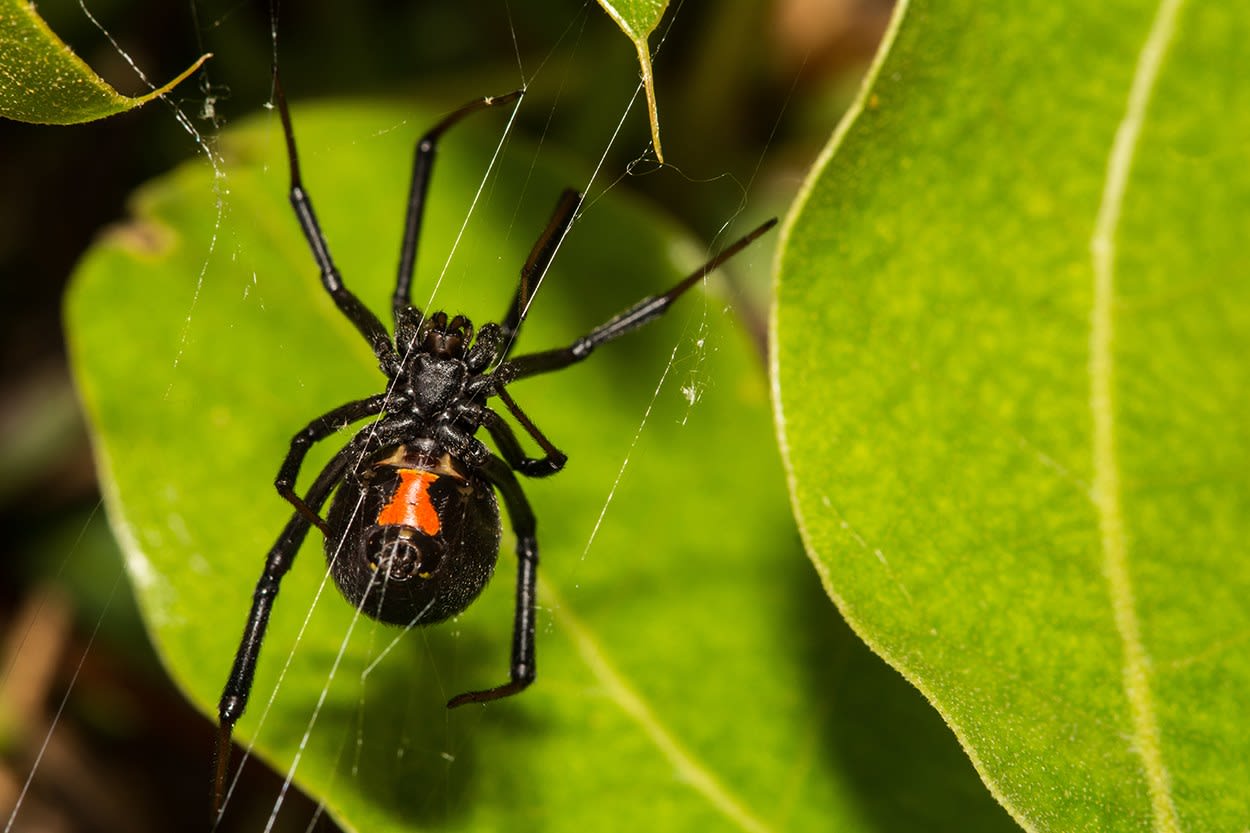
The female black widow spider is the most easily recognized, her shiny black body giving great contrast to her round abdomen's red hourglass marking.
Adult black widow spider males are harmless, about half the female's size, and usually have yellow and red bands with spots on their backs.
The male's legs are much longer in proportion to his body than that of the female, with its body half the size.
Black Widow Spider Habits
Black widow spiders can be found on the underside of ledges, rocks, plants, and debris, wherever a web can be strung. Cold weather and drought may drive these spiders into buildings.
The female black widow spider rarely leaves her web and retreats, waiting for her prey. The web she constructs is an irregular, tangled, criss-cross web of relatively coarse silk. They can be found under stones, outside boards, along with foundational slabs, behind shrubs, and along sliding that touches the ground. This same web may be rebuilt or changed on an ongoing basis depending upon her needs.
This female spider spends most of her daylight hours there. She is often found hanging upside down. The
female captures her victims with her silk, wrapping it around the prey.
After the covering of the silk,
the prey is killed by an injection of venom.The prey might be eaten immediately or reserved for later
feeding.
She stays close to her egg mass, defensively biting anything that disturbs her or her egg sac. Egg sacs are oval, brown, papery, and about ½ inch long. They hold from 25 to 750 or more eggs, which have an incubation period of 20 days.
Newly hatched spiders are predominately white or yellowish-white, gradually acquiring more black and varying red and white amounts with each molt.
Growth requires two to three months, with older black widow spider females dying in autumn after egg laying.
The female black widow stores sperm, producing more egg sacs without mating. Some black widow spider females live more than three years.
Black Widow Spider Bites
The venom in the black widow bite is toxic to the nervous system. There are many variables to a person's reaction to a bite. The severity may depend on the body weight, the person's general sensitivity, where the bite occurred, the amount of venom that was injected, the bite's depth, etc.
- You may not always feel the black widow spider bite at first. The first sign of a bite is a small local swelling
- There may be two small red spots in the center of the swelling. After three hours or so, the site of the bite becomes more painful.
- Common reactions include an overall ache of the body, in particular the legs. Other symptoms include alternating salivation and dry-mouth, paralysis of the diaphragm, profuse sweating, and swollen eyelids. In severe cases, a headache, elevated blood pressure, nausea, and perspiration could occur.
- The poison injected by the Black Widow Spider bite can cause abdominal pain similar to appendicitis and pain to muscles or the soles of the feet.
- In most cases, symptoms disappear in two or three days.
- Calcium gluconate is used intravenously to relieve and relax muscle spasms produced by black widow venom.
- The victim of a black widow bite should go to the doctor immediately for treatment.
- Clean the site of the bite well with soap and water.
- Apply a cool compress over the bite location and keep the affected limb elevated to about heart level.
- Aspirin or Tylenol may be used to relieve minor symptoms.
- Treatment in a medical facility may be necessary for children less than five years old or adults with severe symptoms.
- Take proper precautions, wear gloves, and pay attention to where you are working
Black Widow Distribution
The black widow spider's range is from Massachusetts to Florida and west to California, Texas, Oklahoma, and Kansas.
Although they can be found in almost every state (and some portions of Canada), this spider is most common in the Southern areas of the United States.
Written by our resident pest control expert Ken Martin.