




How to Get Rid of Cluster Flies
Learn to prevent & remove a cluster fly infestation in your house
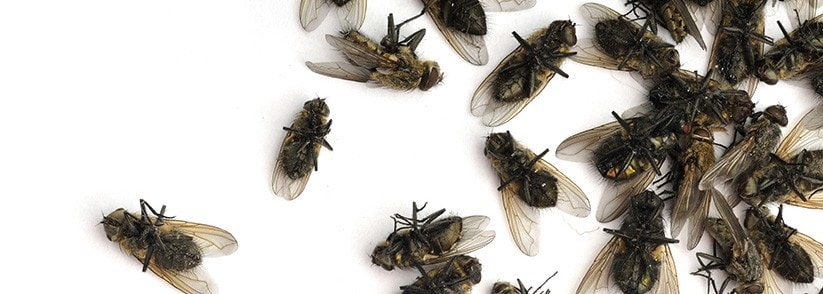
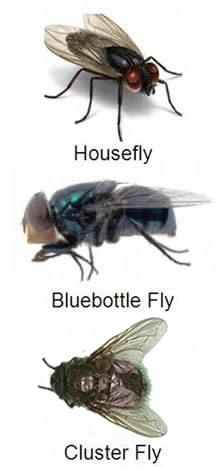
Cluster flies look like House Flies but are slightly larger and more sluggish in their movements. Their name "cluster" fly comes from their habit of forming clusters before hibernating over the winter. They are also called "attic flies," because of their habit of clustering in the attics. They appear on sunny, warm days during late fall, winter, or early spring days.
ClusterFlies are part of the Biting/Nuisance Fly Category
Cluster Fly Control and Prevention
Prevention is the best measure to keep away Cluster Flies. Fall months are the times to use residual insecticide sprays before they enter the building and over-winter. Once these flies are inside, they hide in the walls or under insulation.
Cluster flies enter wall voids and attics of structures, seeking shelter from the cooling temperatures. Spray the building's outside walls where cluster flies are likely to land and rest before entering the building. If the temperature rises, they become active and will enter your home's interior to leave the structure entirely.
- Spray recommended residual insecticides, such as Cyzmic CS or Demon WP.
-
Apply residual insecticides outdoors to window frames, door frames, soffits, eaves, and any other areas that are vulnerable to entry during this time. Pay particular attention to the south and southwest walls.
-
Seal as many cracks, holes, and voids with caulk on the outside walls as possible, paying attention to the south and southwest walls. These will reduce the number of cluster flies attempting to enter the structure during the fall months.
-
Seal cracks around lights and switches, electrical outlet boxes, and around baseboard and window moldings inside will help trap these flies within the walls.
- Application of the surrounding soil of the structures with Avesta CS may also help minimize Cluster Fly populations and later entry.
Active Infestations
Cluster fly problems can be partially prevented, but after the fall, little can be done. All of those currently found within the home had infiltrated walls months ago. A "mini-vac" is the best control of the individual flies that are currently present. If this is not successful, an aerosol contact pyrethrin aerosol can be used as a space spray to get some immediate relief. Recommended pyrethrin aerosols are CB-80 or PT 565 contact aerosols.
FAQ: It is wintertime, but we have had some warm days recently. When should I spray if I see them after the fall time? Is it still too late? When should I seal up the area? There are still many flies inside?
Answer: If you seal them up at this point, the cluster flies probably won't know how to get out. The time to seal up is in early fall before they start to get inside. Wait a couple of months to seal but spray now (for the ones that have come out already).
Key Takeaway
To prevent cluster flies from entering your home in the fall, treat the outside perimeter with a good all-purpose concentrate. Pay particular attention to the south and west exposure of the house.
Residual Insecticide Concentrates
- Avesta CS is a long-term residual and does not break down easily outside on wall surfaces.
- It is odorless and does not leave a stain or visible residue.
- Avesta CS can be used as a perimeter treatment.
- Demon WP with Cypermethrin is an orderless product, but will leave a visible residue seen against dark surfaces.
Insecticide Dusts
You can also use a dust D-Fense dust. Dust this into all cracks and crevices. The dust will flow into the void areas. Pay attention to the west and south walls and caulk any openings.
Pyrethrin Insecticide Aerosols
Use aerosols with pyrethrins such as: CB-80 or PT 565, These are pyrethrum contact aerosols that can be used as space sprays to kill on contact. Spray lightly and repeat spray as needed.
Cluster Fly Control Product Recommendations
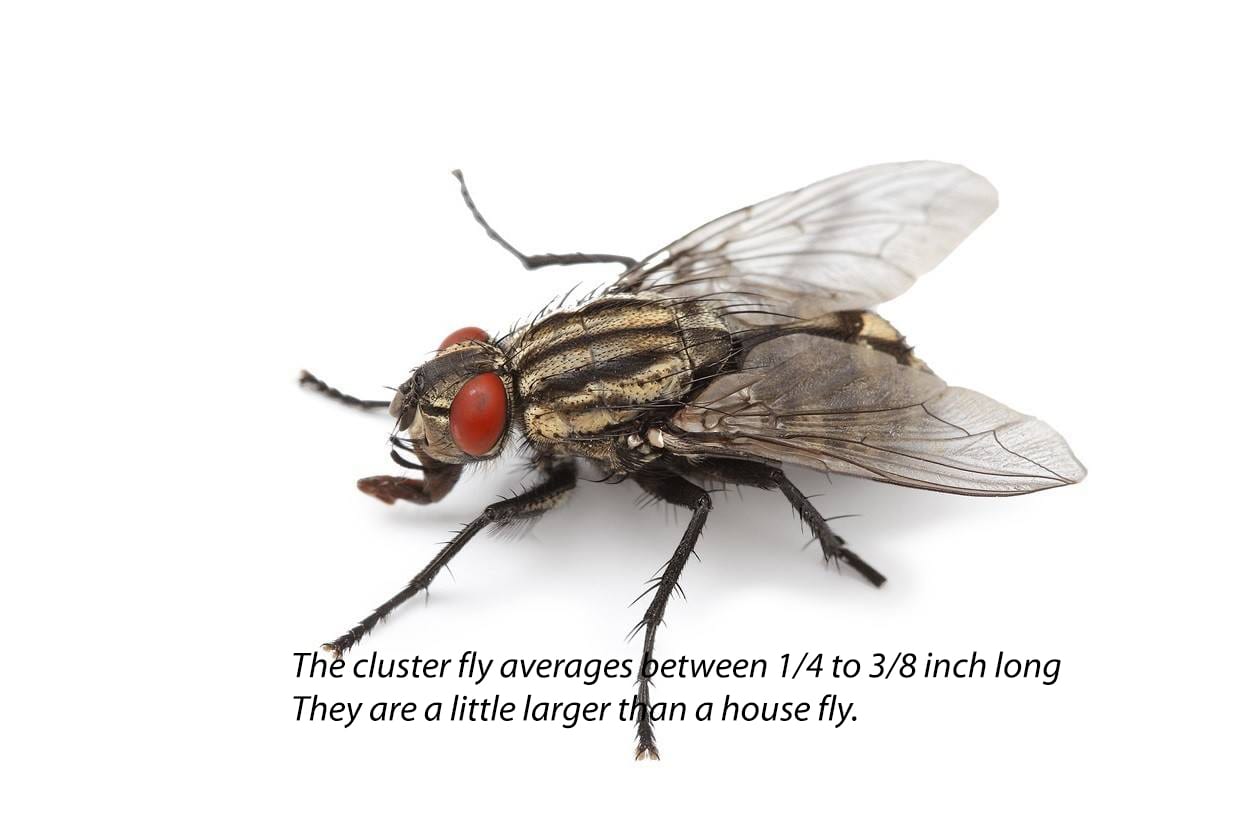
The cluster fly averages between 1/4 to 3/8 inch long.
ColorThey are dark gray, never metallic blue or green. Cluster flies closely resemble house flies, but they are usually larger and have a yellowish-golden sheen on the thorax. They have yellow hairs under their wings.
Distinguishing Characteristics- They have overlapping wings at the tips when they are at rest. When crushed, they give off an odor like buckwheat honey.
- They are more sluggish in movement than house flies. They move slowly.
- Cluster flies gather in a cluster or large numbers, particularly around windows.
Cluster Fly Inspection
Check around windows for live or dead flies. If you can find the voids in which they are over-wintering, you can treat the voids with dust or aerosol, but that is not an easy task. In most cases, the voids can't be located.
To locate the voids, start with an inspection of cracks and crevices on the southern and western exterior walls. Usually, the only accessible openings are the attics, crawlspaces, and false ceilings.
Identifying and Inspect Cluster Flies (Pollenia rudis)
Biology and Habits of Cluster Flies
The cluster fly is a parasite of earthworms and breeds outdoors in lawns and fields during the spring and summer. You can find cluster flies almost everywhere in the United States and Canada, except for the Southern states bordering the Gulf of Mexico. They do not cause a health concern because they do not lay their eggs in human food.
Female Cluster Flies lay their eggs in cracks in the soil, which hatch in three days. The larvae use earthworms as a food source. The larvae feed for about 22 days. After that, they go into the pupae stage, which lasts 11-14 days before emerging as adults. Adult flies feed on flowers. There are about four generations hatched per summer.
The larvae feed on earthworms and the adults feed on flowers.
When fall approaches, the cluster flies begin to enter structures in large numbers in clusters. Cluster flies mark homes that they hibernate with pheromones. Problems with cluster flies start in late August as they move to winter quarters to over-winter. They seek shelter to avoid the cooler temperatures. The cluster fly seeks warm sites with protective cracks for shelter, crawling back as far as they can get.
It is important to consider treatment before this happens. Spray with the recommended insecticides late summer or early fall.
Cluster flies have been known to squeeze around the edges of windows that are weather-proofed. As the number of cluster flies attracted to the building increases, large clusters of flies huddle inside wall voids, attics, and false ceilings. Most infestations occur in the upper regions of buildings, such as the attics of homes. In multi-story buildings, the cluster flies can be found in the upper two or three floors and almost always on the buildings' south and west sides.
Suppose you have unseasonably warm weather in the late fall or winter. In that case, the cluster fly may emerge, thinking it is spring, going for the warmer air outside. Cluster flies fly very slowly when they wake up. They are strongly attracted to light, so they are usually found around windows. At night, they are attracted to lamps.
Written by our resident pest control expert Ken Martin.