



How to Get Rid of Fire Ants
March 27, 2024
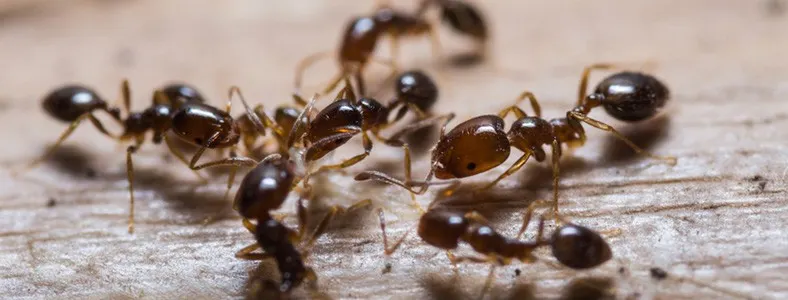
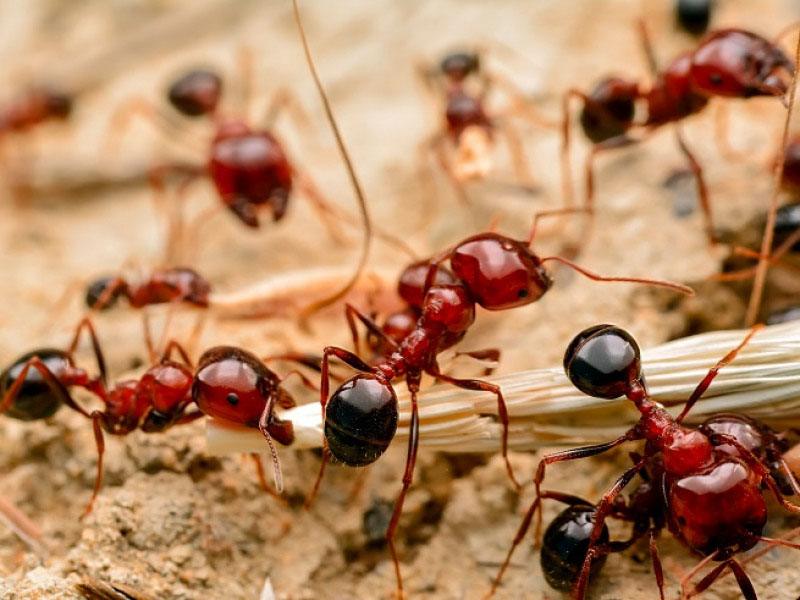
Both native and Red Imported Fire Ants (RIFA) can sting. Red Imported Fire Ants are very aggressive. When fire ants sting humans, they can cause irritation, nausea, and even more severe reactions.
Red Fire Ants also attack animals that intrude on their nests. Besides attacking people and animals, they can also damage plants, buildings, air-conditioning units, and telephone wires. The reason is not apparent, but fire ants seem to be attracted to electrical currents. They cause damage by nesting in places such as electrical junction boxes.
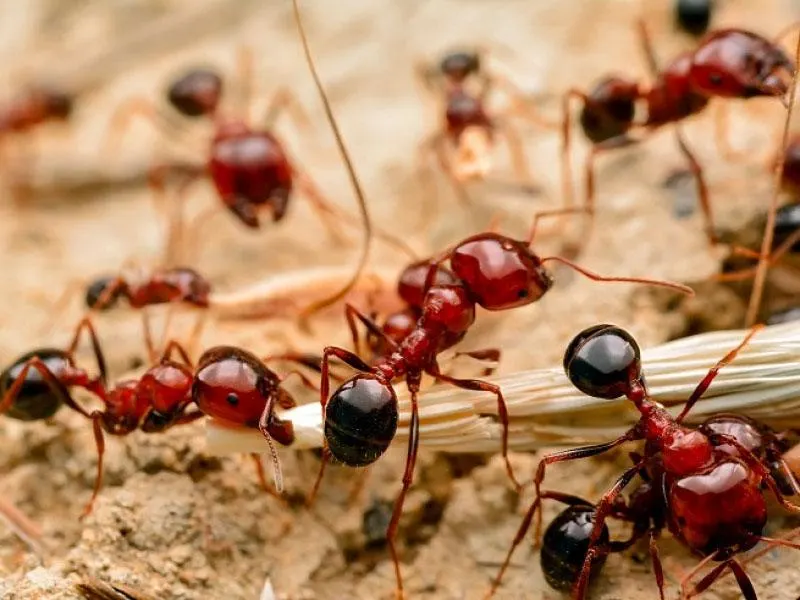
Get Rid of Fire Ants with Effective Control Products
There are two types of fire ant treatment plans.
-
Preferred way: Use a fire ant bait that is broadcast over the mound and yard.
-
Second way: Use an insecticide to drench each mound individually.
1. Broadcast Fire Ant Bait
The broadcasting method is the first step to getting rid of fire ants. Broadcast a fire ant bait over the entire area. We recommend treating a couple of times a year during the warm months. This method will solve 80-90 percent of your fire ant infestation. If there are still troublesome mounds, treat the individual mounds.
How To Apply Fire Ant Baits
-
Apply Ant baits on a fairly sunny day when there is a fair amount of activity around the mound so that the Ants can begin to forage for the bait.
-
Do not put out the bait on extremely hot and rainy days; there is not as much activity to begin to source the bait.
-
You can use Ant Bait Insect Plates to put the granular Ant bait inside to keep it dry and make it difficult for children and pets to disturb.
-
1.5 - 5 lbs. per acre, mounds: 4 level tablespoons around the mound. Do not apply immediately before or after irrigation or rain. It comes in 2lb and 25 lb packages.
2. Treat Individual Mounds with Insecticides
Treating the mounds individually without doing a broadcast treatment for the whole yard first may be an uphill battle.
You can use the drench method of a liquid insecticide poured into the mound; make sure that the whole mound is treated with the ant killer. Pour enough volume of the liquid insecticide into the mound to kill the queens and get rid of the fire ant colony.
The most effective way is to use a rod to form vertical tunnels in the mound to facilitate the liquid mixture reaching the queens.
Use Fire Ant Baits around each mound (not on top of the mound) to get rid of fire ants effectively.
Key Takeaway
Broadcast applications consistently perform better than individual mound treatments for fire ant control, especially when done in spring and early summer.
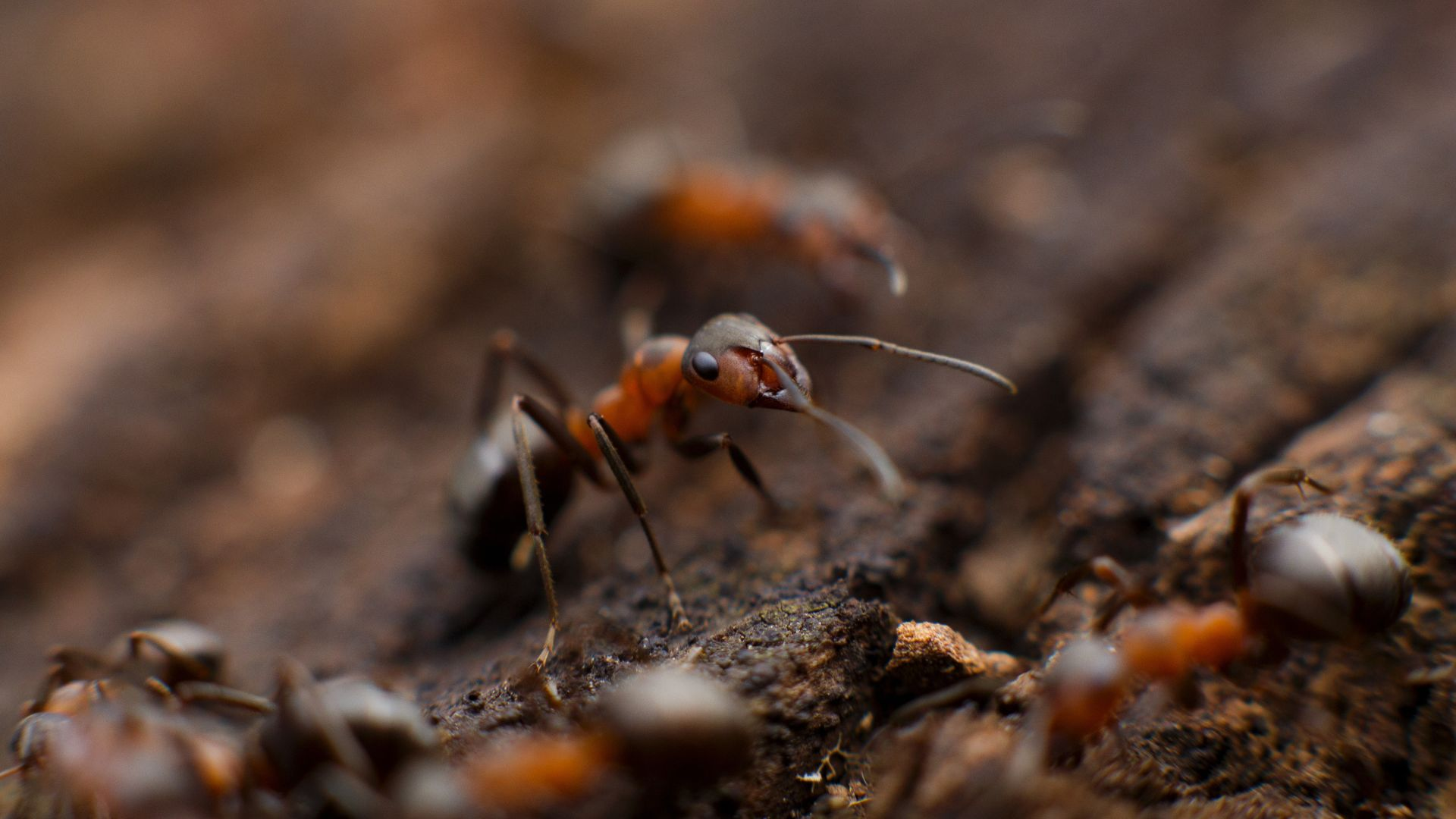
Best Fire Ant Killers
1. Extinguish Plus Fire Ant Killer - DIY Pest Control Top Recommendation
Extinguish Plus comes in three sizes: 1 lb, 4.5 lb, and 25 lb containers. Extinguish Plus Fire Ant Bait has two active ingredients for its killing power. It has an Insect Growth Regulator (IGR), preventing all new Ant generations. The other active ingredient kills the existing colony.
The Extinguish Plus Bait is a slower-acting bait than the Advion Fire Ant Bait, but very effective.
Since Extinguish Plus Fire Ant Bait is a slower-acting bait, it is recommended that you use it with Martin's Surrender Acephate-Fire Insecticide to kill the mounds as they arise, waiting for Extinquish's IGR to complete its action. We have two kits with this combination at discounted pricing called the Texas 2 Step Fire Ant Kits, small and large.
A fast-acting bait, killing the entire colony quickly. However, it does not have an IGR to prevent new Ant generations; you will need to repeat treatment with this bait to get rid of fire ants effectively.
Contains the active ingredient Fipronil. Workers take it back to the fire ant queens to feed. Does not include an IGR to stop newer generations, but it will kill the existing colony.
A one-pound container of Surrender Fire Ant Killer can treat up to 108 Fire Ant mounds. Surrender Fire Ant Killer is an agricultural Fire Ant insecticide.
Identifying The Red Imported Fire Ant
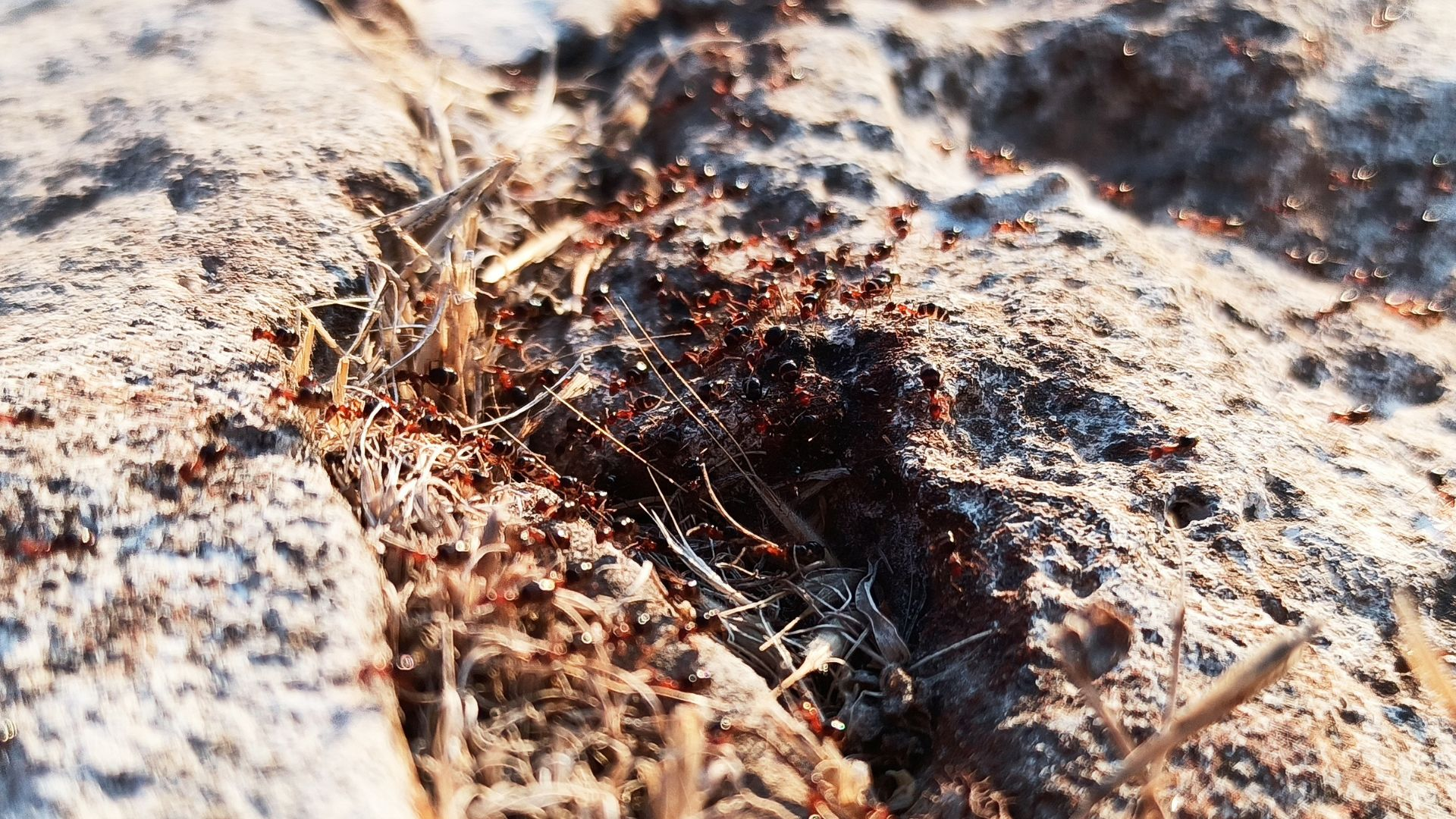
In areas where fire ants are commonly found, most people identify this pest by the mound's appearance.
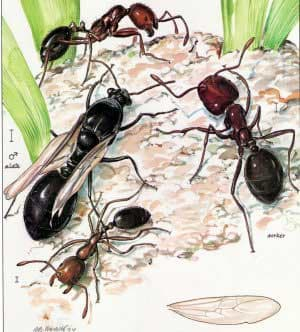
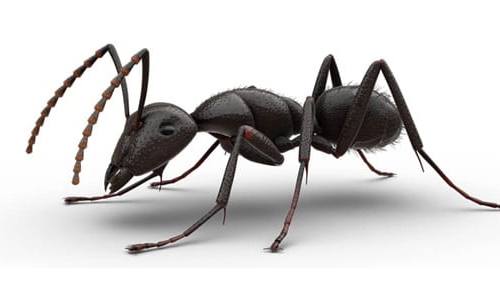
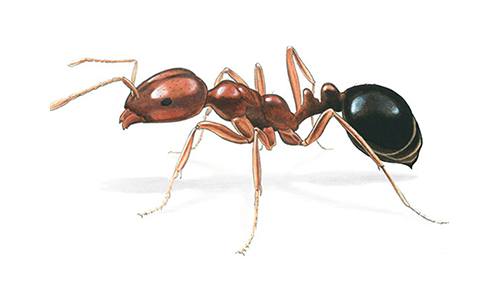
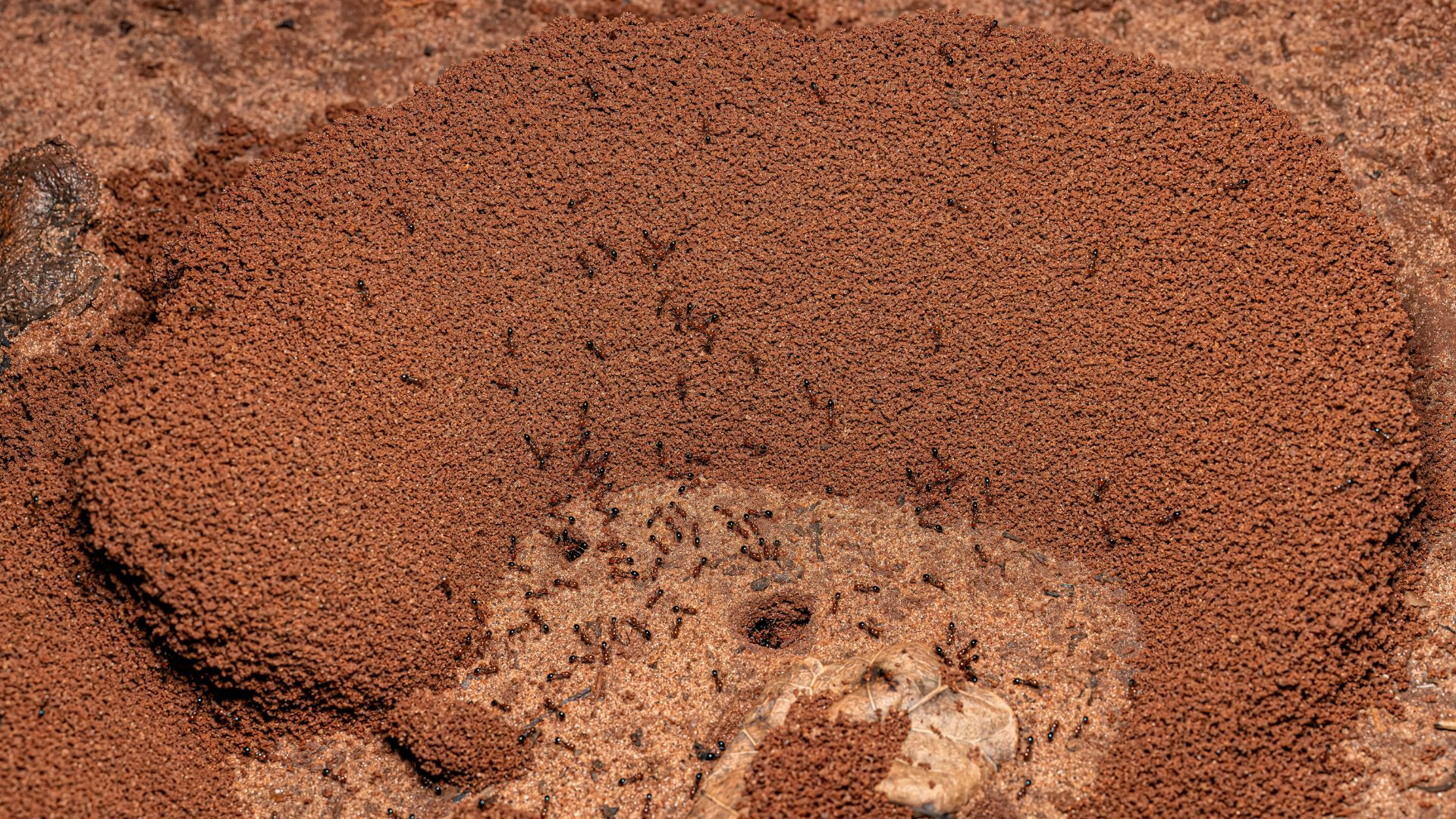
Fire ants build mounds in almost any soil type but prefer open sunny areas such as pastures, parks, lawns, and fields. Their mounds can grow 18 to 24 inches in height if the soil conditions are right. The ants themselves are reddish-brown and roughly 1/8 to 1/4 inch in length.
Often red imported fire ant mounds are located in rotting logs and around stumps and trees. Colonies can also occur in or under buildings.
There are several other ant species found throughout the United States, some of them indigenous (native ant species). The Red Imported Fire Ant (Solenopsis invicta) is considered the worst of all ant species. Its rapid reproduction ability, aggressive swarming behavior, and painful fire ant stings have made the Red Imported Fire Ant one of the most detested insects.
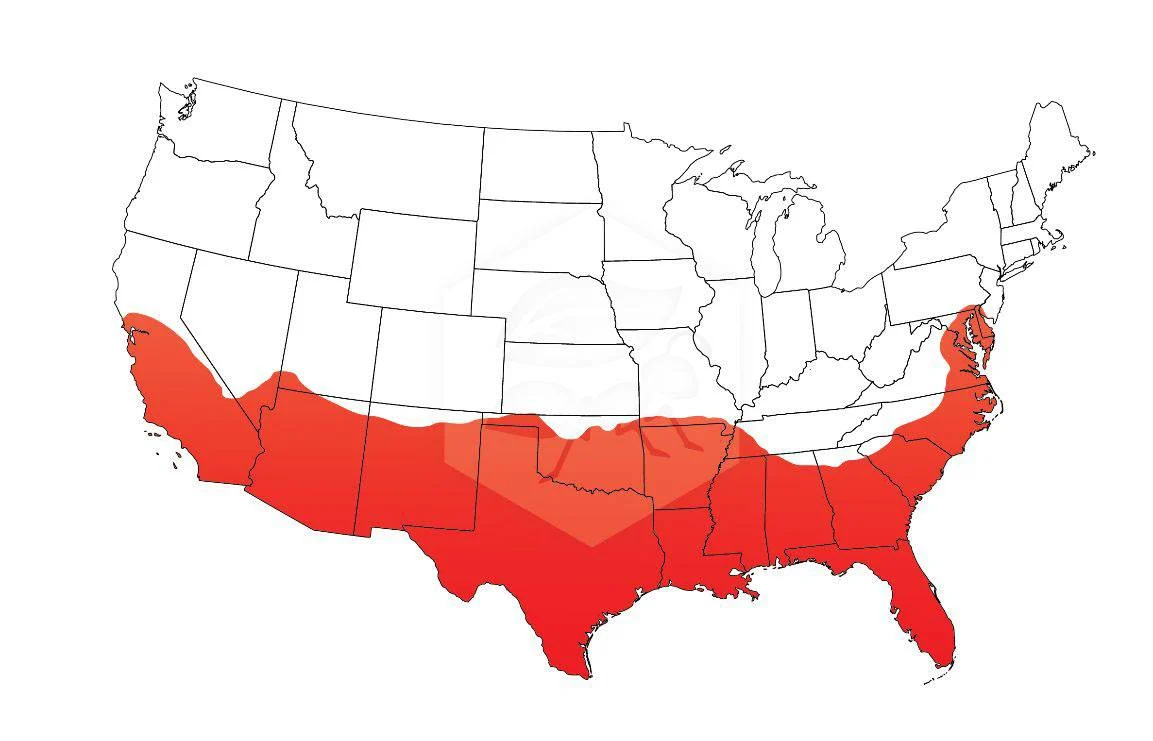
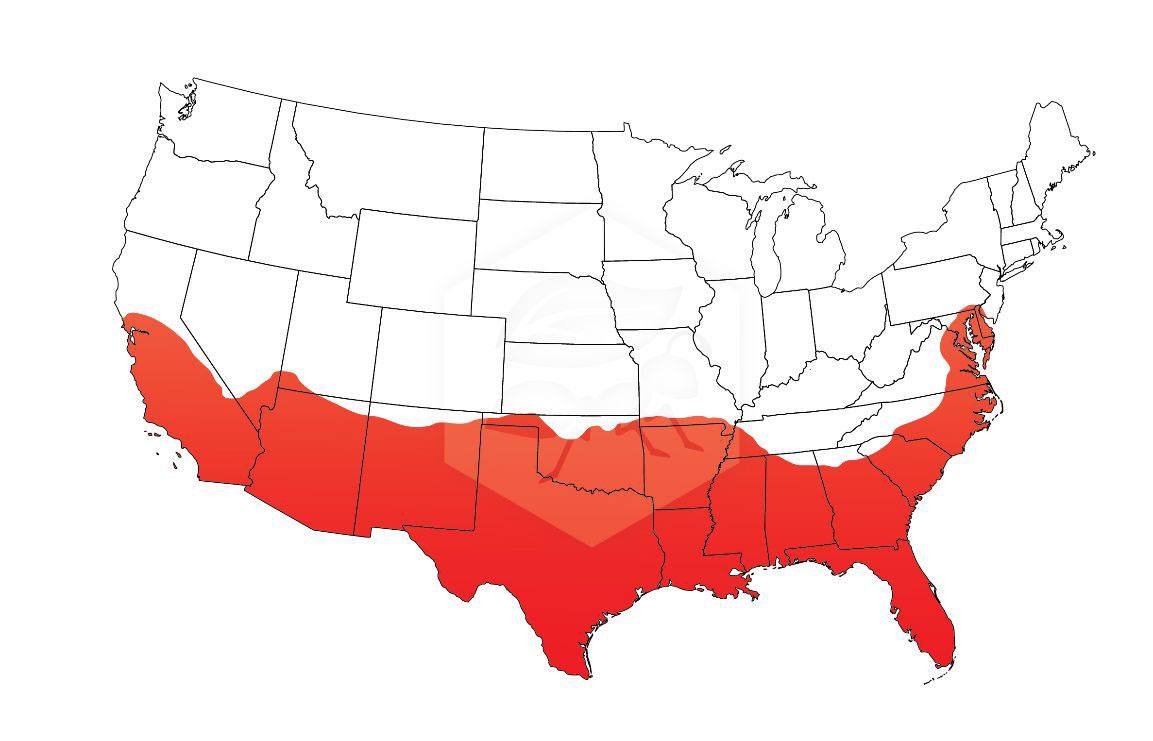
The Ant was accidentally introduced into the southeastern United States during the 1930s through the port of Mobile, Alabama. Now, Red Imported Fire Ants are found in at least 15 states. As fire ant populations expand, it's important to be aware of their presence and how to spot them.
It helps to identify and understand the ant species you are dealing with before trying to get rid of them.
Fire Ant Identification Tips:
-
Mounds of loose soil, resembling gopher diggings, are found above ground.
-
Red Imported Fire Ant mounds are generally numerous and easily seen.
-
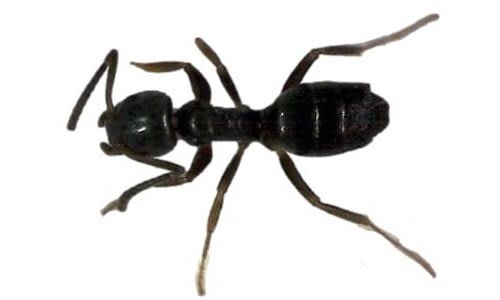
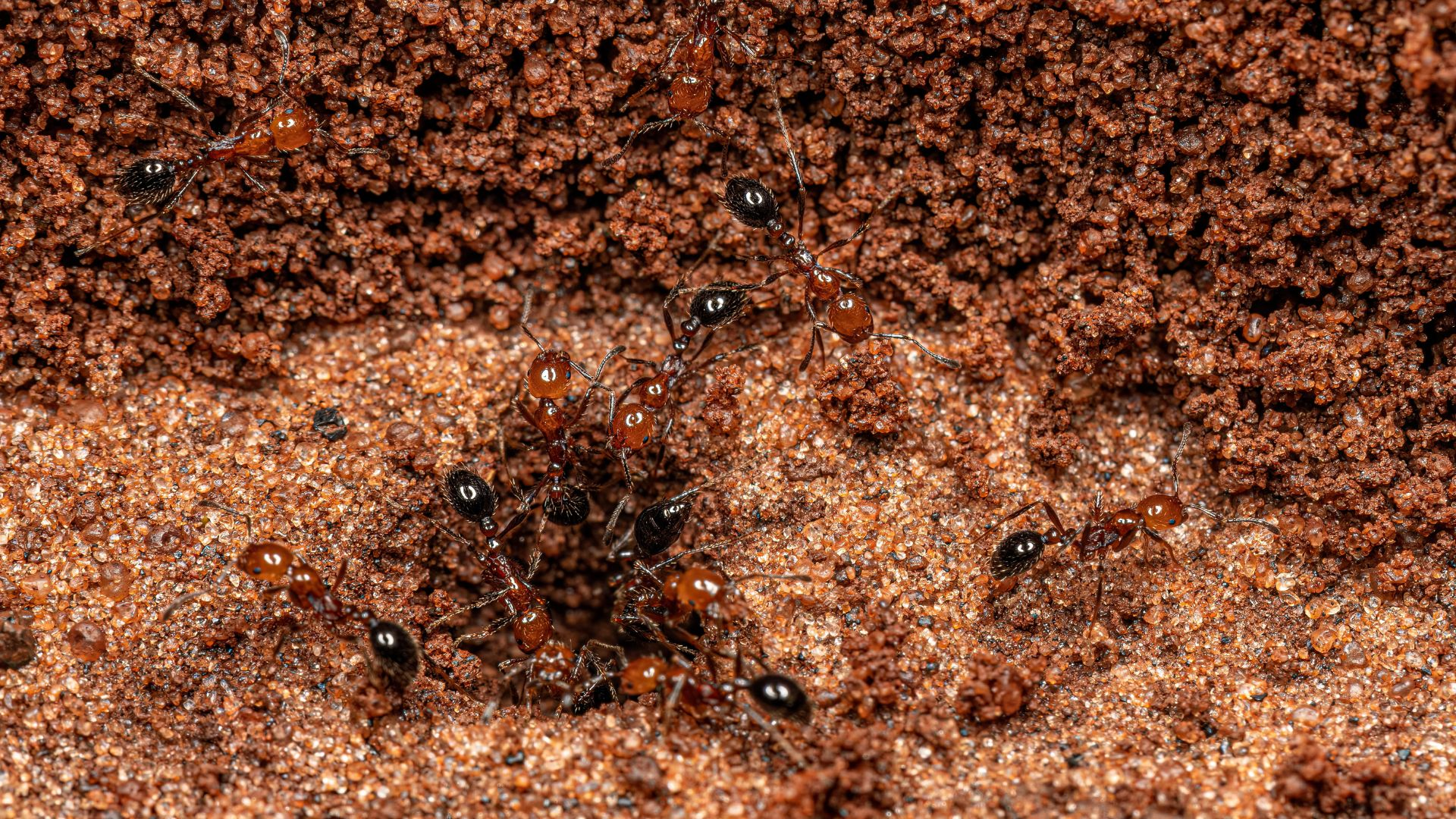
Worker Fire Ants are dark, small, highly variable in size, aggressive, and sting relentlessly.
-
Workers of all sizes have the same body proportions: head width never exceeds the abdomen width, even in the largest workers.
Fire Ant Reproduction
Total time from egg to adult Red Imported Fire Ant averages 30 days. Workers live up to 180 days, and queens live two to six years.
Red Fire Ant Diet
Red Imported Fire Ants will not only forage for food (such as small insects, dead animals, and sweet materials such as plant secretions). They will also kill insects and small animals to feed.
The Southern Fire Ant is attracted to various foods, including protein, grease, and sweet foods.
Inspecting for Fire Ants
So, you want to get rid of fire ants but need help figuring out where to start? It pays to know where these pests are living to kill them efficiently.
Most of the time, the Red Imported Fire Ant will be found near mounds in yards, parks, cemeteries, athletic fields, and other outside locations. If mounds are disturbed, they begin to swarm out of the ground aggressively and sting animals or people.
Sometimes the Red Imported Fire Ant will nest inside buildings during winter under bathtubs (when on a slab) or next to hot water heaters. The Southern Fire Ant usually nests in loose soil but can be found in woodwork or masonry. They are known to nest inside utility boxes or void spaces if weather conditions are very dry or too high temperatures.
Their nests outside may be seen as large crevices that spread 2-4 feet in the ground. Southern Fire Ant nests can also be found under houses, under boards or stones, or in cracks in the concrete.
Colonies frequently migrate from one site to another. The Red Imported Fire Ant queen only needs a few workers to start a new colony. They can develop a new mound several hundred feet away from their previous location in hours.
Flooding causes colonies to leave their mounds and float until they can reach land to establish a new mound.
Fire Ant Colonies
Workers in single-queen colonies are territorial, foraging only within their territory. Workers from multiple-queen fire ant colonies are not territorial; they freely move from one mound to another, which has resulted in a dramatic increase in the number of mounds per acre.
Areas infested with single queen colonies contain 40-150 mounds per acre (rarely more than 7 million ants per acre). There may be 200 or more mounds and 40 million Red Imported Fire Ants per acre in areas with multiple-queen colonies.
Fire Ant Mounds
Like most Ant mounds, the Red Imported Fire Ant mound has no opening in the center. Red Imported Fire Ants enter and exit the mound through underground tunnels. When their mounds are disturbed, the workers will come out of the ground and aggressively sting the intruder.
Mounds containing colonies can reach 18 inches in height, depending on the soil type. Many times mounds are located in rotting logs and around stumps and trees.

The Red Imported Fire Ant can have huge colonies with 300-500,000 workers foraging at distances of 100 yards. Fire ant activity ranges from the spring into the fall months. During the spring and summer months, the active mounds send out winged swarmer ants whose sole job is to start new colonies. Ideally, you want to get rid of fire ant mounds before this happens. Otherwise, you will have more ants to deal with.
The Southern Fire Ant usually nests in loose soil, but they can be found in woodwork or masonry. They are known to nest inside utility boxes or void spaces if weather conditions are very dry or too high. Their nests outside may be seen as large crevices in the ground that spread from 2-4 feet.
How to Prevent Fire Ants
Two methods of prevention work well. The first, and our favorite for places with high fire ant concentrations, is to broadcast fire ant bait. Two of the most effective baits for getting rid of fire ants are Advion Fire Ant Bait and Extinguish Plus Fire Ant Bait.
These fire ant baits should be broadcast in early spring before the ants begin to form new colonies. It would help if you also broadcast bait again in the fall. The bait kills the queen once the worker ants gather it and bring it to her as food. Any mounds that survive should be treated individually by sprinkling the same bait around each mound base as they are noticed.
DIY Natural Fire Ant Control Strategies
Looking for a natural alternative for fire ant control? Here are the most effective non-toxic, natural solutions:
Boiling Water
Boiling water is a remarkably simple yet effective method for controlling fire ant infestations. Its greatness lies in its accessibility, affordability, and immediate impact. Almost everyone has access to water and a means to heat it, making this method universally applicable without the need for special equipment or hazardous chemicals. This eco-friendly approach aligns with sustainable practices by avoiding the introduction of toxins into the environment, ensuring the safety of children, pets, and wildlife.
When poured directly onto the fire ant mound, boiling water penetrates the tunnels, reaching the queen and other ants deep within the colony. The high temperature swiftly kills the ants on contact, offering a quick reduction in the ant population. Although it may not always reach every ant, leading to potential survival of some colony members, its effectiveness in significantly reducing or even eliminating a mound is undeniable. This method stands out for its simplicity, environmental safety, and the satisfaction of seeing immediate results, making it an excellent first line of defense in fire ant control.
Diatomaceous Earth
Diatomaceous earth (DE) is a natural, non-toxic powder made from the fossilized remains of diatoms, a type of algae. Its greatness as a pest control method, particularly against fire ants, stems from its mechanical action—DE works by absorbing the oils and fats from the exoskeleton of insects, leading to dehydration and death. This method of action means that insects cannot develop resistance to it, making DE an enduringly effective tool in the pest control arsenal.
What sets diatomaceous earth apart is its safety profile. It's safe for use around children and pets when food-grade DE is chosen. It is an excellent option for environmentally conscious households looking to manage fire ant infestations without resorting to harsh chemicals. Additionally, DE is versatile and can be used in dry and wet applications, offering protection in various environments. Its effectiveness, safety, and ease of use solidifies its status as a great choice for sustainable, effective fire ant control.
Beneficial Nematodes
Beneficial nematodes are microscopic, soil-dwelling organisms that prey on various garden pests, including the larvae of fire ants. Their greatness lies in their ability to specifically target and eliminate pest populations without harming beneficial insects, pets, or humans. This specificity makes them an invaluable tool in the integrated pest management toolkit, offering a biological control method that aligns with eco-friendly and organic gardening principles.
Once applied to the soil, they seek out and enter their hosts, releasing bacteria that quickly kills the pest from within. This process is highly effective and fast-acting, reducing pest populations without the need for chemical pesticides. Additionally, nematodes are easy to apply, typically mixed with water and sprayed onto affected areas, making them accessible to professional landscapers and home gardeners alike. Their efficiency, safety, and ease of use underscore their greatness as a natural solution to fire ant infestations.
Get Rid of Fire Ants with DIY Pest Control
Discover the ultimate arsenal in your fight against fire ants with our curated selection of top-rated fire ant control products. Whether you're looking for immediate results or long-term prevention, our range has you covered. From powerful insecticides to eco-friendly alternatives, each product is carefully chosen for its effectiveness and ease of use. Don't let fire ants take over your yard and peace of mind. Explore our collection now and arm yourself with the best tools to reclaim your outdoor spaces. Experience the difference quality makes. Start your journey to a fire ant-free home today!
Shop Fire Ant Control ProductsHow to Get Rid of Fire Ants & Red Fire Ants
If you have active fire ant infestations, follow these guidelines to treat fire ants

Fire Ants
Both native and Red Imported Fire Ants can sting. Red Imported Fire Ants are very aggressive. Their sting can cause reactions ranging from irritation and nausea to even more severe reactions.
Red Fire Ants also attack animals that intrude on their nests. Besides attacking people and animals, they can also damage plants, buildings, air-conditioning units, and telephone wires. The reason is unknown, but fire ants seem attracted to electrical currents. They cause damage by nesting in places such as electrical junction boxes. There are two kinds of Red Imported Fire Ants; the single-queen and multiple-queen types.
Get Rid Of Fire Ants with Fire Ant Control Products
There are two ways to get rid of fire ants for fire ant treatment plans.
- Preferred way:Use a fire ant bait that is broadcast over the mound and yard.
- Second way: Use an insecticide to drench each mound individually.
1. Broadcast Fire Ant Bait
The broadcasting method is the first step. Broadcast a fire ant bait over the entire area. We recommend treating a couple of times a year during the warm months. This method will solve 80-90 percent of your fire ant infestation.If there are still troublesome mounds, treat the individual mounds.
How To Apply Fire Ant Baits
- Apply Ant baits on a fairly sunny day, when there is a fair amount of activity around the mound so that the Ants can begin to forage for the bait.
- Do not put out the bait on extremely hot and rainy days; there is not as much activity to begin to source the bait.
- You can use Ant Bait Insect Plates to put the granulated Ant bait inside to keep it dry and make it difficult for children and pets to disturb.
2.Treat Individual Mounds with Insecticides
Treating the mounds individually with without doing a broadcast treatment for the whole yard first may be an uphill battle.
You can use the drench method of a liquid insecticide poured into the mound; make sure that the whole mound is treated. Pour enough volume of the liquid insecticide into the mound to kill the queens. The most effective way is to use a rod to form vertical tunnels in the mound to facilitate the liquid mixture reaching the queens.
Use Fire Ant Baits around each mound (not on top of the mound)
- Advion
Ant Bait is a fast-acting bait, killing the entire colony quickly.However,
Advion Ant Bait does not have an IGR (Insect Growth Regulator) to prevent new Ant generations; you will need to repeat treatment with this
bait.
Broadcast treatment: 1.5 - 5 lbs. per acre, mounds: 4 level tablespoons around the mound. Do not apply immediately before or after irrigation or rain. Comes in 2lb and 25 lb packages
- Maxforce FC Ant Bait contains the active ingredient Fipronil. Workers take it back to their queens to feed. Does not include an IGR to stop newer generations, but will kill the existing colony.
- Acephate Pro 75 SP: A one-pound container of Acephate Pro 75 SP can treat up to 108 Fire Ant mounds. Acephate Pro 75 SP is an agricultural Fire Ant insecticide. Acephate Pro 75 SP (Acephate 75%) is an effective Fire Ant control.
- Extinguish Plus - Top Recommendation
Extinguish Plus comes in three sizes: 1 lb, 4.5 lb, and 25 lb containers. Extinguish Plus Fire Ant Bait has two active ingredients for its killing power. It has an Insect Growth Regulator (IGR), preventing all new Ant generations. The other active ingredient kills the existing colony.
The Extinguish Plus Bait is a slower acting bait than the Advion Fire Ant Bait.
Since Extinguish Plus Fire Ant Bait is a slower acting bait, it is recommended that you use it with Acephate Pro 75 SP to kill the mounds as arise, waiting for Extinquish's IGR to complete its action. We have two kits with this combination at discounted pricing called the Texas 2 Step Fire Ant Kits, small size, and large size.
Key Takeaway
Broadcast applications consistently perform better than individual mound treatments, especially when done in spring and early summer.
Fire Ant Mounds
The mound has no opening in the center like most Ant mounds. Red Imported Fire Ants enter and exit the mound through underground tunnels. When their mounds are disturbed, the workers will come out of the ground and sting the intruder very aggressively.
The Red Imported Fire Ant can have huge colonies with 300-500,000 workers foraging at distances of 100 yards. Fire ant activity ranges from the spring into fall months. During the spring and summer months, the active mounds send out winged swarmer ants whose sole job is to start new colonies.
Most of the time, Fire ants will be found near mounds in yards, parks, cemeteries, athletic fields, and other outside locations. If mounds are disturbed, they begin to swarm out of the ground with aggressive behavior and sting animals or people. Sometimes the Red imported Fire Ant will nest inside buildings during the winter months under bathtubs (when on a slab), or next to hot water heaters.
The Southern Fire Ant usually nests in loose soil, but they can be found in woodwork or masonry. They are known to nest inside in utility boxes or void spaces if weather conditions are very dry or too high. Their nests outside may be seen as large crevices in the ground that spread out from 2-4 feet.
Southern Fire Ant nests can also be found under houses, under boards or stones, or in cracks in the concrete.
Fire Ant Colonies
Workers in single-queen colonies are territorial, foraging only within their territory. Workers from multiple-queen colonies are not territorial; they freely move from one mound to another, which has resulted in a dramatic increase in the number of mounds per acre.
Areas infested with single queen colonies contain 40-150 mounds per acre (rarely more than 7 million ants per acre). There may be 200 or more mounds and 40 million Red Imported Fire Ants per acre in areas with multiple-queen colonies.
The Red Imported Fire Ant builds mounds in almost any soil type but prefers open, sunny areas such as pastures, parks, lawns, meadows, and cultivated fields. Colonies can also be located in or under buildings.
Mounds containing colonies can reach 18 inches in height, depending on the type of soil. Many times mounds are located in rotting logs and around stumps and trees.
Identifying Red Imported Fire Ants
Potential Red Imported Fire Ant Range Expansion
In areas where fire ants are commonly found, most people identify this pest by the mound's appearance. The fire ant's bite's painful sting is another good indicator, but not recommended as an identification method. Fire ants build mounds in almost any soil type, but they prefer open sunny areas such as pastures, parks, lawns, and fields. Their mounds can grow 18 to 24 inches in height if the soil conditions are right. Often mounds are located in rotting logs and around stumps and trees. Colonies can also occur in or under buildings. The ants themselves are reddish-brown and roughly 1/8 to 1/4 inch in length.
Actually, there are several species of fire ants found throughout the United States; some of them indigenous. The Red Imported Fire Ant (Solenopsis invicta) is considered the worst of all varieties. It has become a significant pest in many parts of the country. This ant’s ability to rapidly reproduce, its aggressive swarming behavior, and painful stings have made the Red Imported Fire Ant one of the most detested insects around. The ant was accidentally introduced into the United States during the 1930s through the port of Mobile, Alabama. Red Imported Fire Ants have currently spread into at least 15 states that we know.

- Mounds of loose soil, resembling gopher diggings, are found above ground.
- Red Imported Fire Ant mounds are generally numerous and easily seen.
- Worker Fire Ants are dark, small, highly variable in size, aggressive, and sting relentlessly.
- Workers of all sizes have the same body proportions: head width never exceeds the abdomen width, even in the largest workers.
(Courtesy of the National Pest Control Association.)
Where You See Fire Ants
Most of the time, Fire ants will be found near mounds in yards, parks, cemeteries, athletic fields, and other outside locations. If mounds are disturbed, they begin to swarm out of the ground with aggressive behavior and sting animals or people.
Most of the time, Fire ants will be found near mounds in yards, parks, cemeteries, athletic fields, and other outside locations. If mounds are disturbed, they begin to swarm out of the ground with aggressive behavior and sting animals or people.
Sometimes the Red imported Fire Ant will nest inside buildings during the winter months under bathtubs (when on a slab), or next to hot water heaters. The Southern Fire Ant usually nests in loose soil, but they can be found in woodwork or masonry. They are known to nest inside utility boxes or void spaces if weather conditions are very dry or too high temperatures. Their nests outside may be seen as large crevices in the ground that spread out from 2-4 feet. Southern Fire Ant nests can also be found under houses, under boards or stones, or in cracks in the concrete.
Colonies frequently migrate from one site to another. The queen only needs a few workers to start a new colony. They can develop a new mound several hundred feet away from their previous location in a matter of hours.
Flooding causes colonies to leave their mounds and float until they can reach land to establish a new mound.
Fire Ant Reproduction
Total time from egg to adult Fire ant averages 30 days. Workers live up to 180 days, and queens live two to six years.
Red Fire Ant and Diet
Red Imported Fire Ants will not only forage for food (such as small insects, dead animals, and sweet materials such as plant secretions). Still, they will kill insects and small animals to feed.
The Southern Fire Ant is attracted to various foods, including protein, greases, and sweet foods.
Prevent Fire Ants
Two methods of prevention work well. The first, and our favorite for states with high fire ants concentrations, is to broadcast fire ant bait. Two of the most effective baits are Advion Fire Ant Bait or Extinguish Plus Fire Ant Bait.
These fire ant baits should be broadcast in early spring before the ants begin to form new colonies. It would help if you also broadcast bait again in the fall. The bait kills the queen once the worker ants gather it and bring it to her as food. Any mounds that survive should be treated individually by sprinkling the same bait around each mound base as they are noticed.
Q: What if I already have active mounds in the yard?
A:You will usually have better results by baiting each mound individually. Use Acephate Pro 75 with acephate around each mound. It is economical and quick-acting. Large, well-established mounds may need several treatments to eradicate. A broadcast application of bait should be spread around the yard in the fall to kill any remaining ants.
Written by our resident pest control expert Ken Martin.