




How to Get Rid of Fruit Flies
If you notice fruit flies in your home, you may have an infestation. Learn how to get rid of fruit flies, where fruit fly infestations come from, and discover the best fruit fly control products.
December 16th, 2023

The first step to get rid of Fruit Flies in your house is to have proper sanitation. It is important to locate the source of fruit flies and eliminate any breeding grounds you find. In this article, we will go over the best practices for fruit fly control and the best products you can use to control a fruit fly infestation.
Where do Fruit Flies Come From?
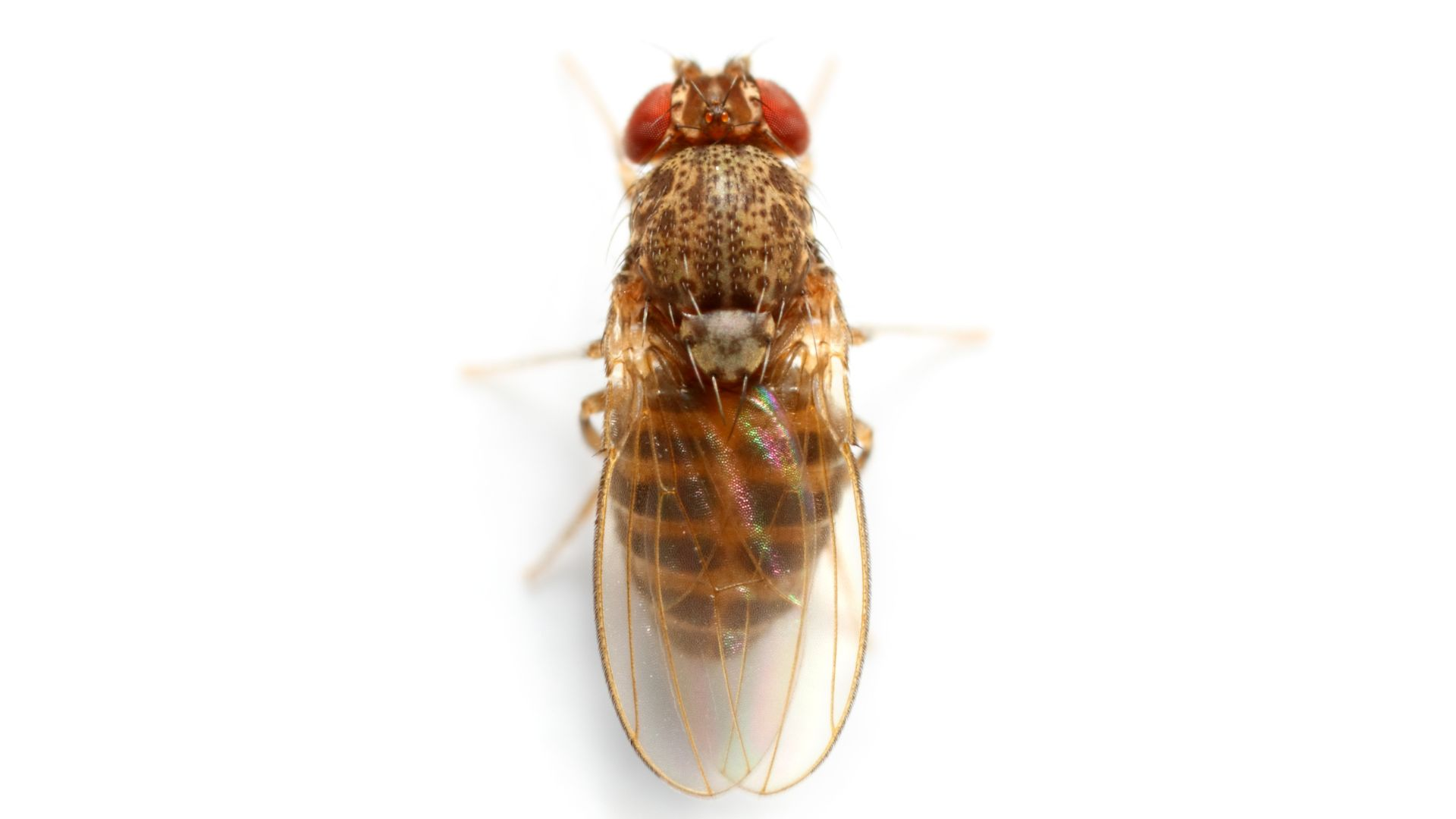
Fruit flies are common in homes, restaurants, stores, and anywhere where food can spoil or ferment. Adult fruit flies are about 1/8 inch long and they have easy-to-spot red eyes. The front of their body is tan, and the rear part is black. Fruit flies lay eggs on or near the surface of rotting foods or other moist, organic material.
The reproductive potential of fruit flies is enormous. The average female fruit fly will lay up to 500 eggs in her brief lifetime. Fruit fly eggs develop into maggots within the first 30 hours of them being laid.
The newly hatched maggot will begin feeding off rotten fruit and vegetables immediately. By day 2, the fruit fly is fully developed and ready to reproduce. Fruit flies will only live for 7 to 15 days, making their lifespan very short.
Fruit flies quickly develop in ripe or decaying food, particularly apples, bananas, onions, and potatoes. You may find them circulating at the bottom of garbage cans with fermenting liquid, on cleaning cloths, or on a dirty mop. Fruit Flies may come from under refrigerators, inside cupboards, and on your countertops, if organic food spills are left untreated.
Many people confuse fruit flies with other small types of flies such as Fungus Gnats, Moth Flies, or Sphaerocerid Flies. Although these species look similar to the fruit fly, they all breed in different ways and require specific types of treatment.
Therefore, it is critical that you identify which ones you have and where the fruit fly infestation is coming from so you can treat the issue effectively. The different breeding sources will help determine what you are dealing with.
Fruit Fly Identification
-
Fruit flies are small, about 1/8-inch in length, including the wings.
-
A key characteristic of a Fruit Fly is its bright red eyes.
-
The Fruit fly is about one-third the size of the filth or house fly.
-
Body color is usually a light yellow to tan color.
-
Fruit flies are quick and agile in movement
-
Typically found in kitchens with ripe or rotten fruits and veggies, in your garbage disposal, or near high-fructose material.
-
Fungus gnats are easily misidentified as fruit flies. Fungus gnats are dark gray, and infest soils, overwatered plants, and have low flying abilities.
-
Drain flies are also mistaken for fruit flies because both can be located around drains or garbage cans. Sewer flies, or moth flies, have furry black wings on the surface of their body.
Fruit Fly Biology and Habits
-
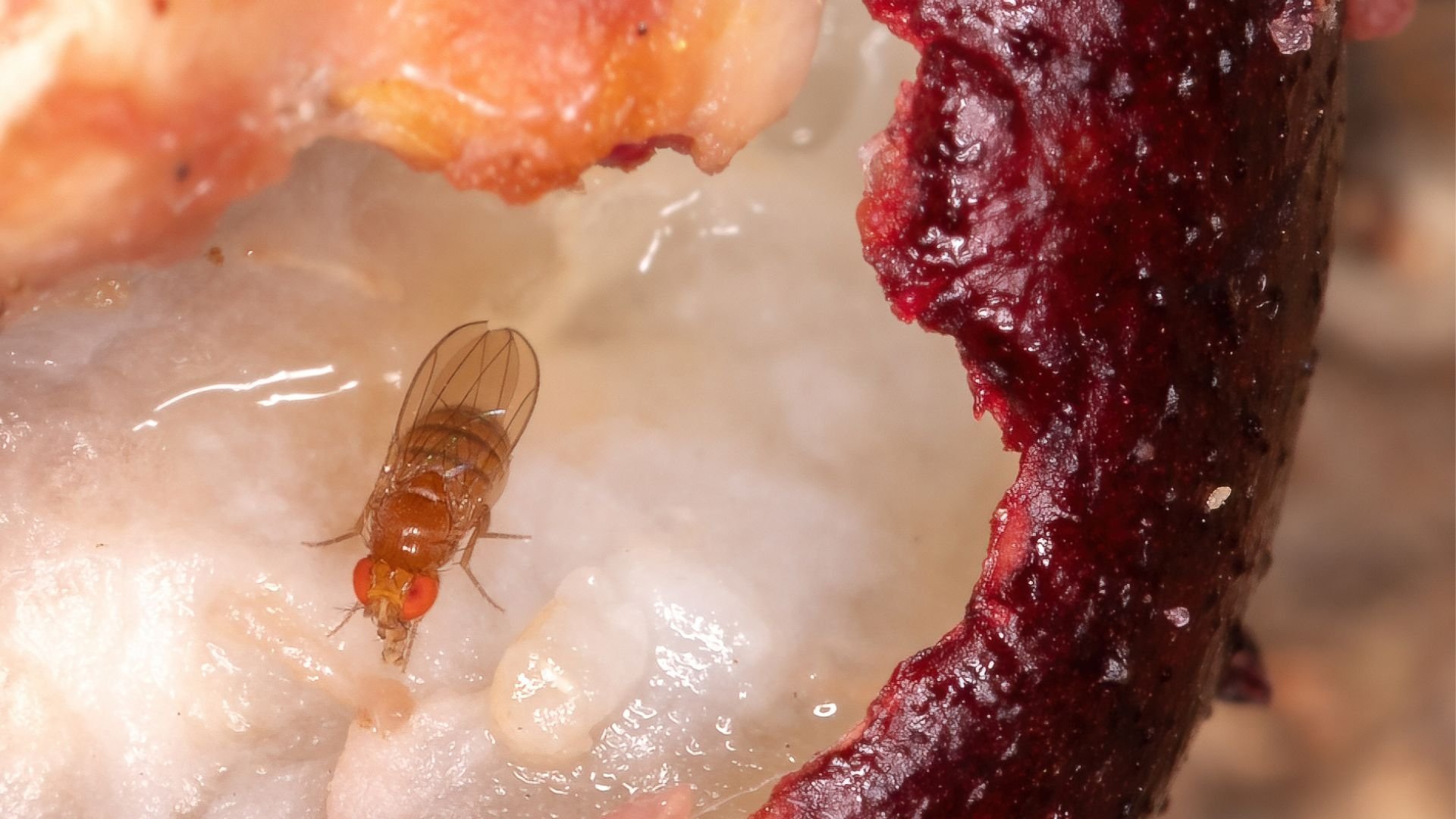
Fruit flies belong to the genus Drosophila. The most common fruit fly in the house is the D.melanogaster, also referred to as pomace flies or vinegar flies. These pests can be found throughout the world, in homes, food processing plants, warehouses, grocery stores, wineries, and restaurants.
-
Fruit flies in the house are often found at the end of the summer season.
-
Fruit flies are generally found hovering around decaying vegetation and overripe fruit. Fermenting materials, such as leftover beer or soft drinks, also are a favorite food of fruit flies.
Fruit flies are often found in the kitchen, especially when vegetable or fruit materials are present after major home canning efforts.
-
Like all flies, the fruit fly develops by complete metamorphosis. Fruit fly eggs are laid near or on top of attractants (fermenting materials) such as beverages, decaying fruit and vegetable matter, garbage, or slime in drains.
The fruit fly is attracted to an area where moisture has accumulated, including mops and wet rags. The larvae emerge from the eggs and feed near the surface of the fermenting material for 5-6 days.
-
Eating fruit fly larvae can cause intestinal discomfort and diarrhea. For this reason, health professionals are concerned when fruit flies are found infesting facilities where food is prepared, processed, or served.
-
Newly-emerged fruit fly adults are attracted to lights, but egg-laying female fruit flies will not leave fermenting materials, such as overripe fruits. The fruit fly larvae then crawl to drier areas of the food source or even out of the food source to pupate.
Inspect
Breeding Sources of Drain Flies, Fruit Flies, Phorid Flies, and Sphaerocerid Flies
Below is a list of possible breeding sources for various small flies found in kitchen areas and other breeding areas. If you understand the various breeding sources, you can manage these flies with greater success.
Drain flies: Drain flies can breed in sewers, drains, septic tanks, and contaminated soil from sewage.
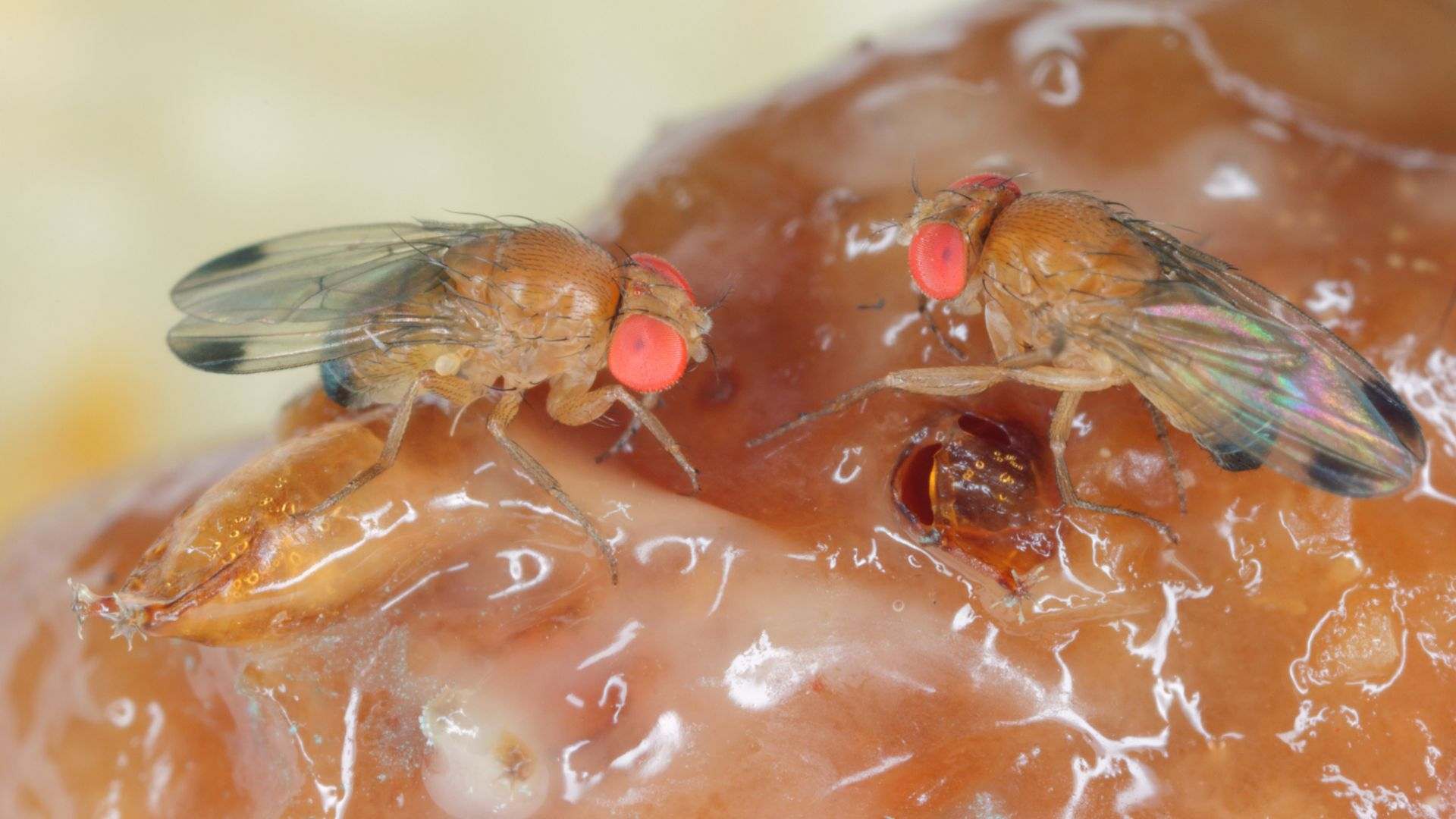
Fruit flies: You can find Fruit flies flying around fruits and vegetables, both fresh and rotten. They can also be found around any moist organic matter, such as fresh produce, garbage, and high-fructose material.
Phorid Flies: Phorid flies are also found in contaminated soils from garbage, drains, and from garbage disposals. They can also be found in human cadavers.
Sphaerocerid Flies: These small flies breed in rotting fruits and vegetables, garbage, and drains.
Residential Home Inspection
-
Rotten fruit or veggies that are stored on the counter
-
Under refrigerators or locations where fruit or vegetable juice may have spilled
-
Moist liquid under garbage cans or trash bags
-
Sink drains
-
In drip condensation pans under the refrigerator
-
Near kick plate under counters
-
Under loose tiles or counter tiles
-
Fruit juice and soda cans in recycling bins
-
Terrariums
Restaurants and Bars Inspection
-
Rotting fruits or vegetables stored on the counter
-
Under the bar counter
-
Bar mats
-
Sink drains
-
Floor Drains
-
Residual buildup around the base of equipment legs
-
Mops and buckets
-
Grease or food trapped in cracks of equipment
-
Elevator pits
Tips on How to Get Rid Of Fruit Flies
-
The first step to getting rid of fruit flies is proper sanitation. It is critical to eliminate any breeding sources. Start with a thorough cleaning of all surfaces, countertops, and drawers.
-
Look for any spills and check that they are not coming from any appliances leaking fermented liquid.
-
Spray surfaces with an insecticide or homemade solution to kill fruit flies in the house. Ensure all cleaning sponges are washed and free of debris. It’s also a good idea to replace cleaning items, like rags, regularly.
-
A simple tip on How to Get Rid Of Fruit Flies in the house is to discard any rotten fruit or vegetables.
-
Clean garbage cans and dumpsters. They should have tight lids. Remove rubbish daily to prevent it from becoming a breeding ground for the fruit fly.
-
Ripened fruit should be eaten, refrigerated, or covered.
-
Get rid of any extra moisture with proper drainage.
-
Use screens on building openings to stop fruit flies from getting inside your home.
-
Re-grout tiles in bathrooms and kitchens; this will prevent any water leakage in the walls and possible fruit fly breeding sources.
-
As an extra step to kill fruit flies, use UltraFloor Defender, an all-natural cleaner with bacteria cultures to break down grease buildup. Using UltraFloor Defender would be very beneficial in commercial kitchens.
How to Treat a Fruit Fly Infestation
Fruit flies are primarily a nuisance. They do, however, have the potential to contaminate food with bacteria and other disease-producing organisms. Therefore it is critical that you treat a fruit fly infestation rigorously to prevent any health risks. Killing fruit flies will reduce infestation, but the elimination of fruit fly breeding areas is necessary for proper management.
First, begin by inspecting where the fruit fly infestation has come from. Look for fruit fly sources in areas where fruits or veggies are stored outside refrigeration. Also, look for fruit fly sources in garbage cans, under appliances, and in recycling bins.
Even a bit of spilled juice behind an appliance or in the garbage can contribute to their breeding. Rinse your recycling thoroughly with hot water and dispose of food scraps in a sealed garbage bag.
When searching for fruit fly breeding and rotten food sources, remember that the tiny larvae can only survive in decaying organic matter that is moist.
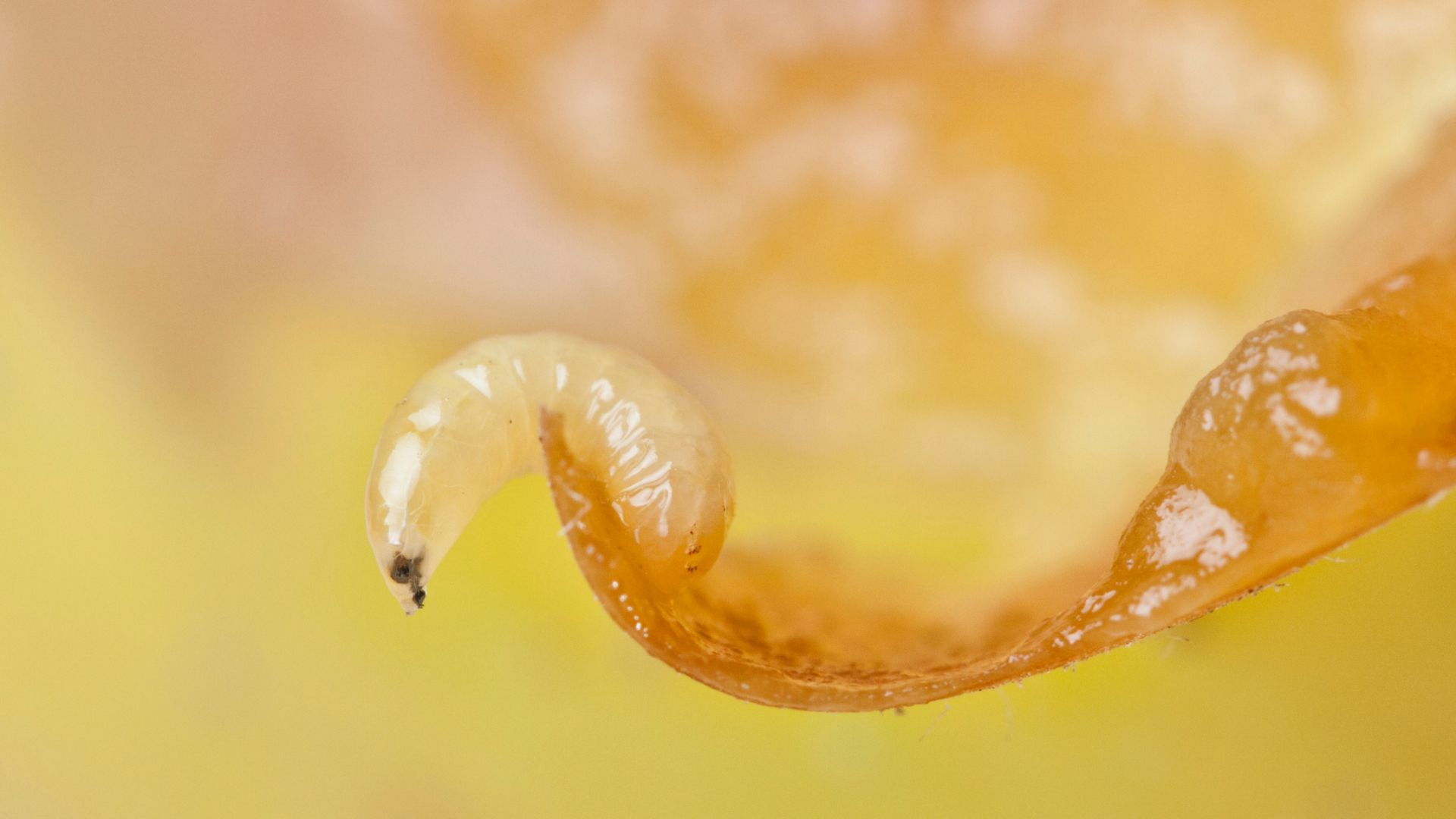
All fruit fly infestation stages depend on the organic debris to complete the fruit fly life cycle. Whenever possible, food and organic materials on which fruit fly eggs can lie must be removed.
If fruit flies are still present after a deep clean, you may want to check your drains. Fruit flies, like the drain fly, can breed inside the drainage systems in your home. Drains are commonly filled with rotten fruit and other damp, organic matter that attract fruit flies.
Using a typical enzyme drain treatment, like Invade Bio Drain Treatment, will instantly kill fruit fly eggs before they hatch. This treatment will also kill any existing adult fruit flies.
Fruit Fly Traps
It is also a good idea to install fruit fly traps wherever you have spotted them. Keep in mind that Fruit Fly Traps will not work for other small flies such as Sewer Flies, Phorid Flies, or Sphaerocerid Flies.
Apple Cider Vinegar Traps
A simple device you can use at home is an apple cider vinegar trap. Merely fill a bowl with about a cup of apple cider vinegar and cover the top with plastic wrap and a rubber band. Poke a few tiny holes into the plastic wrap with a fork and leave it in the infested location.
Fruit flies are attracted to the smell of apple cider vinegar, so once they enter your fruit fly trap they won’t be able to get out.
Another variation of this DIY fruit fly trap involves simply mixing drops of dish soap (for surface tension) into the apple cider vinegar without plastic wrap. The apple cider vinegar will attract the flies, while the surface tension of the dish soap will suspend the fruit fly on the surface of the liquid and cause them to drown.
In this type of fruit fly trap, You can also mix drops of dish soap into old beer, wine, juice, or other organic material to entice fruit flies.
Fruit Fly Control - Residual Insecticides
Cyper WSP or Avesta CS are residual insecticide concentrates that yield several gallons of finished solution. Spray surfaces where fruit flies would land and rest, and keep them sprayed once about a week or month, depending on severity. These insecticides would also treat other types of flies. Both products have a broad label for general pest control.
Homemade Spray to Kill Fruit Flies
If you want to know how to eliminate fruit flies with household products, you’re in the right place. A homemade spray to kill fruit flies can be made with isopropyl alcohol and water.
Simply mix these two products together and spray the solution liberally onto surfaces to kill fruit flies. You can also swap out the alcohol for a few drops of tea tree, peppermint, lavender, or eucalyptus oil.
Key Takeaway
It's not overly complicated if you want to get rid of fruit flies. Finding and eliminating the source where fruit flies are feeding and laying eggs will eliminate the problem. This is easier said than done, but it should be your focus.

Prevent Fruit Flies
-
Fruit flies are attracted to ripened fruits and vegetables in the kitchen. Since they can breed in drains, garbage disposals, empty bottles and cans, trash bins, mops, and cleaning rags, perform a complete inspection. All they need is a moist film of fermenting fruits or other decaying material to start breeding.
-
The best fruit fly prevention is to eliminate sources of attraction. Ripened fruit and produce should be eaten, discarded, or refrigerated. Cracked or damaged fruit should be thrown out to avoid a fruit fly problem.
-
A decaying potato, onion, ripe fruit, or even a juice spill under a refrigerator can breed thousands of fruit flies. Be sure to check and clean recycling bins and trash cans, as you may have thrown out overripe fruit there as well.
Be sure that window screens and screen doors fit tightly and that the screen is not ripped or torn.
-
The adults can also fly in from outside through poorly fitted window screens and doors, so keep screens tight.
-
Fruit Flies are not the only small flies that you may see in your kitchen area. If you see a small fly or gnat type of fly, it may be coming from the drains. Test the drains as a source by placing tape (with a few small holes punched in for ventilation) over the drain at night. Check the tape the next morning for fruit flies stuck to the tape.
How To Get Rid of Fruit Flies
Learn how to get rid of fruit flies, where infestations come from, and discover the best fruit fly control products
The first step in order to get rid of Fruit Flies in the kitchen or elsewhere is to have proper sanitation. It is important to discover where they are coming from and eliminate the source. It is critical to eliminate any breeding sources.
Finally, we go go over the best practices for fruit fly control and the best fruit fly control products.
Fruit flies are common in homes, restaurants, stores, and anywhere that food can spoil or ferment. Adults are about 1/8 inch long, and one of their easy-to-spot features is their red eyes. The front part of their body is tan, and the rear part is black. Fruit flies lay eggs on or near the surface of rotting foods or other moist, organic material. The reproductive potential of fruit flies is enormous. The average female fruit fly will lay about 500 eggs in her brief lifetime. Their complete lifecycle from egg to adult takes only about a week.
Fruit Flies are commonly associated with fermenting fruits and vegetables. They can quickly develop in over-ripe fruits and vegetables. You may find them fermenting liquid at the bottom of garbage cans, rotting onions or potatoes, or a dirty mop. They may accumulate under refrigerators and any moist organic material in an area.
Fruit flies are primarily a nuisance. They do, however, have the potential to contaminate food with bacteria and other disease-producing organisms. Many people confuse fruit flies with other small types of flies such as Drain Flies, Phorid Flies, or Sphaerocerid Flies. The different breeding sources will help determine which ones you have and where the fruit fly infestations are coming from.
Fruit Fly Identification
Identification
- Fruit flies are small about 1/8-inch in length including the wings.
- A key identifying character of a Fruit Fly is its bright red eyes.
- The Fruit fly is about one third the size of the filth or house fly.
- Body-color is usually a light yellow to tan color.
- Many people confuse fruit flies with other small types of flies such as Drain Flies, Phorid Flies, or Sphaerocerid Flies. The different breeding sources will help determine which ones you have.
- Many people confuse fruit flies with other small types of flies such as Drain Flies, Phorid Flies, or Sphaerocerid Flies. The different breeding sources will help determine which ones you have.
Get Rid Of Fruit Flies
Fruit Fly Control: Exclusion & Sanitation
- The first step to getting rid of Fruit Flies in the kitchen or elsewhere is to have proper sanitation. It is critical to eliminate any breeding sources.
- Clean garbage cans and dumpsters. They should have tight lids.
- Ripened fruit should be eaten or refrigerated.
- Get rid of any extra moisture with proper drainage.
- Use screens on building openings.
- Re-grout tiles in bathrooms and kitchens; this will prevent any water leakage in the walls and possible fruit fly breeding sources.
- As an extra step, use UltraFloor Defender, an all-natural cleaner with bacteria cultures to break down grease buildup. Using UltraFloor Defender would be very beneficial in commercial kitchens.
Fruit Fly Inspection ( Where Fruit Fly Infestations Come From )
Residential Home Inspection
- Rotting fruits of vegetables stored on the counter.
- Under refrigerators or locations where fruit or vegetable juice may have spilled.
- Moist liquid under garbage cans, under trash bags.
- Sink drains
- In drip condensation pans under the refrigerator
- Near kick plate under counters
- Under loose tile or counter tiles
- Fruit juice and soda cans in recycle bins
- Terrariums
Restaurants and Bars Inspection
- Rotting fruits of vegetables stored on the counter
- Under the bar counter
- Bar mats
- Sink drains
- Floor Drains
- Residual buildup around the base of equipment legs
- Mops and buckets
- Grease or food trapped in cracks of equipment
- Elevator pits
To begin to inspect where fruit fly infestations come from, look first for fruit fly sources in areas where vegetables or fruits are stored outside refrigeration. Also, look for fruit fly sources in garbage cans, under appliances, and recycling bins. Even a little-spilled juice behind an appliance can contribute to their breeding. When searching for fruit fly breeding sources, remember that the larva can only survive in decaying organic matter that is moist. All fruit fly infestations' stages depend on the organic debris to complete the complete fruit fly cycle. Whenever possible, food and materials on which fruit flies can lay their eggs must be removed.
Killing adult fruit flies will reduce infestation, but the elimination of fruit fly breeding areas is necessary for proper management.
Fruit Flies are not only the only small flies that you may see in your kitchen area. If you see a small fly or gnat type of fly, it may not be coming from the drains. So using a typical enzyme drain treatment like Invade Bio Drain Treatment may not work if they are not coming from the drains. They could be coming from various sources like rotten fruit, garbage, or other damp organic matter.
Fruit Fly Traps would also not work for other small flies such as Drain Flies, Phorid Flies, or Sphaerocerid Flies.
Breeding Sources of Drain Flies, Fruit Flies, Phorid Flies, and Sphaerocerid Flies
Below is a list of possible breeding sources for various small flies found in kitchen areas and other breeding areas. If you understand the various breeding sources, you can manage these flies with greater success.
Drain flies: Drain flies can breed in sewers, drains, septic tanks, and contaminated soil from sewage.
Fruit flies: You can find Fruit flies flying around fruits and vegetables, both fresh and rotten. They can also be found around any moist organic matter and garbage.
Phorid Flies: Phorid flies are also found in contaminated soils from garbage, drains, and garbage. They can be found in human cadavers.
Sphaerocerid Flies: These small flies breed in rotting fruits and vegetables, garbage, and drains.
Fruit Fly Control - Residual Insecticides
Cyper WSP or
Avest CS are residual insecticide concentrates that
yield several gallons of finished solution. Spray surfaces where fruit flies would land and rest sprayed
once a month. These insecticides would also treat other types of flies. Both products have a broad label for
general pest control.
If you are looking for
fogging insecticides and
fogger
equipment we have a wide assortment.
Fruit Fly Biology and Habits
- Fruit flies comprise several different species belonging to the genus Drosophila. The most common species encountered in homes and other structures is the D.melanogaster. Fruit flies are also identified as pomace flies or vinegar flies. These pests can be found throughout the world, in homes, food processing plants, warehouses, grocery stores, wineries, restaurants, and other structures.
- The fruit fly is among the smallest flies found in homes.
- Many homeowners often encounter fruit flies in and about their kitchens and near garbage storage areas at the end of the summer season.
- Fruit flies are generally found hovering around decaying vegetation and overripe fruit. The fruit fly is most often found hovering around the overly ripe fruit. Fermenting materials, such as leftover beer or soft drinks, also are a favorite food of fruit flies. Fruit flies are often found in the kitchen, especially when vegetable or fruit materials are present after major home canning efforts.
- Pomace flies look like Fruit flies and may infest homes. However, the breeding source maybe something like a forgotten mop pail or an open sewer drain.
- Because fruit flies frequent such unsanitary areas like garbage, it could potentially carry disease-causing bacteria onto food products.
- Like all flies, the fruit fly develops by complete metamorphosis. Eggs are laid near or on top of attractants (fermenting materials) such as beverages, decaying fruit and vegetable matter, garbage, or slime in drains. The fruit fly is attracted to an area where moisture has accumulated, including mops and wet rags. The larvae emerge from the eggs and feed near the surface of the fermenting material for 5-6 days.
- This surface-feeding characteristic of the fruit fly larvae is significant because damaged or over-ripened portions of fruits and vegetables can be cut off without having to discard the remainder for fear of retaining any developing larvae. However, eating larvae can cause intestinal discomfort and diarrhea. For this reason, health professionals and sanitarians are concerned when fruit flies are found infesting facilities where food is prepared, processed, or served.
- Newly-emerged fruit fly adults are attracted to lights, but egg-laying females will not leave fermenting materials. The fruit fly larvae then crawl to drier areas of the food source or even out of the food source to pupate. Under ideal conditions, the fruit fly's life cycle, from egg to adult, can be completed in as little as eight days. The life cycle from egg to adult is approximately ten days.
Key Takeaway
It's not overly complicated. Finding and eliminating the source where fruit flies are feeding and laying eggs will eliminate the problem.
That is easer said than done but it should be your focus.
Prevent Fruit Flies
-
Fruit flies are especially attracted to ripened fruits and vegetables in the kitchen. Since they can breed in drains, garbage disposals, empty bottles and cans, trash bins, mops, and cleaning rags, perform a complete inspection. All they need is a moist film of fermenting material to start breeding.
-
The best fruit fly prevention is to eliminate sources of attraction. Ripened fruit and produce should be eaten, discarded, or refrigerated. Cracked or damaged fruit should be thrown out.
-
A decaying potato or onion or a juice spill under a refrigerator can breed thousands of fruit flies. Be sure to check and clean recycling bins and trash cans as well. Be sure that window screens and screen doors fit tightly and that the screen is not ripped or torn.
-
The adults can also fly in from outside through poorly fitted window screens and doors, so keep screens tight.
-
Fruit Flies are not only the only small flies that you may see in your kitchen area. If you see a small fly or gnat type of fly, it may not be coming from the drains. Test the drains as a source by placing tape (with holes punched in for ventilation) over the drain at night. Check the tape the next morning for fruit flies stuck to the tape.
Written by our resident pest control expert Ken Martin.