




How To Get Rid Of Gnats Inside the Home
If you have an active gnat infestation, follow these guidelines for gnat control in your house.
December 16th, 2023
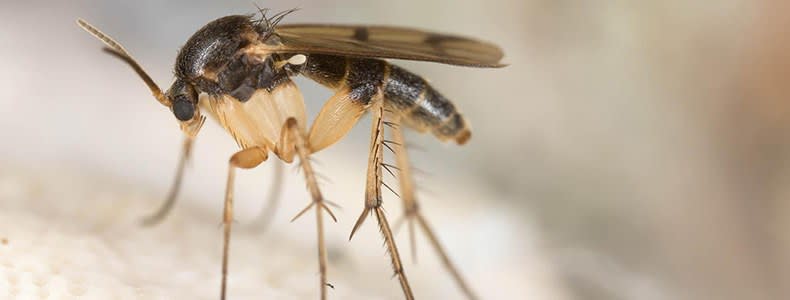
Swatting away gnats from your face or food can be extremely annoying, and this may be a sign of a gnat problem. They are attracted to body heat, water, and sweet or fruity scents. These small flying insects are one of the most common types of pesky flies that you'll find in your home or outside.
Gnat Identification
Gnats are often mistaken for other types of small flies found in homes.
Fruit flies, Drain flies (sometimes called drain gnats), and Phorid flies resemble gnats to the naked eye, but gnats are much smaller under closer examination. Determining the breeding source will help you understand the type of fly you have. Fruit flies and Phorid flies breed from organic matter like rotting fruit and vegetables, food spillage, and garbage. Drain flies breed in drains and sewer tanks and soil contaminated from sewage.
Gnats also breed in drains and are often sourced from potted plants and fungi.
Fungus Gnats
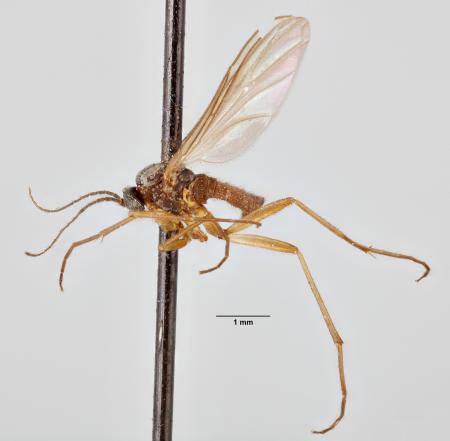
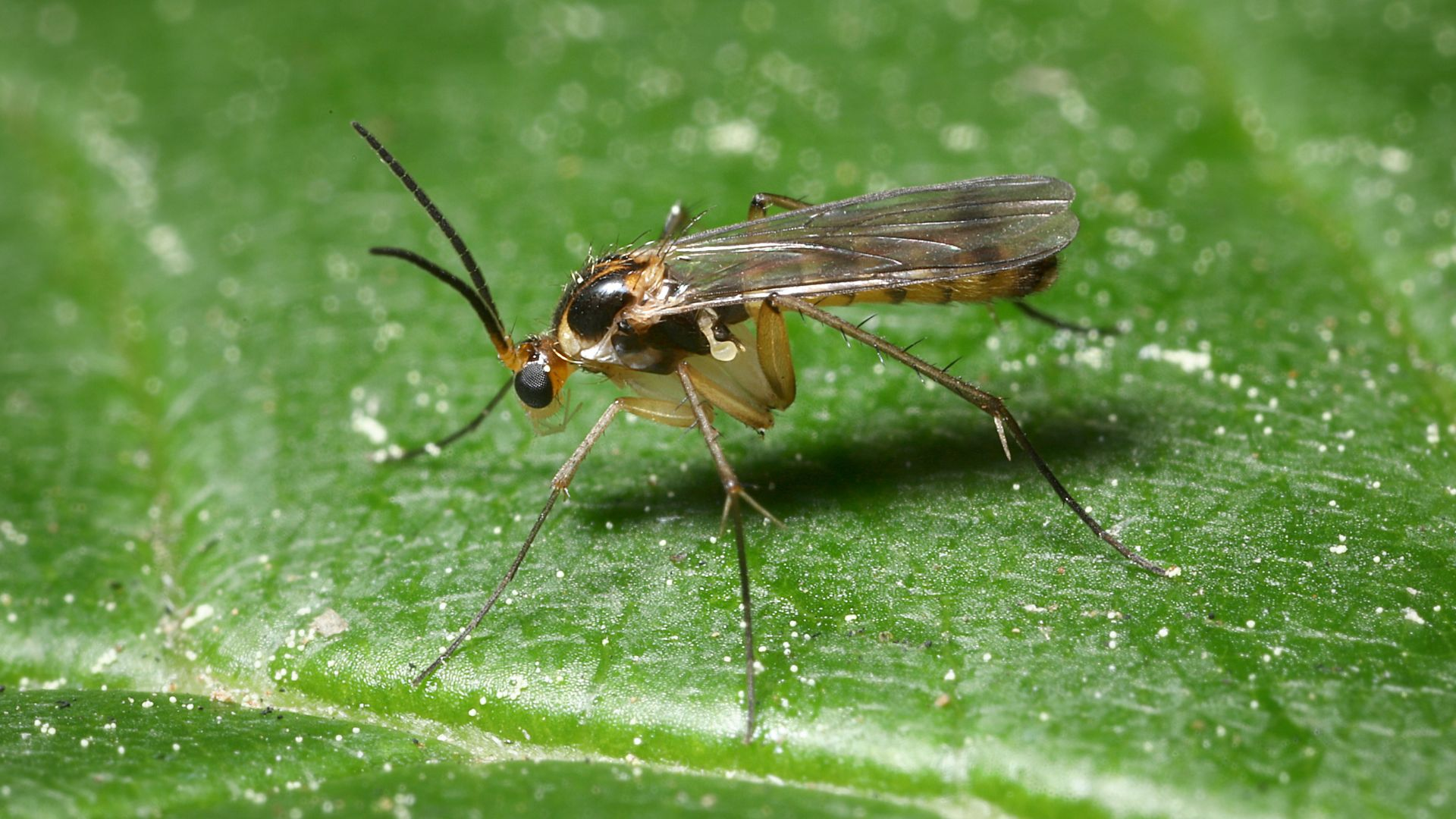
Gnats breed in all the sources listed above: drains, rotten fruit and vegetables, and trash cans. Fungus gnats are often spotted around potted plants or windows. They like to breed in very moist soil and moist areas in general. These gnats are tiny flies with long legs and long thin wings. Looking closely, you will see vein patterns in their wings.
Fungus Gnat Larvae
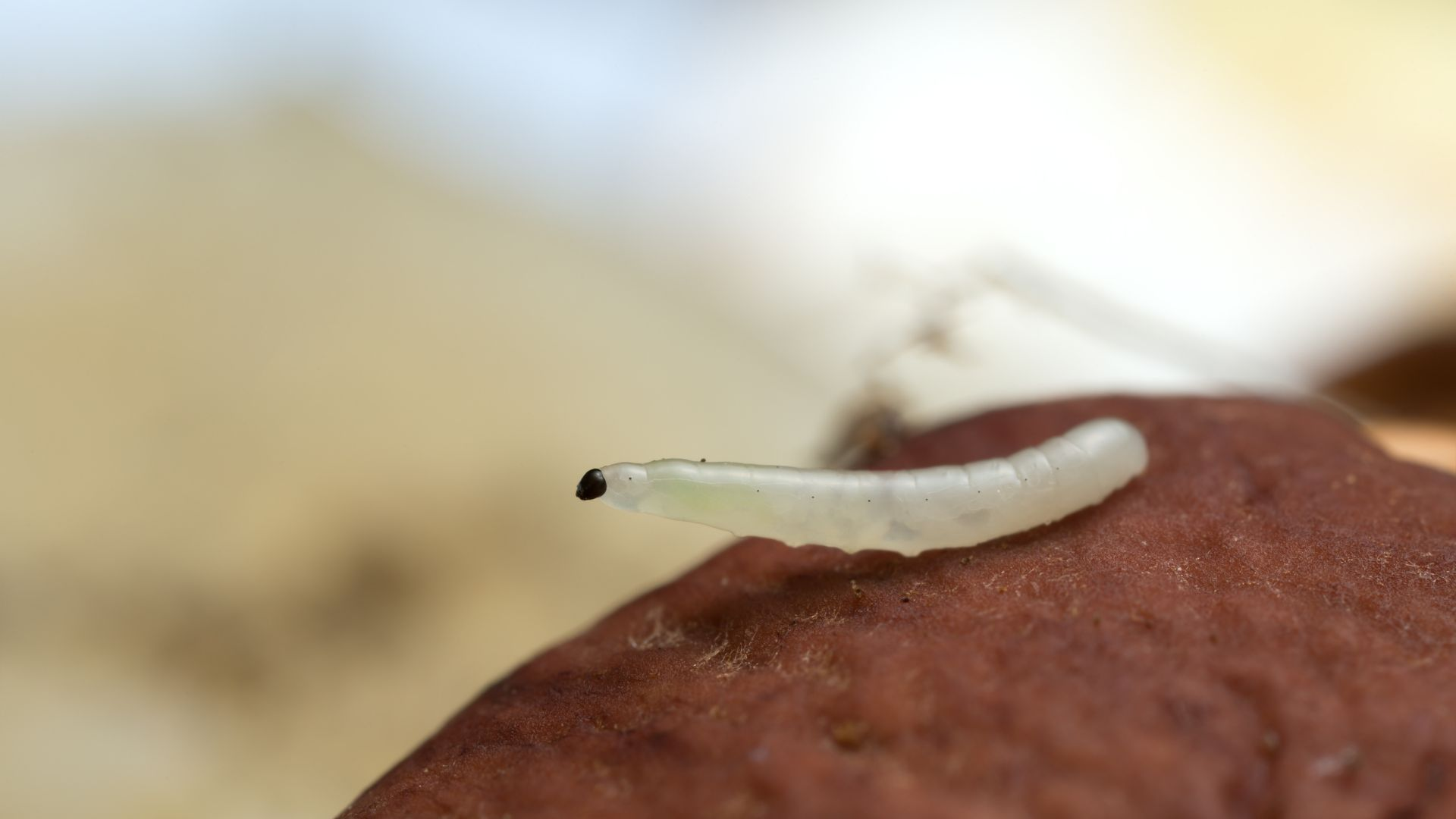
Their eggs are semi-transparent, oval, smooth, and hardly visible. Their larvae (maggots) are white, with a shiny blackhead, and measure up to 1/4 inch long. In the soil, you can see silk-like cocoons, and their pupae.
Fruit Flies
These tiny insects have bright red eyes with a round-like body; are common around rotten fruit and other rotting foods.
Drain Flies
Drain flies ( Moth flies) body colors are tan or a light gray color; their moth-like wings become dust when they are smashed. They are often seen around drains.
Gnat Inspection
-
Inspect soil of potted plants for fungus gnat damage.
-
Look for adult gnats flying around the plants. This gnat swarm would indicate soil under the infested plants as a breeding source. It may be difficult to find or see larvae of gnats on the soil surface.
-
Gnats may be entering the building from the outside if no planters or atrium areas are serving as breeding sources. Check the plants, potting soil, and organic matter near entry points like doors and windows.
-
Look for adult Fungus gnats flying around the plants outside as well.
-
Because fungus gnats are attracted to all the lights around your home, occasionally, the exterior lighting on the building may be attracting fungus gnats from neighboring areas.
-
Also, look for water leaks or moisture problems inside, such as water stains, swelled wall coverings, peeling paint, etc. If fungus is growing there, these gnats could be breeding there.
-
In new construction, moisture normally gets onto the lumber used to build houses. Occasionally, surface fungi will grow on wood inside wall voids, which don't dry out quickly. It is rare, but severe fungus gnat infestations have developed in new houses inside walls where fungi have grown. Remove the plates on wall outlets and attach tape over much of the opening to determine if this is occurring. Leave a gap between the tape pieces to allow air movement for the gnats to follow out of the void. If gnats are breeding in the walls, some will invariably become stuck to the tape. Try this on all wall openings in infested rooms if the walls are suspected as possible breeding sources.
-
Don't stop looking when one breeding source has been found. In most cases, several breeding sources will be present.
How To Get Rid Of Gnats - Step by Step
Step 1: Locate and Eliminate Breeding Sources
-
Potted Plants or Outside Soil: If you have Gnats coming from any potted plants, locate the breeding source by a complete inspection and remove the soil or dry the soil.
-
Drains: Test to see if the gnats or drain flies are coming out of drains. A handy way to check to see if they are coming from drains, apply some clear tape over the top of the drain, with some holes in it for airflow. If the gnats or drain flies get stuck on the tape as they exit the drain, you know you have gnats or drain flies.
-
Fruits, Vegetable or Food Spillage: Eliminate decaying fruit/vegetable matter. Also check under refrigerators in the condensation pan.
Step 2: Use Traps, Enzyme Drain Products or BTI Products
If you have gnats or other small flies that are coming from organic sources, you can use a Fruit Fly Trap or make your homemade traps.
A. Homemade Traps
-
Old Fashion Apple Cider Vinegar Trap
Place a little (1-2 tablespoons) apple cider vinegar with a teaspoon of sugar in a jar or small bowl, with some liquid dish soap. The apple cider vinegar will serve as an attractant, and the dish soap will keep them trapped and not able to fly out.
Dish soap is sticky enough to keep the flies from either walking or flying out of the trap. Any type of dish soap will work for an apple cider vinegar trap.
-
Ripened Fruits
Don't throw away that ripe banana or apple. Fruit flies and gnats are attracted to ripened fruit. Put some of that ripened fruit in a bowl and cover it with plastic wrap with small holes poked into it. The flies will fly into the bowl but will not be able to make their way out through the plastic wrap again.
-
Almost Gone Red Wine Trap
If you have fruit flies or gnats, they can be trapped in the bottom level of wine leftover in the bottle. They will crawl into the bottle and not be able to escape.
B. Enzyme Drain Products
-
If you have gnats in the kitchen and you can not locate their breeding source ( food spillage or garbage) they may be coming from the drains. Apply the clear tape over the drains with punched-out holes to see if they are coming out of the drains.
-
Use an enzyme drain product like Invade Bio Drain and pour in the drains. Invade Bio Drain Treatment contains microbes and natural citrus oil in a thick formula to coat the sides of drains.
Invade Bio Drain Treatment will eat through the residue and scum in drains, eliminating scum and odors in the drains. The oil in Invade Bio Drain Treatment smells like fresh oranges.
-
Unfortunately, bleach will not completely take out the debris collected in the drains.
C. BTI Products (Bacillus thuringiensis israelensis)
-
Mosquito Bits not only will control mosquito populations but will control Gnats
-
Mosquito Bits contain BTI (Bacillus thuringiensis israelensis) that will kill the Fungus Gnat larvae. Sprinkle or spread a few granules (not much is needed- see the label). Water will release it into the soil and kill the Fungus gnat larvae.
Step 3: Use Insecticides or Fly Lights
-
Gnats Outside: After you eliminate the breeding sources in the soil by reducing excessive moisture, spray a residual treatment such as Bifen IT residual insecticide.
-
You may use Pyrethrin Aerosol space sprays such as Stryker 54 Contact Aerosol for an immediate knockdown.
-
Using a fly trap like Gardner WS 85 Wall Sconce or Gardner GT-200 Fly Light would help control many types of flies, including the Fungus Gnats
-
For areas outside that may still retain moisture, after eliminating the breeding sources in the soil, spray a residual treatment such as Bifen IT residual insecticide. Repeat as needed, keeping children and pets off sprayed surfaces until it dries.
More Tips for Getting Rid of Gnats in the House
If you want to learn how to get rid of gnats completely, you may need to use a combination of several techniques. Gnats quickly increase in numbers because they reproduce in short cycles.
To get rid of gnats for good, try one of these natural methods if pesticides or insecticides are not cutting it. While they differ in how they work, these gnat control products are all effective at getting rid of your gnat problem.
1. Gnat Trap
Gnats are attracted to bright colors, particularly yellow. Gnat traps are an excellent method to capture dozens of adults flying around at one time. These traps are yellow and contain a sticky adhesive layer, so once the gnat flies onto the surface they cannot get off.
Simply place the traps in the soil of potted plants where you've seen gnats hanging around or anywhere that a gnat infestation is present. Once the gnat traps are full of tiny bugs, throw them out in a sealed, outside rubbish can.
2. Diatomaceous Earth
Diatomaceous earth is a natural, organic powder that works on any insect that has an exoskeleton. It is commonly bought to treat pests in gardens. This is a great DIY option without having to pay pest control companies to come out and visit your home. For gnat pest control, sprinkle DE over dry soil in your plants.
This will trap the insects and dehydrate gnat larvae. It is important that the soil is not wet or damp, otherwise the active ingredients in DE will not work. For best results, put a layer of sand on top of the soil before applying the DE.
3. Flypaper Ribbons
Flypaper ribbons are a popular method to kill gnats in your home. Simply hang these sticky ribbons on your walls and ceilings away from any curtains or furniture. Some ribbons contain a strong odor that may not be the most pleasing smell inside the home. Regardless, do not use ribbons outside as they will trap helpful creatures and bugs.
4. Apply a Drench to the Soil of Potted Plants
To get rid of gnats, you will want to target the larvae turning into adults. Sticky gnat traps are excellent at killing adult gnats, but the traps alone are not going to treat an entire gnat infestation.
Try evenly applying a chemical solution, or a ‘drench’, through your potting mix. For the best results, follow the label to ensure you mix and apply the solution correctly. This method will target gnat larvae and stop the next cycle of gnats maturing and infesting your home.
Try saturating your potting mix with a Bti drench. Bacillus thuringiensis, or Bt var. Israelensis, is a type of bacterium that naturally lives in soil and kills the larvae of fungus gnats. We recommend Dipel Pro DF.
Follow the mixing instructions when making the Bti drench and cover the soil evenly in the product. Treat all houseplants and outdoor plants with a Bti drench. Bti drenches are non-toxic to plant roots and effectively kill gnat larvae that feed off the plant nearby.
It’s a good idea to let any plants you’ve treated with Bti dry out slightly between each watering. This will prevent adult gnats from returning and laying more eggs in the soil. For further gnat pest control, try placing small pieces of fabric over the drainage holes in your pots. This will treat any hard-to-reach gnats that gather in the bottom of your pots.
How to Prevent Gnats
If you have an ongoing gnat problem in your home, here are some popular methods to help get rid of the pesky insects and prevent them from coming back for good.
1. Water your Houseplants less
Fungus gnats lay eggs in damp, wet soil. For this reason, overwatered houseplants are a common cause of gnat infestations because of the excess moisture the gnats use to lay their eggs in.
These gnats are black with a silver tinge and sit on the surface of the soil or around the rim of pots. Water your houseplants only when it is necessary to prevent saturating the soil and welcoming an influx of gnats into your home.
Fungus gnats love to hang out in wet soil, so it’s a good idea to let your indoor plants dry out before rewatering. For further treatment, try applying a thin layer of diatomaceous earth on top of soil to kill gnats and prevent them from laying more eggs.
2. Clean your Home Regularly
To get rid of gnats long-term, keep your home clean and tidy on a regular basis. All surfaces should be sanitized and clear of any organic material. Store your food in sealed containers and dispose of any overripe fruit, vegetables, or produce in a tightly covered rubbish can. Clear your sinks, drains, and rubbish cans frequently to prevent any slime build-up or debris.
If gnats are still re-infesting your home, you’ll want to seal all gaps around doors and windows. Any broken window shades should be replaced. If there are cracks in the foundation of your home, it’s a good idea that you patch and remedy these areas.
3. Remove Indoor & Outdoor Moisture Build-up
Moisture is a breeding ground for gnats to lay their eggs. Moisture can build up inside your home if there are broken plumbing pipes or sink blockages. Inspect for any plumbing leaks or sink drainage issues indoors.
Moisture can also accumulate outside from blocked rain gutters, broken downpipes, and swamped birdbaths. Check these areas regularly and drain any excess moisture.
Any questions? Get in touch with one
How to Get Rid of Gnats
If you have an active gnat infestation, follow these guidelines for gnat control in your house.
Swatting away gnats from your face or food can be extremely annoying. They are attracted to body heat, water, and sweet or fruity scents. Gnats are one of the most common types of pesky flies that you'll find in your home or outside.
Gnats Are Often Mistaken For Other Small Flies
Gnats are often mistaken for other types of small flies found in homes.
Fruit flies, Drain flies, and Phorid flies resemble gnats to the naked eye, but gnats are much smaller under closer examination. Determining the breeding source will help you understand the type of fly you have. Fruit flies and Phorid flies breed from organic matter like fruits and vegetables, food spillage, and garbage. Drain flies breed in drains and sewer tanks and soil contaminated from sewage.
Gnats also breed in drains and are often are sourced from potted plants and fungi.Identification ( Where Are They Coming From ?)
Gnat Identification and Inspection
Gnat Inspection
- Inspect soil of potted plants.
- Look for adult gnats flying around the plants. This gnat swarm would indicate soil under the plants as a breeding source. It may be difficult to find or see larvae of gnats in soil.
- Gnats may be entering the building from the outside if no planters or atrium areas are serving as breeding sources. Check the plants, soil, and organic matter near entry points like doors and windows.
- Look for adult Fungus gnats flying around the plants outside as well.
- Because fungus gnats are attracted to lights, occasionally, the exterior lighting on the building may be attracting fungus gnats from neighboring areas.
- Also, look for water leaks or moisture problems inside such as water stains, swelled wall coverings, peeling paint, etc. If fungus is growing there, these gnats could be breeding there.
- In new construction, moisture normally gets onto the lumber used to build houses. Occasionally, surface fungi will grow on wood inside wall voids, which don't dry out quickly. It is rare, but severe fungus gnat infestations have developed in new houses inside walls where fungi have grown. Remove the plates on wall outlets and attach tape over much of the opening to determine if this is occurring. Leave a gap between the tape pieces to allow air movement for the gnats to follow out of the void. If gnats are breeding in the walls, some will invariably become stuck to the tape. Try this on all wall openings in infested rooms if the walls are suspected as possible breeding sources.
- Don't stop looking when one breeding the source has been found. In most cases, several breeding sources will be present.
Steps To Get Rid Of Gnats
Step 1: Locate and Eliminate Breeding Sources
- Potted Plants or Outside Soil: If you have Gnats coming from any potted plants, locate the breeding source by a complete inspection and remove the soil or dry the soil.
- Drains: Test to see if the gnats or drain flies are coming out of drains. A handy way to check to see if they are coming from drains, apply some clear tape over the top of the drain, with some holes in it for airflow. If the gnats or drain flies get stuck on the tape as they exit the drain, you know you have gnats or drain flies.
- Fruits, Vegetable or Food Spillage: Eliminate decaying fruit/vegetable matter. Also check under refrigerators in the condensation pan.
Step 2 : Use Traps, Enzyme Drain Products or BTI Products
If you have gnats or other small flies that are coming from organic sources, you can use a Fruit Fly Trap or make your homemade traps.
- Old Fashion Vinegar Trap: Place a little (1-2 tablespoons) apple cider vinegar with a teaspoon of sugar in a jar, with some dish soap. The cider vinegar will serve as an attractant, and the soap will keep them trapped and not able to fly out.
- Ripened Fruits: Don't throw away that ripe banana or apple. Fruit flies and gnats are attracted to ripened fruit. Put some of that ripened fruit in a bowl and cover it with plastic wrap with small holes poked into it. The flies will fly into the bowl but not escape.
- Almost Gone Red Wine: If you have fruit flies or gnats, they may be trapped to the bottom level of wine leftover in the bottle. They will crawl into the bottle and not be able to escape.
- If you have gnats in the kitchen and you can not locate their breeding source ( food spillage or garbage) they may be coming from the drains. Apply the clear tape over the drains with punched-out holes to see if they are coming out of the drains.
- Use an enzyme drain product like Invade Bio Drain and pour in the drains. Invade Bio Drain Treatment contains microbes and natural citrus oil in a thick formula to coat the sides of drains. Invade Bio Drain Treatment will eat through the residue and scum in drains, eliminating scum and odors in the drains. The oil in Invade Bio Drain Treatment smells like fresh oranges.
- Unfortunately, bleach will not completely take out the debris collected in the drains.
- Mosquito Bits not only will control mosquito populations, but will control Gnats
- Mosquito Bits contain BTI (Bacillus thuringiensis israelensis) that will kill the Fungus Gnat larvae. Sprinkle or spread a few granules (not much is needed- see the label). Water will release it into the soil and kill the Fungi gnat larvae.
Step 3 : Use Insecticides or Fly Lights
- Gnats Outside: After you eliminate the breeding sources in the soil by reducing excessive moisture, spray a residual treatment such as Bifen IT residual insecticide.
- You may use Pyrethrin Aerosol space sprays such as Stryker 54 Contact Aerosol for immediate knockdown.
- Using a fly trap like Gardner WS 85 Wall Sconce or Gardner GT-200 Fly Light would help control many types of flies, including the Fungus Gnats
- For areas outside that may still retain moisture, after eliminating the breeding sources in the soil, spray a residual treatment such as Bifen IT residual insecticide. Repeat as needed, keeping children and pets off sprayed surfaces until it dries.
Key Takeaway
To eliminate gnats, you have to find and remove the breeding site. Often times this alone can eliminate the flies so quickly that no insecticides are needed.
How To Prevent Gnats
- Don't Over Water Plants : When plants are over watered, increasing moisture, it causes conditions for Fungus Gnats to breed.
- Allow Enough Time Between Watering Outside : If landscaped areas are not allowed to dry enough between watering periods, fungi can grow.
- Even without over watering, landscaped areas may retain moisture long enough to permit the fungus to grow, causing conditions for breeding fungus gnats.
- Raking the soil or mulch will killing the existing fungi as it is exposed to air and light.
- Repair Water Leaks : Moisture problems from water leaks will cause increased fungal growth to encourage fungus gnat growth.
- Proper Ventilation : Discourage fungi growth with proper ventilation.
Fungus Gnats Biology and Habits
Gnats reproduce in decaying organic matter that is moist and shaded. The larvae feed on fungus growing in the soil and moist organic matter. The larvae will also feed on live plant tissue, especially in root hairs and small roots. Damage from these Gnats occurs most often in greenhouses or plant beds.
The life cycle is about four weeks, with continuous reproduction in homes or greenhouses where warm temperatures are maintained. Adults live about 7 to 10 days and deposit eggs on the moist soil surface or soil cracks.
Females lay up to 100 to 300 eggs in batches of 2 to 30 each in decaying organic matter. Eggs hatch in 4 to 6 days; larvae feed for 12 to 14 days. The pupal stage is about 5 to 6 days. There are many overlapping generations throughout the year.
Adult Gnats are very attracted to light and can be found flying in windows and around lamps.
Written by our resident pest control expert Ken Martin.