




How to Get Rid of Pantry Moths
Learn how to get rid of a pantry moth infestation (Indian meal moths), and the best products to get rid of them for good.

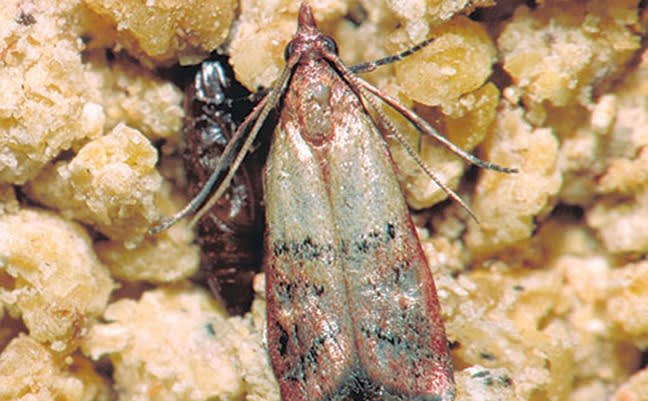
Indian Meal Moths (Plodia interpunctella) are probably the most common pantry pest found in kitchens and pantries. They are also prevalent in commercial food manufacturing facilities and warehouses that process nut, grain, or cocoa-based foods.
The Indian Meal Moth is found more often than any other stored food and grain pantry pest in the United States. Since they feed on any items containing grain or cereal products, the Indian Meal Moth alone is responsible for most of the insect problems associated with the natural food industry.
Eggs: are microscopic. Female adults lay 350-500 eggs during their short lifetime.
Larvae: Larvae size: is 1/2", a dirty white-off white color, it can have green or pink hues. Usually feed in protected areas such as the ears on a bag or in cracks and crevices. The larvae stage is the damaging stage. The larvae can chew through bags of food and seed. The larvae are what does the damage-feeding on these different food items, forming an extensive web type of substance over the food items that they infest.
Pupa: This quiescent stage can be seen covered in a silken cocoon. No damage occurs during this stage.
Adult: Indian meal moths have a wingspan of about 3/4" when at rest, the wings are folded together-held tightly together by the body. The wing is a blend of two colors: the front half of the wings-pale grey-pale tan, the bottom half of the wings: a rust-bronze color. Indian Meal moths only live for 5-7 days. Their primary function is to reproduce. This reproductive activity is why the Pheromone traps work so well. The male moth is very attracted to the pheromone scent.
Color: Bronze-colored wings
Life Cycle: Indian meal moths can take 25-135 days for moths egg-egg development cycle to occur. One moth can lay 100-400 eggs over 1-18 day period. Almost anything in your pantry that is not in a "tin can" is suspect. All insect life cycles are dependent on temperature and environmental conditions. Still, in the summer months (65+° F, 18+°C), this moth will take 5 to 7 weeks to develop. Although this pest is not native to the US, it has spread throughout this country.
Indian Meal Identification & Description
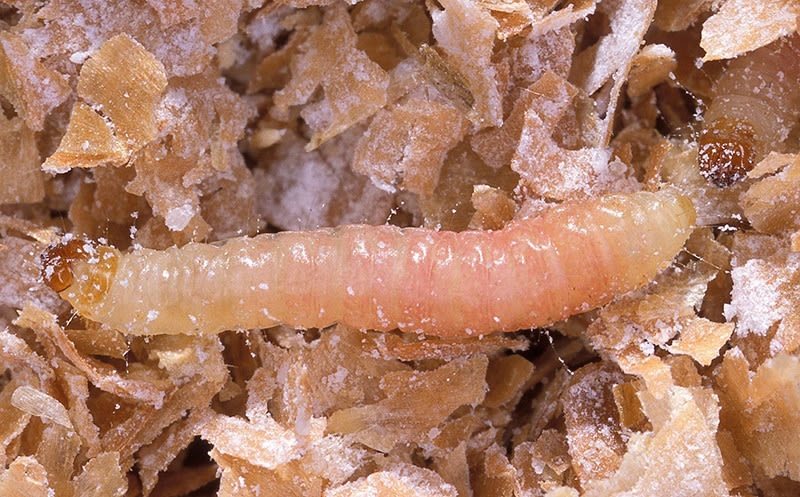
Damage from Larvae Stage:
Indian meal moth can produce significant damage to several foods. After the adult female lays eggs in food, they hatch into larvae. The larvae do the damage to the foodstuffs. The larvae stage (caterpillar stage) feeds on a variety of foods. These include dry pet foods, bird seeds, grains, flours, seeds, powdered milk, breakfast foods, and chocolate.
Key Takeaway
Finding and eliminating the food that Indian Meal Moths have infested can removemot of their eggs, and larvae and makes controlling them much more likely.
Indian Meal Moth Habits
- Nocturnal: They are nocturnal, flying at night. They have a zigzag pattern.
- Lay Their Eggs: They lay their eggs in foods like flours, cereals, grains, grain products, dried fruit, dried food, seeds, powder milk, chocolates, candy, chocolates, and dehydrated pet foods.
- Webs: They make a lot of webs in the foodstuff that Indian Meal Moths infest.
- Larvae: The larvae may be found far away from infested foods. They crawl to a hidden area to make cocoons in which to pupate.
- Cloth Moths or Indian Meal Moths? The Clothes moth has no distinctive markings, and the wing span is only 1/4th inch.
For more information: Pantry Pests and Indian Meal Moths
Get Rid Of Indian Moths
The first step to getting rid of Indian Meal Moths is to thoroughly inspect such items as cereals, grains, powdered milk, dog food, birdseed and throw away contaminated products. You can see infested material that is webbed together. You may see small moths flying near the infested products.
Pheromone traps for the adult moths and residual insecticidal sprays are the two most common recommendations.
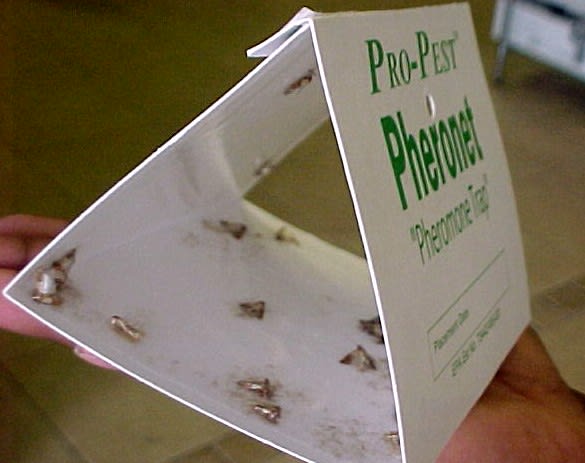
Our top recommendation is the Propest Pheronet Trap, which mimics the female pheromones. The female will release this sex pheromone to alert the male moths. As the male moth flies about, it can detect the pheromone with its antennae and will try to target the female. It is important to place no more than two of these Pheromone traps per room, so you don't confuse the male moths.
The Propest Pheronet Trap is distinctive. It is designed to capture the pantry moths, like the Indian Meal Moth and Cigarette Beetles. Simply peel the paper off to expose the glue. The pheromone is impregnated in the glue; it has no external pheromone.
Aerosols with crack and crevice tips are used to spray cracks and crevices and along wall edges, baseboards, and void areas. Spectre PS and Alpine Aerosols are recommended.
Frequently Asked Questions
If they are clothes moths, you must eliminate the source. Then fog the attic twice, 2 weeks apart. They could be in fur, feathers, wool, hair, or silk. If they are Indian meal moths, the same treatment will work, but the food source is seeds and nuts, which may have been placed there by squirrels or other rodents.
An additional treatment would be a clothes moth trap such as the Safestore| X Lure Cloth Moth Traps for Webbing clothes moths or Pro-Pest Safestore Casemaking Clothes Moth Traps.
You have a type of weevil or beetle, pantry pest. The sticky substance is digested sugar. Otherwise known as "bug poop." Go through everything in the pantry and throw out opened products. Then spray with Spectre PS Aerosol. If you have flying moths, you may want to try our moth traps, and if beetles or weevils, you can use a trap called Pantry Patrol.
More information can be found at Pantrypest.com
Written by our resident pest control expert Ken Martin.