



How to Get Rid of Moles in Your Yard
May 24, 2024
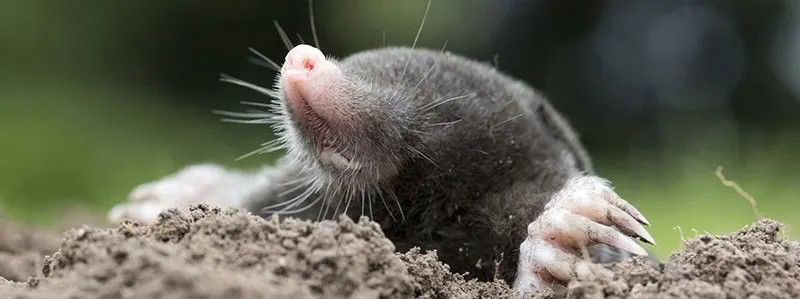
Have a mole problem in your yard? Solve your problem by knowing how to spot a mole infestation and treat the area mole baits. You can protect root systems, eliminate unsightly mounds in your lawn, and prevent mole damage.
Identifying Moles
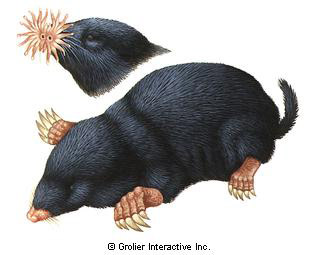
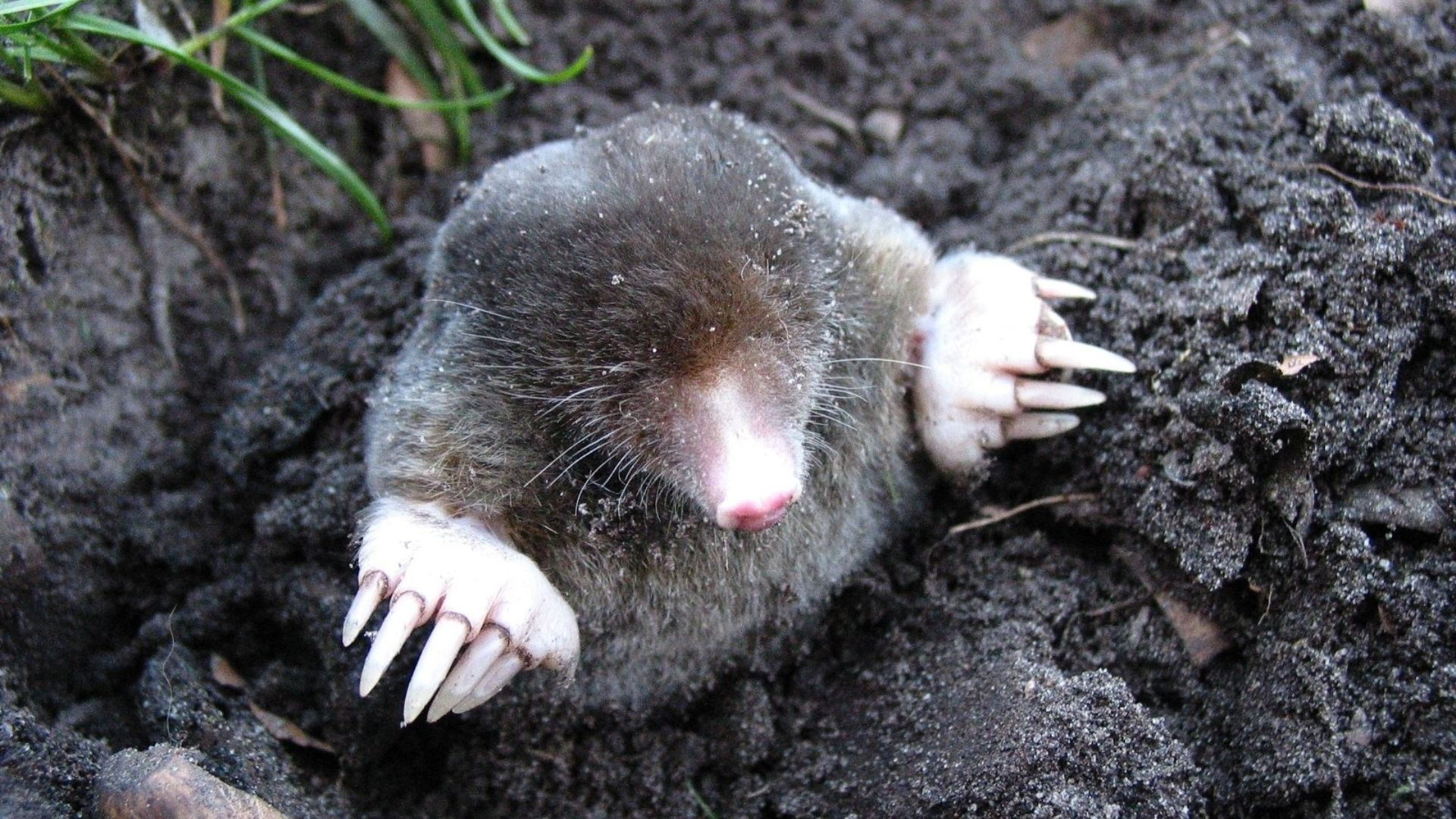
Moles have bluish-black to gray fur. They have a slender, pointed snout, teeth like needles, flattened feet, claws, and small ears. Moles can grow up to 12 " long, depending on the species.
Moles have pointed noses that distinguish them from meadow voles, gophers, and shrews. Their noses extend well in front of their mouths.
Their small eyes and ears are concealed by fur. Their feet are spade-like in shape and are wider than they are long. Moles are mammals that spend most of their life underground.
Moles use their large claws to dig holes in your yard. One mole can create up to 150 feet of tunnels in just one day. Discharged mounded soil and heaved runways are indicators of the mole's presence.
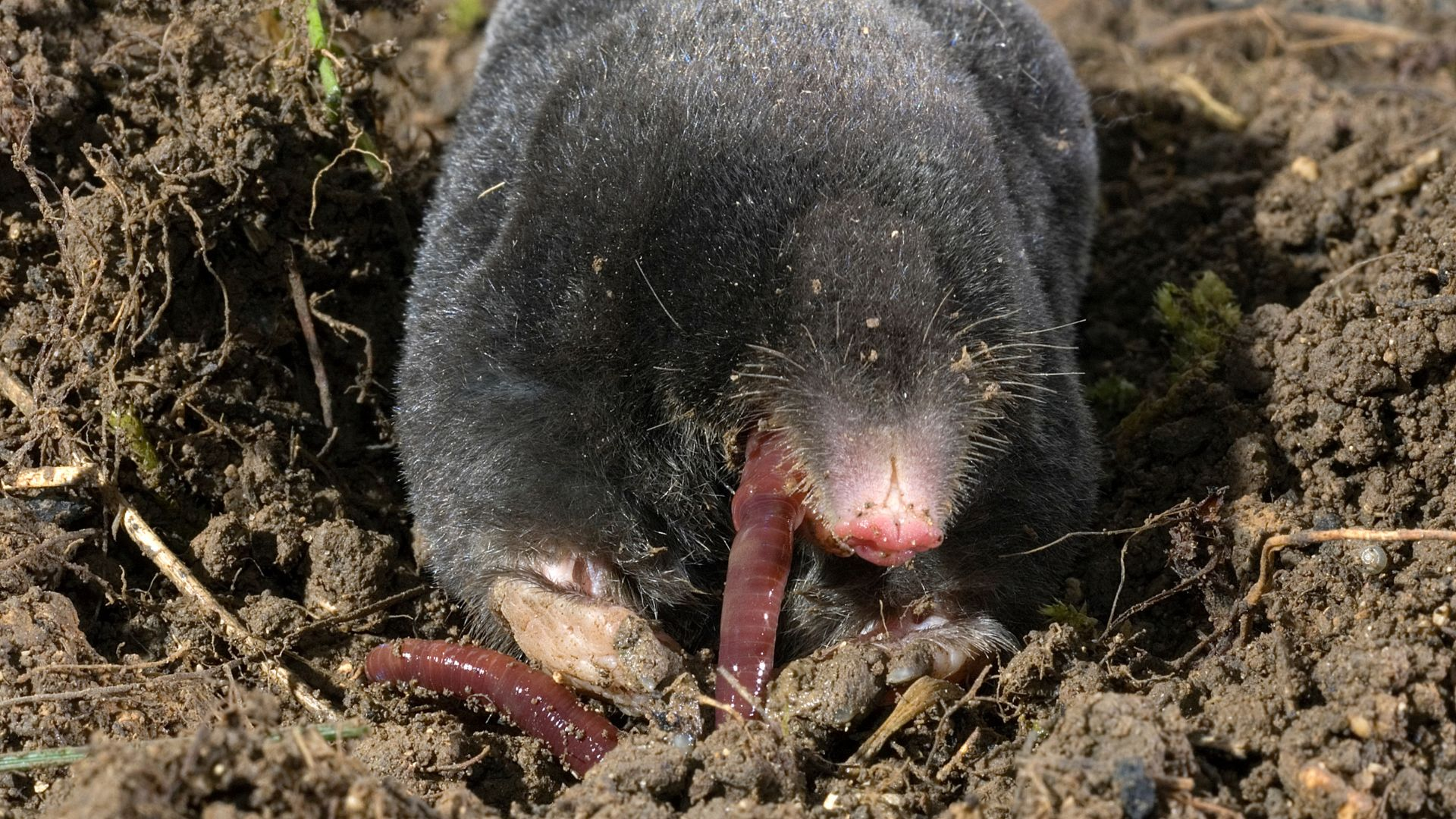
A mole's diet consists of earthworms, grubs, and other insects. These insectivores can almost eat their entire body weight on a daily basis. To get rid of moles from your yard, it is a wise idea to remove their food source - Insects.
Moles tend to also eat plant roots and disrupt root systems. Ground moles will cause a problem in yards where there are lots of insects for them to feed on, and where the soil is moist.
If the areas surrounding your property are dry, overwatering your lawn will make it a hotspot for moles.
How to Detect Signs of Moles in Your Yard
How do you know if you have moles in your yard? Even though moles spend most of their lives underground, they are not subtle creatures, and their presence is easily noticed if you know where to look.
Three of the main signs of mole activity to look out for are:
1. Dead Grass
As moles dig tunnels under your yard, they interfere with the root systems of your lawn. This kills the grass and you will begin to see dried patches of dead grass.
2. Molehills
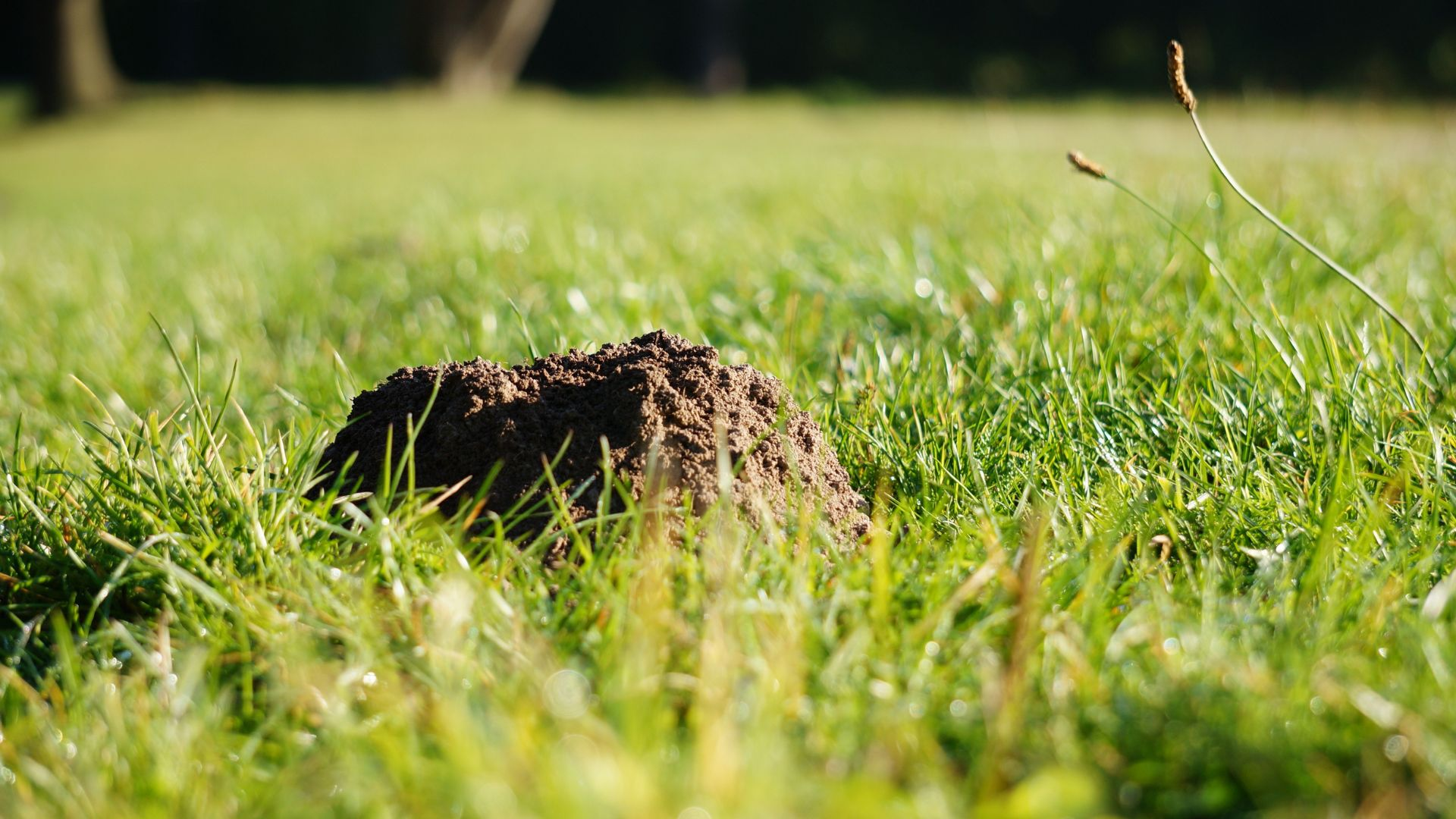
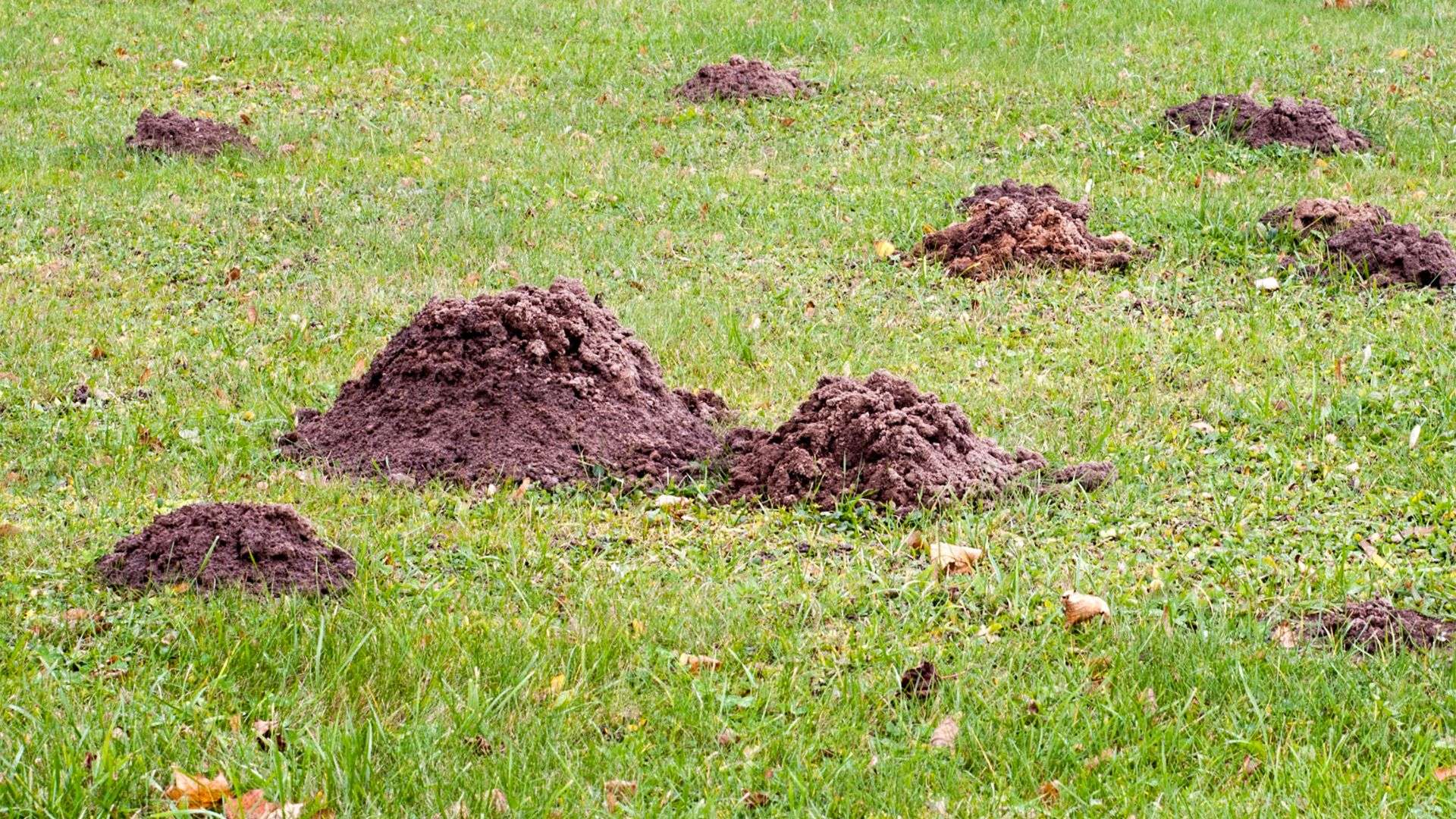
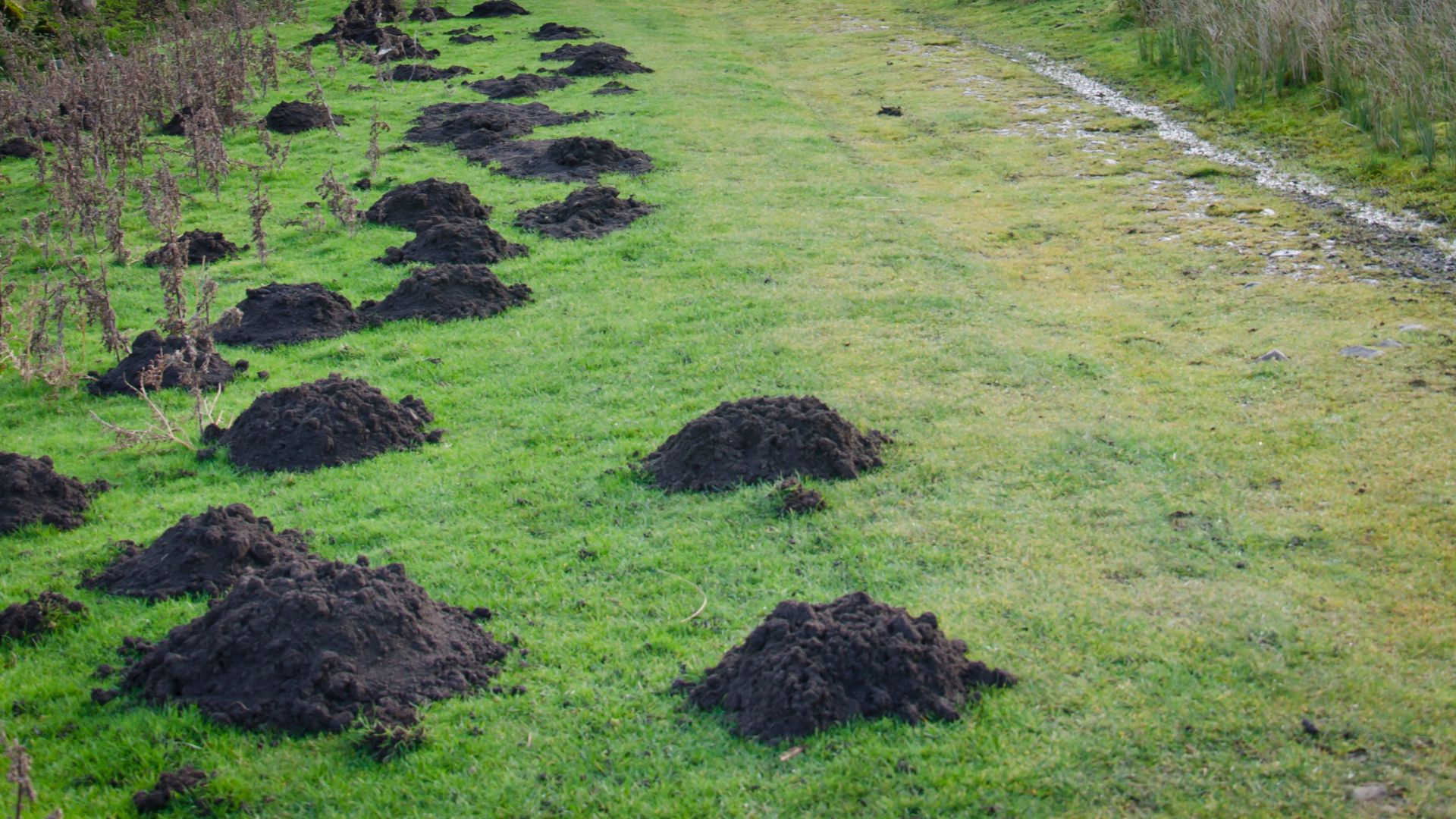
Yes, it may seem obvious, but Molehills are one of the telltale signs that you have moles in your yard. As a mole digs its tunnels, it pushes all of the excess dirt to the surface of your lawn.
This creates a mound of dirt at the entrance of their tunnel. If you are seeing mounds of dirt appear on your lawn, it's time to implement a mole control program.
3. Chunks Of Dirt
Unlike gophers, who smash the dirt into a fine powder, moles use their claws to dig up clumps of dirt.
When you inspect the mounds of dirt on your lawn, inspect these to see whether the soil is chunky or smooth. If the dirt is chunky, it is very likely that you have a mole problem.
Once you have confirmed that moles are in your yard, the next step to getting rid of them is to locate the main mole runways or tunnels.
-
Main runways and tunnels can be indicated by mounds of soil created as they construct them.
-
To locate mole tunnels in frequent use, clear away a mound of soil and probe for the opening, usually a short passage that leads down a few inches to the main tunnel. Place Victor mole traps or Talpirid Mole Bait in this tunnel.
Further Ways To Identify Main Runways:
-
Follow more or less a straight course for some distance.
-
Appear to connect two mounds or two runway systems.
-
Follow fence rows, concrete paths, or other man-made borders or
-
Follow a woody perimeter of a field or yard.
-
Nests are commonly found along with protected areas like fence rows or hedgerows.
Mole Tunnels
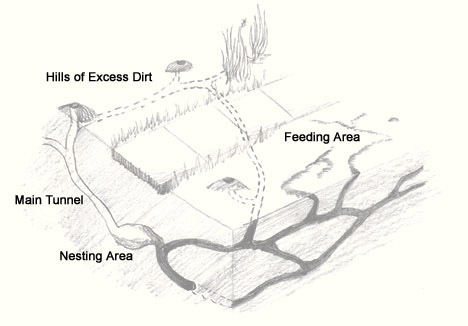
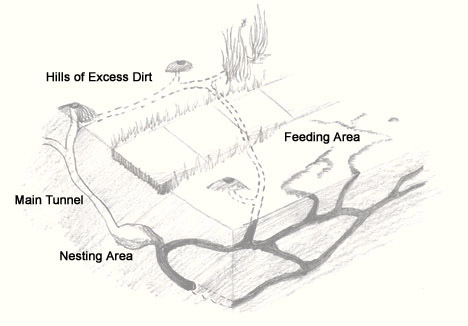
Moles produce two types of runways (surface tunnels); sub-surface runways and deep runways. Moles create vast underground tunnels in search of worms, insects, and nesting/living space.
Mounds form a row of excavations, unlike the random excavations of a gopher.
Certain mole tunnels of both the deeper runways and the subsurface runways are used as major travel lanes (main runways). They may be used by several moles in the area.
Sub-Surface Runways
Sub-surface mole runways are feeding tunnels just below the soil surface.
-
They are commonly seen as raised soil or raised ridges running through lawn areas.
-
The mole is capable of extending these runways at the rate of 100 feet per day.
-
Sub-surface mole runs may be used daily, maybe revisited at irregular intervals, or used only once for feeding and then abandoned.
-
Moles connect with the deep runways, which are located roughly between 3-12 inches below your lawn's surface. As a rule, few or no mole mounds are produced due to the production of sub-surface tunnels.
Deep Runways
The deep mole tunnels are usually the main runways since they are used every day as the mole travels to and from the main subsurface runways or the nest.
The soil excavated from the deep tunnels is deposited on the surface through short vertical tunnels in volcano-like heaps (Mole mounds should not be confused with pocket gopher mounds, which are more horse-shoe shaped.)
The number of mole mounds or surface ridges present is no indication of how many moles may be present. On average, one acre of land will support about two or three moles at one time.
However, areas next to large tracts of forested areas may be subject to moles' continual invasions because such areas may support many moles.
Getting Rid of Moles
If you have an existing mole problem, there are several methods to control your mole population in the yard.
Some of the best methods to get rid of moles are preventative, they help to deter moles before they start to infest your yard. There are both home remedies and commercial pest control solutions to stop moles from making tunnels under your lawn.
Our top 5 tips to get rid of moles
-
Baiting
-
Trapping
-
Gassing
-
Repelling
-
Use of Insecticides to eliminate insects (removes their food source)
Baiting
Talpirid mole bait's size, shape, and feel let ground moles consume the bait in the same manner as its primary food source, the earthworm. These baits mimic the mole's natural food source and has the same size, shape, and feel as earthworms.
One worm contains a lethal dose of bromethalin, an active ingredient that capitalizes on the mole's high energy demands.
Special enhancers ensure immediate attraction and excellent product acceptance.
Talpirid mole baits work quickly and can kill in 24 hours.
Mole Traps
Trapping is one of the most reliable strategies for killing moles. A wide range of mole traps are available on the market, specifically designed to get rid of moles permanently.
As with all mole control treatment methods (particularly with trapping), patience and persistence are the keywords.
It is critical to place the mole trap in the right place, a great place to start is at the entrance of any mole tunnels that you have discovered.
Trapping ground moles is usually easiest during the spring and fall with mole activity at a peak. Trapping in the early spring can also eliminate pregnant females, reducing the population.
Lawn damage caused by moles plagues homeowners and lawn care specialists alike. Seldom seen as they tirelessly tunnel underground, moles leave their telltale marks above ground as unsightly "molehills," mounds of soil, or grassless brown streaks.
Trapping is most successful during the spring and fall months after rain.
Moles are more difficult to locate in the summer and winter months since their tunnels are deeper in the soil.
Talpirid Mole Trap is a heavy-duty, dual-spring trap designed for use by the professional pest control market.
Talpirid Mole Trap offers professionals speed and safety in servicing mole accounts.
This specially designed "hands-free" mole trap is fast and easy to place and set.
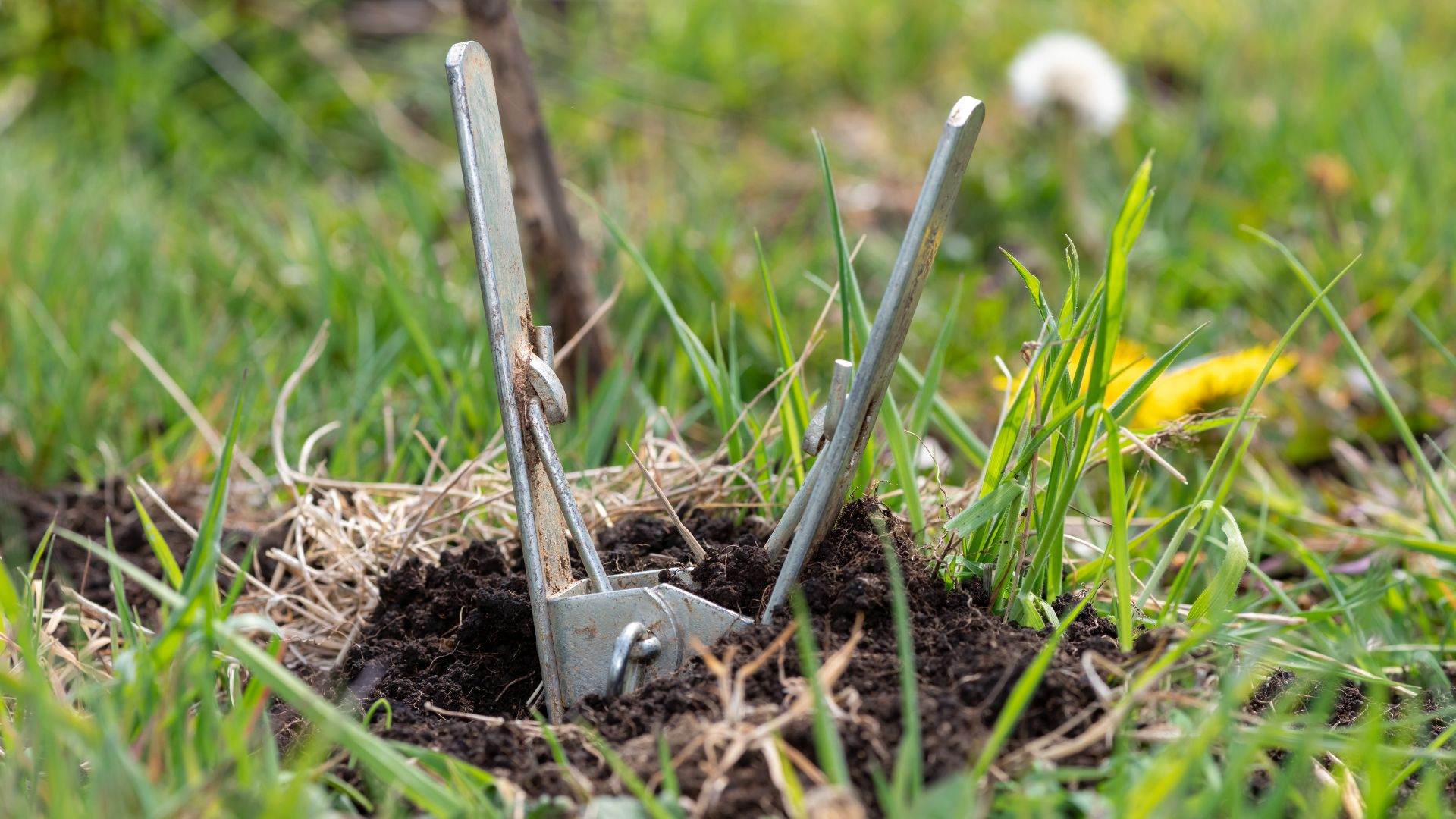
After identifying and properly preparing an active mole tunnel, place the trap jaws in the active mole tunnel and step on the trap's yellow foot pedal, which sets the trigger below the surface.
Once set, the low-profile trap sits close to the ground - no bulky metal or equipment sticking out of the ground.
The trap's dual springs ensure maximum catching power. When a mole encounters the underground trigger, the yellow pedal springs up, making notification of capture easy and safe.
Releasing trapped moles:
Captured ground moles are released by removing the trap from the ground and compressing the pedal by hand.
Using the trap's safety release button, the trap can be quickly and safely disengaged and relocated to other mole tunnels, depending on mole pressure.
The Talpirid Mole Trap can be used over and over again to kill moles. Made of glass-filled nylon, Talpirid Mole Trap will not rust and can be used in all soil types.
Using Gassers
Although poisonous gases such as Revenge Rodent Smoke Bombs are generally less effective unless you can gas the primary nests and repeated applications are made, some people have gotten good results with this type of product.
How to Prevent Moles
Use Mole Repellents
If you would prefer not to use poisons or gassers to kill moles. There are non-toxic mole repellents that can be used for mole prevention.
These repellents won’t kill moles, but they will disrupt their digestive system, and encourage them to seek food from other places.
There are certain flowers and plants that can also prevent ground moles from entering your yard. Plants in the allium family are natural pest repellents.
Daffodils, marigolds, and others give off a smell that moles are repelled by. Adding these flowers to your garden will help get rid of moles and other pests, while also adding a spot of beauty.
Moles do not like sound disturbances and will be driven away by ultrasonic repellents. Sonic Spikes are devices that can be placed in your backyard and release electronic vibrations to repel moles.
Granulated Repellents
By sprinkling repellent granules into the soil of your backyard, you can deter moles. The mole control granules release castor oil into the ground and repel the little critters.
These creatures dislike the scent, so it's a great choice to discourage moles. We recommend that you spread these non-toxic granules on your yard or in your garden. Some of the granular repellents that we recommend are:
-
Mole Scram Professional-22 lbs- -is a professional granulated mole repellent that can repel moles from your yard by organic repellents (Castor Oil - 17.0%, Citronella Oil - .9997%, Garlic Oil - .0003%). Apply Mole Scram Professional during the mole seasons, usually in the spring and fall; lasts 30-45 days, covers up to 16 500 square feet.
-
Mole Scram Granular Repellent- -10 lbs(Castor Oil - 15.0%, Citronella Oil - .4997%, Garlic Oil - .0003%) covers up to 7500 square feet
-
MoleMax and Sweeney's Mole and Gopher Repellents are also granulated products by Bonide, with a lesser percentage of Castor Oil (10.0%, no other ingredients).
Liquid Repellents:
Controlling with Insecticides To Kill Insects and Grubs
As mentioned earlier, one of the best ways to get rid of moles is to eliminate their food source. Moles feed on insects, earthworms, and other grubs. Moles love white grubs.
Treating the lawn surface with a granule such as Imidacloprid .5G or Merit Granules will help you control grubs and eliminate their main source of food and encourage Moles to look elsewhere for food.
Eliminating their food source, however, has one drawback. The ground moles will tunnel more aggressively in search of food, causing more temporary surface damage. This increased tunneling and surface damage will last for 2-4 weeks.
Imidacloprid .5G or Merit Granules are best applied during the spring months and are long-lasting. Most Imidacloprid liquid formulations do not work well as the granule formulations.
Find Your Mole Control Solution at DIY Pest Control
Whether you’re opting for natural methods or considering professional-grade products, DIY Pest Control has everything you need to effectively manage mole problems in your yard. Shop with us today and take the first step towards a mole-free garden!
Shop Mole Control ProductsMoles and Mole Control
How to Get Rid of Moles in Your Yard

Recommended Measures for Mole Control
There are several methods to controlling your mole population in the yard.
- Baiting
- Trapping
- Gassing
- Repelling
- Use of Insecticides to eliminate insects (removes their food source)
A. First: Detect the Presence Of Moles
The first and most crucial step is to correctly detect moles' presence and locate the main mole runways or tunnels.
- Main runways and tunnels can be indicated by mounds of soil created as they construct them.
- To locate mole tunnels infrequent use, clear away a mound of soil and probe for the opening, usually a short passage that leads down a few inches to the main tunnel. Place Victor mole traps or Talpirid Mole Bait in this tunnel.
Further ways to identify main runways:
- Follow more or less a straight course for some distance.
- Appear to connect two mounds or two runway systems.
- Follow fence rows, concrete paths or other man-made borders or
- Follow a woody perimeter of a field or yard.
- Nests are commonly found along with protected areas like fence rows or hedgerows.
Preventing Moles
Mole Habits - Mole Tunnels
Moles produce two types of runways (tunnels); sub-surface runways and deep runways. Moles build vast underground tunnels in search of worms, insects, and nesting/living space. Mounds form a row of excavations, unlike the random excavations of a gopher.
Certain mole tunnels of both the deeper runways and the subsurface runways are used as a major travel lane (main runways). They may be used by several moles in the areas.
Sub-Surface Runways
Sub-surface mole runways are feeding tunnels just below the soil surface.
- They are commonly seen as the raised ridges running through lawn areas.
- The mole is capable of extending these runways at the rate of 100 feet per day.
- Sub-surface mole runs may be used daily, maybe revisited at irregular intervals, or used only once for feeding and then abandoned.
- Moles connect with the deep runways, which are located between 3-12 inches below the surface. As a rule, few or no mole mounds are produced due to the production of sub-surface tunnels.
Deep Runways
The deep mole tunnels are usually the main runways since they are used daily as the mole travels to and from the main subsurface runways or the nest.
The soil excavated from the deep tunnels is deposited on the surface through short vertical tunnels in volcano-like mounds (Mole mounds should not be confused with pocket gopher mounds, which are horse-shoe shaped.)
The number of mole mounds or surface ridges present is no indication of how many moles may be present. On average, one acre of land will support about two or three moles at one time. But areas next to large tracts of forested areas may be subject to moles' continual invasions because such areas may support many moles.
B. Second: Follow up with your choice of mole control methods
Baiting: Using Mole Bait
- Talparid mole bait's size, shape, and feel let moles consume the bait in the same manner as its primary food source, the earthworm. Talpirid mole bait mimics the mole's natural food source and has the same size, shape, and feel as earthworms. One worm contains a lethal dose of bromethalin, an active ingredient that capitalizes on the mole's high energy demands.
- Special enhancers ensure immediate attraction and excellent product acceptance.
- Talpirid mole bait works quickly and can kill in 24 hours.
Using Mole Traps : Talpirid and Victor
As with all mole control treatment methods (particularly with trapping), patience and persistence are the keywords.
Trapping moles with mole traps are usually easiest during the spring and fall with mole activity is at a peak. Trapping in the spring can also eliminate pregnant females, reducing the population.
Lawn damage caused by moles plagues homeowners and lawn care specialists alike. Seldom seen as they tirelessly tunnel underground, moles leave their telltale marks aboveground as unsightly "molehills," mounds of soil, or grassless brown streaks.
Trapping is most successful during the spring and fall months after rain.
Moles are more difficult to locate in the summer and winter months since their tunnels are deeper in the soil.
Talpirid Mole Trap is a heavy-duty, dual-spring trap designed for use by the professional pest control market. Talpirid Mole Trap offers professionals speed and safety in servicing mole accounts. This specially designed "hands-free" mole trap is fast and easy to place and set.
After identifying and properly preparing an active mole tunnel, place the trap jaws in the active mole tunnel and step on the trap's yellow foot pedal, which sets the trigger below the surface. Once set, the low-profile TALPIRID Mole Trap sits close to the ground - no bulky metal or equipment sticking out of the ground. The trap's dual springs ensure maximum catching power. When a mole encounters the underground trigger, the yellow pedal springs up, making notification of capture easy and safe.
Captured moles are released by removing the trap from the ground and compressing the pedal by hand. Using the trap's safety release button, the trap can be quickly and safely disengaged and relocated to other mole tunnels, depending on mole pressure. Talpirid Mole Trap can be used over and over again. Made of glass-filled nylon, Talpirid Mole Trap will not rust and can be used in all soil types.
Using Gassers for Mole Control
- Although the poisonous gases such as Revenge Rodent Smoke Bombs are generally less effective unless you can gas the primary nests and repeated applications are made, some people have gotten good results with this type of product.
Using Mole Repellents
Granulated Repellents:
- Mole Scam Professional-22 lbs- -is a professional granulated mole repellent that drives moles from your yard by organic repellents (Castor Oil - 17.0%, Citronella Oil - .9997%, Garlic Oil - .0003%). Apply Mole Scram Professional during the mole seasons, usually in the spring and fall; lasts 30-45 days, covers up to 16 500 square feet.
- Mole Scram Granular Repellent- -10 lbs(Castor Oil - 15.0%,Citronella Oil - .4997% , Garlic Oil - .0003% ;covers up to 7500 square feet
- MoleMax and Sweeney's Mole and Gopher Repellents are also granulated products by Bonide, with a lesser percentage of Castor Oil (10.0%, no other ingredients).
Liquid Repellents:
Controlling with Insecticides To Kill Insects and Grubs
Treating the lawn surface with a granule such as Imidacloprid .5G or Merit Granules would eliminate their food sources (insects, grubs, and worms).
Eliminating their food source, however, has one drawback. The moles will tunnel more aggressively in search of food, causing more temporary surface damage. This increased tunneling and surface damage will last for 2-4 weeks.
Imidacloprid .5G or Merit Granules are best applied during the spring months and are long-lasting. Most Imidacloprid liquid formulations do not work well as the granule formulations.
Appearance
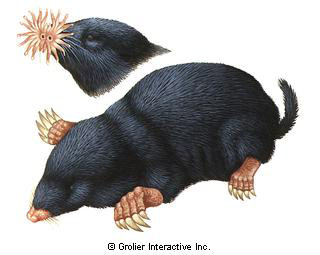
Moles have bluish-black to gray fur. They have a slender snout, teeth like needles, flattened feet, claws, and small ears. Moles can grow up to 12 " long, depends on the species.
Moles have pointed noses that distinguish them from meadow voles, gophers, and shrews. Their noses extend well in front of their mouths. Their small eyes and ears are concealed by fur. Their feet are spade-like in shape and are wider than they are long.
Discharged mounded soil and heaved runways are indicators of the mole's presence.
Biology/ Identification of Moles
Eastern Mole and Townsend's Mole
The Eastern mole is the most common mole found in the eastern US. The most troublesome species on the coast of Oregon and Washington are Townsend's mole; the Broad-footed mole can be found in California. Eastern moles can be seen from the Atlantic to the Rockies and Southern Canada's foothills to Florida's panhandle. All moles can be damaging, but the Eastern mole is by far the most widespread. It is better described as the common or grey mole. This mole is the strongest group and is most often associated with tunnels and or mole mounds by residential homeowners.
Moles consume a large amount of food.
Moles are not rodents but belong to a group of mammals called insectivores. Moles have a very high metabolic rate and, therefore, have to consume large amounts of food.
Moles have large appetites and may eat up to 100 percent of their body weight in one day. White grubs, earthworms, beetles, and assorted larvae are their principal foods.
Moles feed primarily on insects that feed below the ground. The tunnels that the mole excavates while searching for food may be used only once or maybe traveled repeatedly.
Moles may be active during any time of the day and seem to prefer cool, moist soil (the same as that preferred by grubs and earthworms).
Moles do not eat the roots and bulbs of flowers and vegetables, a commonly held belief. Voles and shrews will attack the roots and bulbs. Moles may benefit these plants by feeding on grubs and worms that can damage them. However, the tunneling activities of moles may disfigure lawns and gardens.
Mole Activity and Reproduction
Moles mate during February and March. They produce a single litter of three to five; the gestation period is six weeks. Moles do not hibernate and store food or fat. Severe lawn damage can result until mole control is used or the lawn surfaces freeze in the winter. Newborn female moles will mate the following spring, and the cycle begins anew.
Mole activity occurs both during the day and night. They can be seen during damp days or the day after a rain during the spring and summer months as they push up their tunnels or mounds. If the lawn freezes in the winter or there is a very dry summer, the moles use deep burrows.
Written by our resident pest control expert Ken Martin.