



How to Get Rid of Wood Roaches
If you have an active wood cockroach infestation, follow these guidelines to learn how to get rid of Wood roaches (also known as tree roaches), and the best products for wood roach treatment.
December 16th, 2023
Unlike other insects, the presence of a wood roach indoors does not indicate the presence of a nest. Wood roaches, in fact, require a damp atmosphere to thrive, and their eggs will not grow below 80 degrees.
Because wood roaches aren't afraid of humans, you may come across an uninvited visitor wandering aimlessly. If you have a wood roach in your home, it was either brought in by accident or flew in through an open window at night when the lights were turned on.
You can sweep them out gently with a broom or leave a door or window open near them, they'll eventually make their way outside on their own.
Understanding why your wood roach infestation is occurring is the first step toward resolving it. Food and moisture will entice these cockroaches to enter your home. The removal of any food or moisture sources is a critical first step in getting rid of wood roaches.
Spraying a professional residual insecticide around the outside of your home and access locations is the second step. You can also spray inside along door thresholds and baseboards with many products. Apply bug granules or insect bait as an optional extra around the outside of your house.
Woods Cockroach Control: How To Get Rid of Woods Roaches
Because these roaches don't breed inside the house, you won't have to treat the interior very often. Pesticides that are used to control domestic roaches aren't as effective against these roaches.
Pick up and discard any wooden bits that a wood cockroach may have made their way into your home through. You can do this with a vacuum cleaner or a broom and dustpan.
Take the following actions to get rid of wood cockroaches in your house:
1. Sanitation and Exclusion
The insecticides used with success against other cockroach species are of very limited benefit against wood roaches. Exclusion techniques that prevent wood roach entry should be considered.
2. Recommendations for Wood Roach Control
Since wood roaches do not establish themselves indoors and their presence is usually temporary (a few weeks during the spring), chemical control measures are not always needed to get rid of wood roaches.
You can use broad-spectrum insecticides and chemical barriers to establish a protective barrier around your yard or garden.
If you are experiencing a larger or persistent infestation refer to Perimeter Insecticide Treatments to understand how to kill wood roaches effectively.
Key Takeaway
Wood Roaches enter the structure from outside the home. Exterior perimeter treatment is critical to keep them out.
Pest Control Products To Use For Wood Cockroaches
Insecticide Sprays to Get Rid of Wood Roaches:
Outdoor Building Treatment and Points of Entry and Inside Treatments
You may use the concentrated residual spray: Avesta CS inside or outside.
Where to Spray Outside:
Spray outside around doors, windows, pipe openings, and dryer vents. These insecticides are microencapsulated or suspended concentrates and work well on difficult porous surfaces. Spray a 3-6 foot band around the entire house to get rid of wood roaches for good.
Where To Spray Inside:
Apply inside on the baseboards near the entry points (doors, windows, plumbing under sinks). On the inside, apply around the plumbing under the sinks and washer and dryer connections.
You don't have to spray all the interior baseboards, just the corners, and baseboards inside the garage and basement areas. Recommended products are listed below. They would require a pump sprayer.
Retreatment
The residual insecticides: Lambdastar Ultra Cap 9.7, D-Fense SC, and Cyzmic CS should be repeated every three months during the season. The top recommendation for getting rid of wood roaches is Lambdastar Ultracap 9.7. It has an improved encapsulated formula to cause it to bond to surfaces better and holds up under ultraviolet light and rain longer.
Wood Cockroach Identification
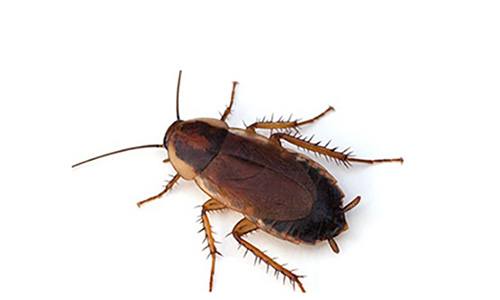
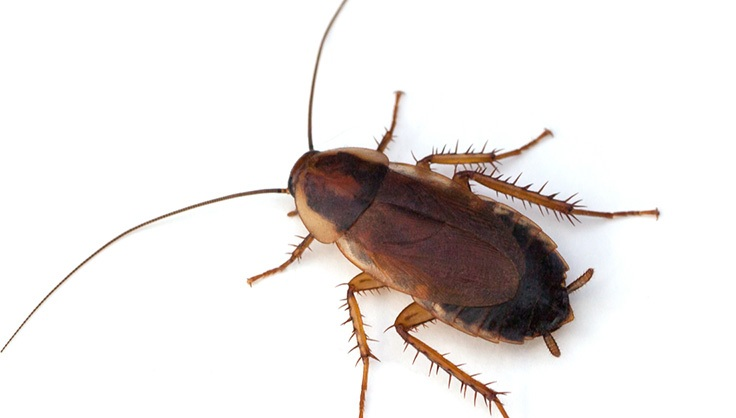
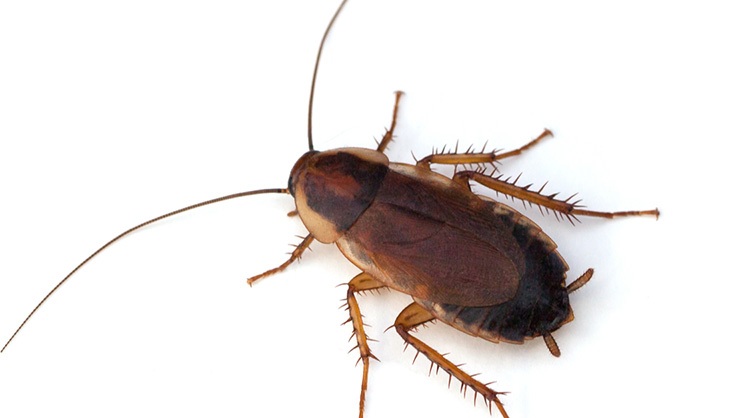
Wood roaches (Parcoblatta pensylvanica) are very similar in appearance to the American cockroach; flat, oval body, long antennae, spiny legs, and chestnut brown color. They are slightly smaller than the American Cockroach - the wood roach measures 3/4 to 1 1/4 inches long.
The adults, especially the males, appear tan because of the color of their wings. Adults and large nymphs of the Pennsylvania wood roach can be recognized by a pale, creamy white, or transparent stripe on their outer edge. The pale edge extends onto the first 1/3 of the front wings of the adults. Wood roaches eat decaying organic material.
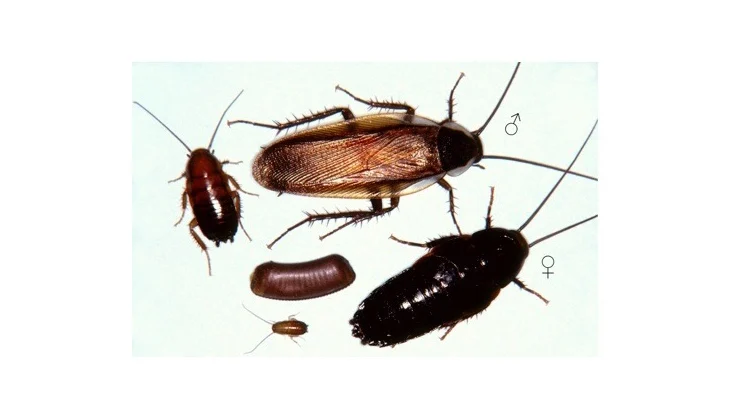
The picture earlier in this guide shows the life cycle of a Pennsylvania wood roach. It goes from egg case to immature, then adult. You can see the distinct differences between male and female adults.
Wood Roach Biology/ Habitats
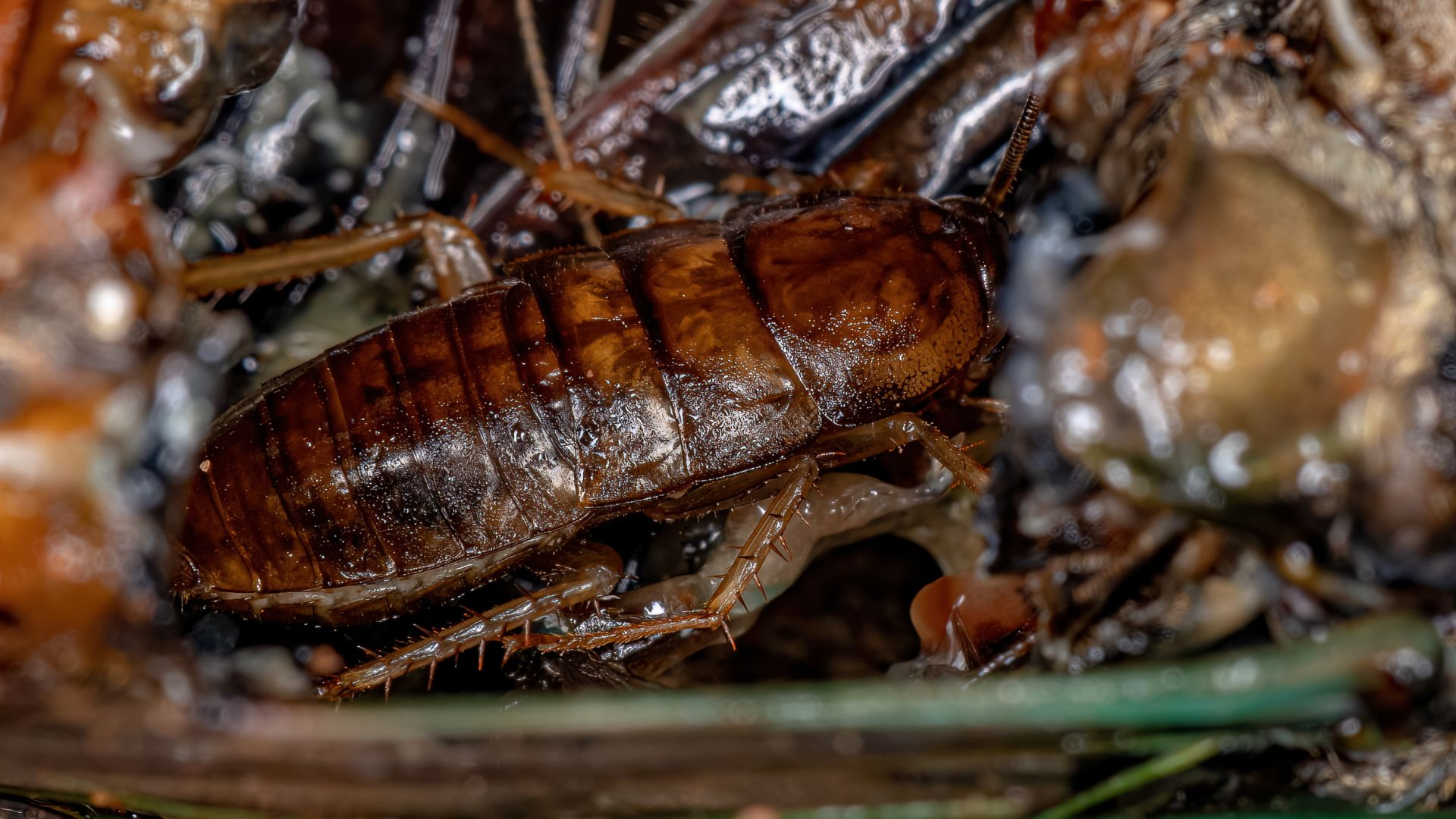
Tree roaches, also known as Pennsylvania wood roaches, are attracted to light which makes them different from other roaches. Females produce about 950 eggs a year, with one generation. Eggs hatch in the summer and mature the following spring. A life cycle can last two years. Adults are present from May through early October.
Wood Roach vs Cockroach Habitats
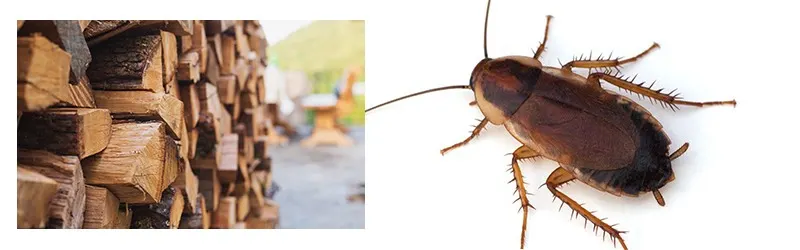
Wood roaches do not survive inside buildings. In wooded areas, these cockroaches can be seen in the headlights of automobiles at dusk. The male wood cockroaches are attracted to lights. They are active during the winter and are often found in firewood. They live in moist woodland areas.
They do not come inside unless carried inside with firewood or they may wander in on their own. Wood roaches are not startled and begin scampering when approached. These outside wood cockroaches do not reproduce inside like the German roach.
They need consistent moist conditions in their environment such as under decaying logs, woodpiles, or loose bark. If they are inside, it is only a temporary condition.
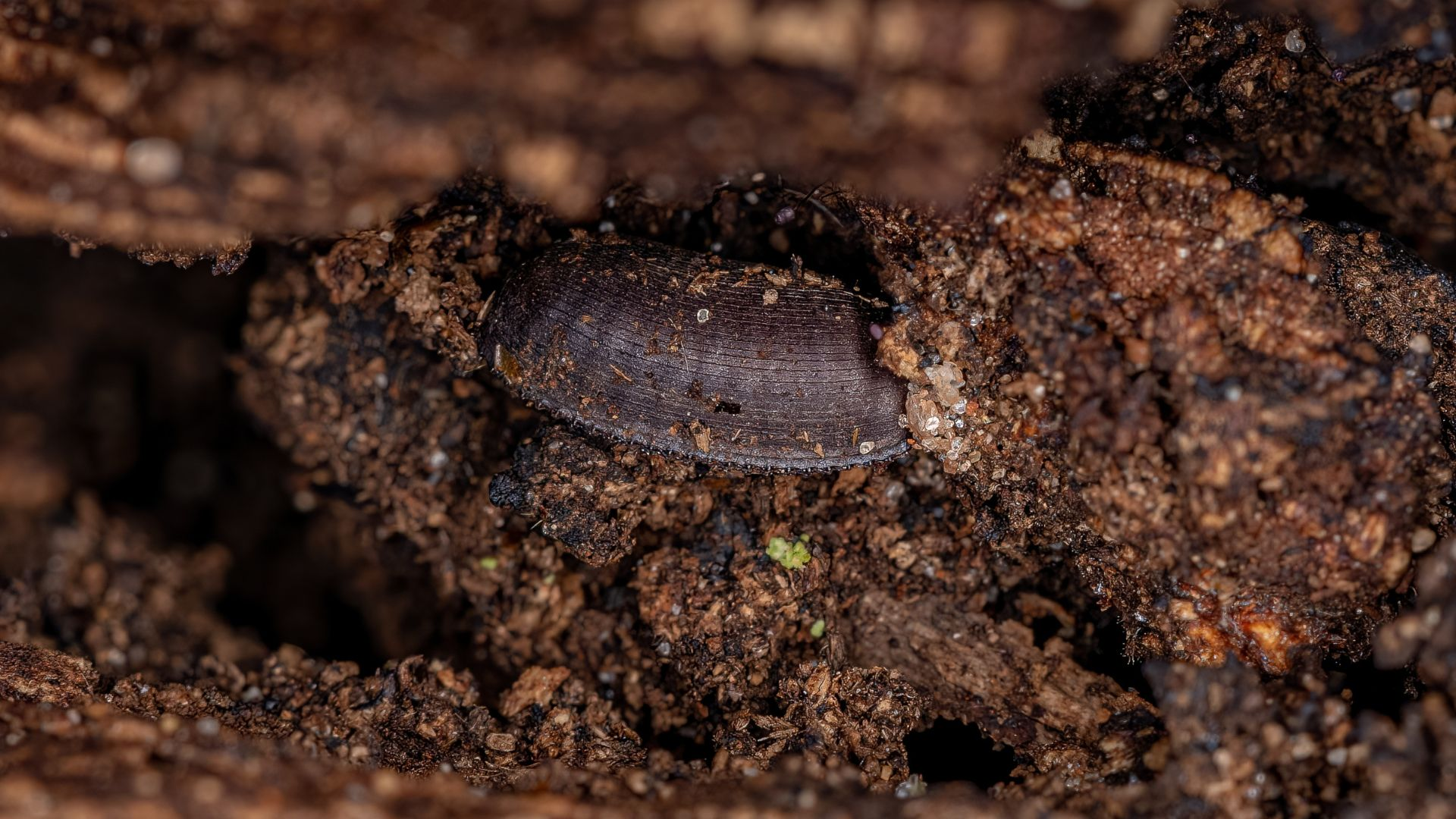
During your inspection, you may find wood roach egg cases like this one hidden in wood debris.
How to Inspect For Wood Roaches
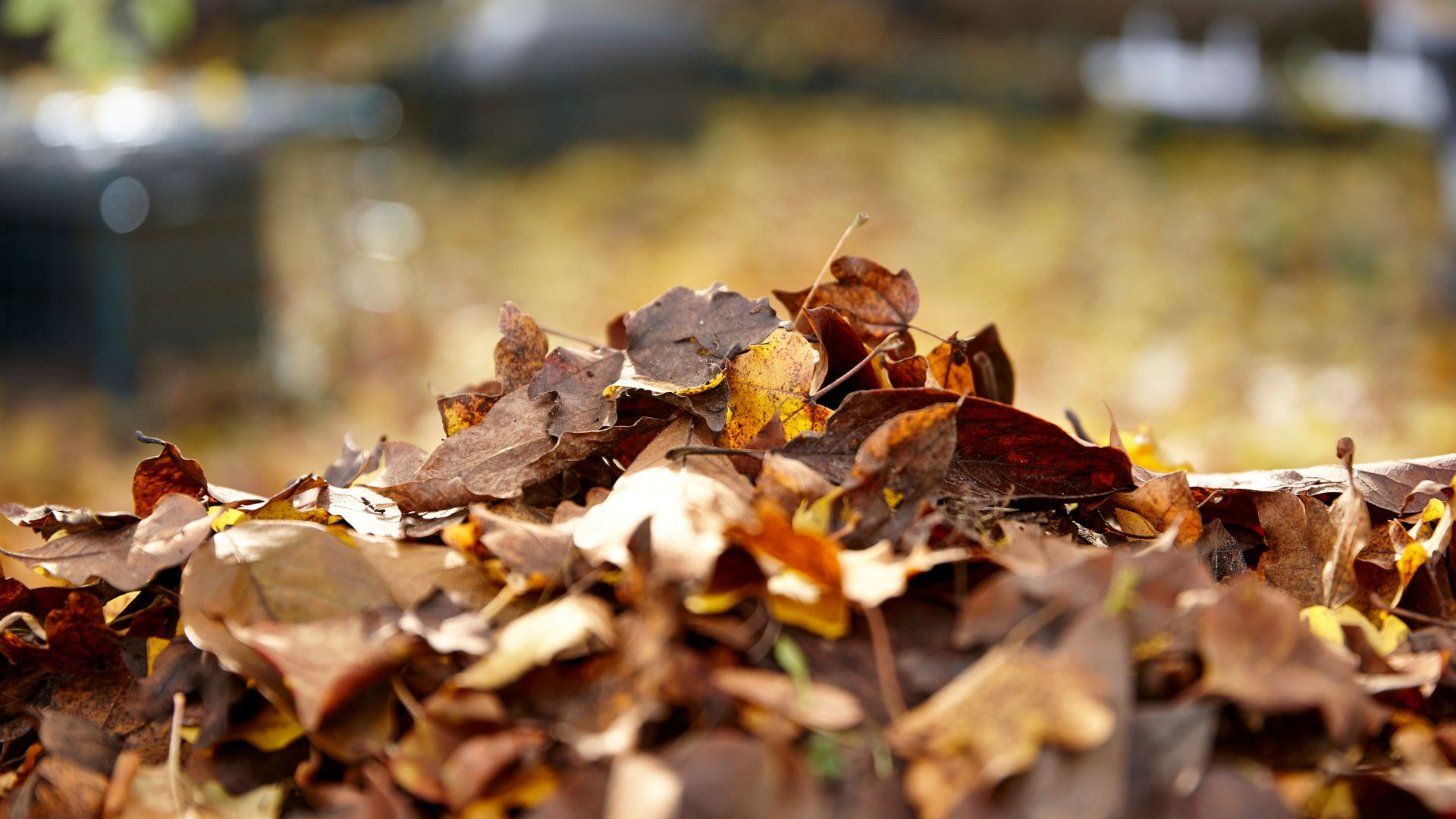
Pennsylvania Wood roaches are found in damp wooded habitats such as wood piles, mulch, under the loose bark of trees, leaf piles, branches, or rotting logs, and are native to North America. Because these wood cockroaches require a continually damp atmosphere, they do not survive or reproduce inside.
The female wood roach takes advantage of the outdoors by depositing egg capsules behind the loose bark of dead trees, fallen logs, or stumps, hidden from hungry predators.
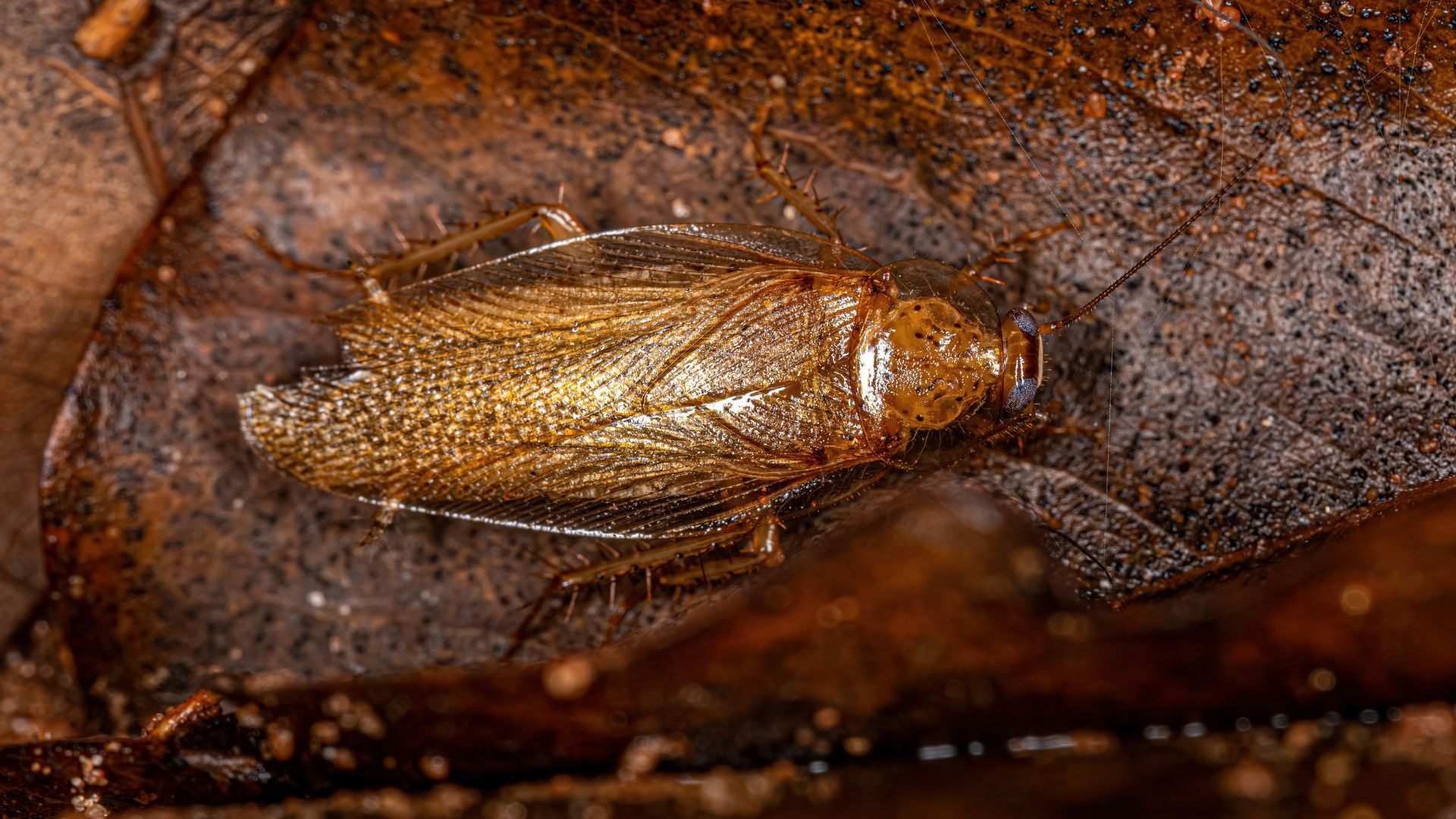
These roaches aren't as likely to infest homes as other cockroaches, although they may appear inside your home on occasion. Because male wood roaches are attracted to light at night, they may enter your home through a window frame or other opening.
When they are indoors, it is often an accident and they are not likely to remain there. Wood roaches rarely breed indoors, and seeing one does not automatically indicate there are many more wood roaches inside your home.
The Pennsylvania wood cockroach feeds on rotting trees and leaf litter. They don't eat the structure or furniture of your house, however, it is never pleasant to see wood cockroaches inside. Continue to the next section to discover how to prevent wood roaches in your home.
Woods Roaches ‐ Prevention and Exclusion
In order to get rid of roaches, you'll need to use sanitation and exclusion strategies. Roaches require food, water, and a safe place to hide. As you begin your wood cockroach control treatment plan, remove as much of their food, drink, and shelter as feasible.
Exclusion
-
The insecticides used with success against other cockroach species are of very limited benefit against wood roaches. Exclusion techniques that prevent wood roach entry should be considered.
-
A variety of creatures can gain access through cracks or fissures in walls, doors, and windows. Make a point of locating and sealing any such gaps. This involves ensuring that any foundation cracks are properly sealed. A little putty or caulk can go a long way toward keeping pests out.
-
Maintain tight-fitting screens, doors, and windows to prevent wood roaches from entering the home.
-
Store firewood piles far away from the house.
-
Try not to carry over large quantities of firewood from season to season to reduce potential breeding sites.
-
If practical, bring only enough firewood indoors for a day or two to prevent insects from later emerging in the house.
-
It is not practical to treat firewood or other areas away from the dwelling because male wood roaches can fly in from a distance. Also, to limit the risk of exposure to toxic chemical fumes when burning firewood, non-chemical preventive practices are preferred.
-
Avoid the use of unnecessary lights at night, since males fly to them during mating season. Female wood roaches will crawl into areas around porch lights or yard lights, thus attracting numerous males.
-
Caulk all penetrations through ground-level walls.
-
Occasionally, populations can build in crawl spaces under the house. Insecticide control measures should concentrate on the outside of the building and points of entry. This control measure is called a "perimeter or barrier" treatment.
Sanitation
-
Stop water leaks, screen equipment overflow drains, and take overflow water away from buildings; keep drain traps full or capped.
-
Remove rotting leaves from window wells.
-
Move garbage cans out of the preferred moist habitat.
-
Individual roaches found inside can be collected with a vacuum cleaner or a broom and dustpan and discarded.
Wood Roaches
Wood Roach Identification & How to Get Rid of Wood Roaches

Wood Roach Identification
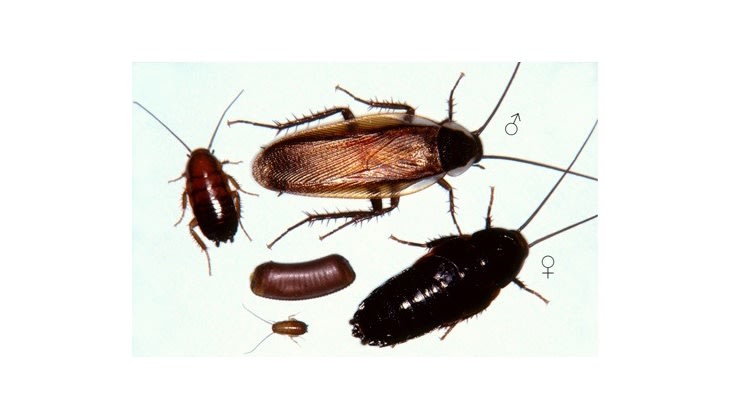
(Nebraska Extension)
Wood roaches are very similar in appearance to the American roach; flat, oval body, long antennae, spiny legs, chestnut brown color. They are slightly smaller than the American Cockroach, about 3/4 to 1 1/4 inch long.
The adults, especially the males, appear tan because of the color of their wings. Adults and large nymphs of the wood roach can be recognized by a pale, creamy white, or transparent stripe on their outer edge. The pale edge extends onto the first 1/3 of the front wings of the adults.
This picture shows the life cycle of Pennsylvania wood roach. It goes from egg case, to immature, then adult. You can see the distinct differences between male and female adults.
Woods Cockroach Control-How To Get Rid of Woods Roaches
1. Sanitation and Exclusion
The insecticides used with success against other cockroach species are of very limited benefit against wood roaches. Exclusion techniques that prevent wood roach entry should be considered.
2. Recommendations for Wood Roach Control
Since wood cockroaches do not establish themselves indoors and their presence is usually temporary (a few weeks during the spring), chemical control measures are not always needed.
If you are experiencing a larger or persistent infestation refer to Perimeter Insecticide Treatments.
Key Takeaway
Wood Roaches enter the structure for outside.
Exterior perimeter treatment is critical to keep them out.
Pest Control Products To Use For Wood Cockroaches
Insecticide Sprays:
Outdoor Building Treatment and Points of Entry and Inside Treatments
You may use concentrated residual spray: Avesta CS inside or outside.
Spray outside around doors, windows, pipe openings, and dryer vents. These insecticides are microencapsulated or suspended concentrates and work well on difficult porous surfaces. Spray a 3-6 foot band around the entire house.
Apply inside on the baseboards near the entry points (doors, windows, plumbing under sinks). On the inside, apply around the plumbing under the sinks and washer and dryer connections. You don't have to spray all the interior baseboards, just the corners, and baseboards inside the garage and basement areas. Recommended products are in the table below. They would require a pump sprayer.
The residual insecticides: Lambdastar Ultra Cap 9.7, D-Fense SC, and Cyzmic CS should be repeated every three months during the season. The top recommendation is Lambdastar Ultracap 9.7. It has an improved encapsulated formula to cause it to bond to surfaces better and holds up under ultraviolet light and rain longer.
Woods Roaches ‐ Prevention and Exclusion
Exclusion
The insecticides used with success against other cockroach species are of very limited benefit against wood roaches. Exclusion techniques that prevent wood roach entry should be considered.
-
Sealing any cracks, gaps or openings with caulking compound, putty or plastic wood.
-
Maintain tight fitting screens, doors and windows.
-
Store firewood piles far away from the house.
-
Try not to carry over large quantities of firewood from season to season to reduce potential breeding sites.
-
If practical, bring only enough firewood indoors for a day or two to prevent insects from later emerging in the house.
-
Avoid the use of unnecessary lights at night, since males fly to them during mating season. Females will crawl into areas around porch lights or yard lights, thus attracting numerous males.
-
Individual roaches found inside can be collected with a vacuum cleaner or a broom and dustpan and discarded.
-
Caulk all penetrations through ground level walls.
-
Stop water leaks, screen equipment overflow drains, and take overflow water away from buildings; keep drain traps full or capped.
-
Remove rotting leaves from window wells.
-
Move garbage cans out of preferred moist habitat.
-
It is not practical to treat firewood or other areas away from the dwelling because males can fly in from a distance. Also, to limit the risk of exposure to toxic chemical fumes when burning firewood, non-chemical preventive practices are preferred.
-
Occasionally, populations can build in crawl spaces under the house.
-
Insecticide control measures should concentrate on the outside of the building and points of entry. This control measure is called a "perimeter or barrier" treatment.
Wood Cockroach Diet
Wood roaches eat decaying organic material
Wood Roach Biology/ Habitats
These roaches are attracted to light which makes them different from other roaches. Females produce about 950 eggs a year, with one generation. Eggs hatch in the summer and mature the following spring. A life cycle can last two years. Adults are present May through early October.
These roaches do not survive inside buildings. In wooded areas, these cockroaches can be seen in the headlights of automobiles at dusk. The males are attracted to lights. They are active during the winter and are often found in firewood. They live in moist woodland areas. They do not come inside unless carried inside with firewood or they may wander in on their own. These roaches are not startled and begin scampering when approached. These outside roaches do not reproduce inside like the German roach. They need consistent moist conditions in their environment such as under decaying logs, woodpiles or loose bark. If they are inside, it is only a temporary condition.
Various Roaches That Invade Homes and Businesses
( American and German Roaches are the most common and have two different types of treatments.)